Refinish Laminate Cabinets: Preparation, Limits & Options
You can refinish laminate cabinets, but the result depends on careful laminate cabinet preparation, strong adhesion, and realistic expectations about finish durability. If the laminate is peeling, damaged, or poorly suited to paint, cabinet refacing may be the safer and more consistent option.
Key takeaways
- Laminate is a smooth manufactured surface that requires cleaning, deglossing, and a bonding primer before painting.
- You can refinish laminate cabinets when the existing surfaces are firmly attached and structurally sound.
- Painted laminate may show chips, scratches, or wear sooner than professionally applied replacement doors and drawer fronts.
- Refacing replaces visible doors and drawer fronts while covering the existing cabinet boxes with a new veneer or laminate.
- Renu Kitchen can help homeowners compare refinishing, refacing, and selective cabinet upgrades during a free estimate.
Can You Refinish Laminate Cabinets Successfully?
Yes, you can refinish laminate cabinets when the covering is firmly bonded, clean, and free from swelling or peeling. Laminate is a thin, decorative manufactured layer bonded to a cabinet substrate, unlike solid wood or wood veneer, which have a natural wood surface. Melamine is a resin-coated manufactured panel often used for cabinet doors, while thermofoil is a heat-formed vinyl covering. Each material needs the right preparation and bonding products.
Sound laminate is the best candidate for paint because it gives primer and paint a stable surface. Bubbling, peeling, swollen, or water-damaged areas can prevent adhesion and lead to early chipping or lifting. Refinishing melamine cabinets follows similar preparation principles, but some melamine products require a product-specific bonding primer. Renu Kitchen evaluates the existing cabinet boxes, doors, drawer fronts, and layout before recommending the right solution. For another option, see Refacing Kitchen Cabinets: What Homeowners Should Know.
- Firmly bonded laminate provides a better foundation than a covering that is separating from the substrate.
- Clean surfaces must be free of grease, wax, and cooking residue before primer is applied.
- Light deglossing helps create a surface that bonding primer can grip.
- Damaged edges and swollen panels may need replacement rather than refinishing.
- The cabinet material and condition matter more than the existing color when deciding whether paint is practical.
Which Laminate Surfaces Are Paintable?
High-pressure laminate has a durable, smooth or lightly textured surface bonded to a manufactured core and commonly appears on cabinet doors and panels. Melamine is a resin-coated panel with a consistent factory finish, while thermofoil is a vinyl covering molded over an engineered wood door, often with wrapped edges or routed details. Wood veneer is a thin layer of real wood bonded over a substrate, so it can be prepared more like wood but is still not solid lumber.
Can laminate cabinets be painted successfully? Usually, yes, when the surface is intact, clean, and lightly deglossed. The cabinet’s material and condition matter more than whether it is white, wood-toned, or another color.
What Makes Laminate Different From Wood?
Laminate does not absorb primer and paint like unfinished wood, so both mechanical adhesion from careful deglossing and chemical adhesion from the correct primer are important. Edges, corners, routed profiles, handle areas, and surfaces exposed to steam or repeated contact are common failure points.
Paint can update the color of existing cabinets, but it cannot repair warped panels or replace a dated door profile. If the doors are sound but the finish is unsuitable, refinishing may be practical; if the covering is failing, cabinet refacing may provide a more consistent result.
How Should You Prepare Laminate Cabinets for Painting?
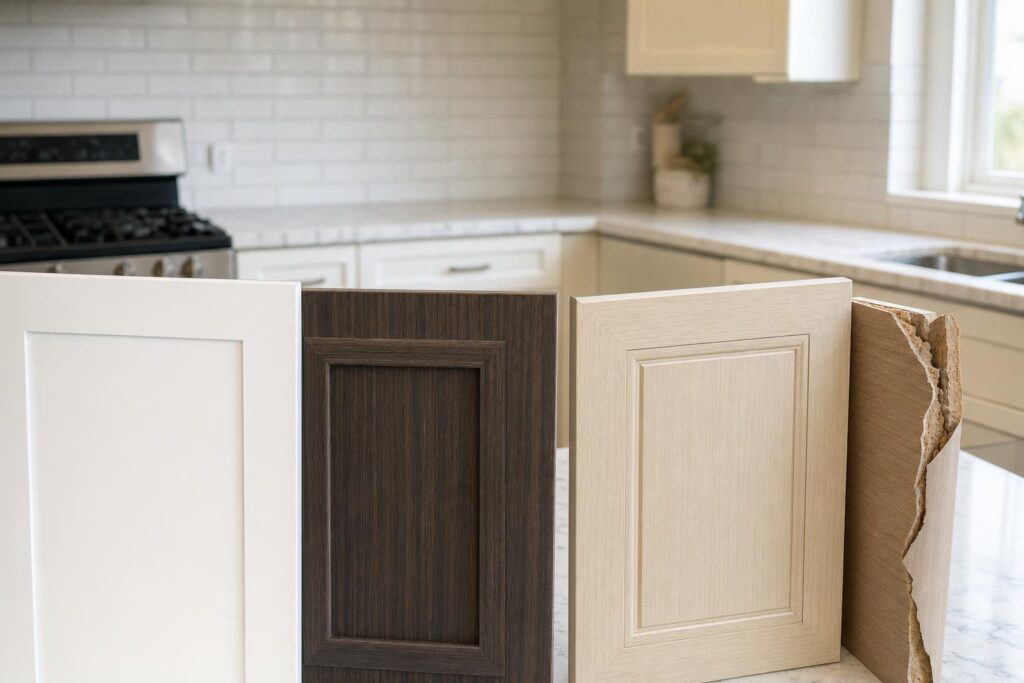
Laminate cabinet preparation should include degreasing, light scuffing, repairs, dust removal, and a bonding primer before you apply finish coats. Each step improves adhesion, appearance, and the finished surface’s service life.
A Practical Laminate Cabinet Preparation Sequence
Complete the work in order, and label every door so it returns to its original opening. Deglossing means dulling the smooth laminate surface so primer can grip it, but aggressive sanding can cut through the laminate and expose the substrate.
- Remove the cabinet doors, label each one by opening, and place them on a stable, clean work surface.
- Remove hinges, pulls, and other hardware, keeping the screws and parts organized for reinstallation.
- Degrease the doors, drawer fronts, and cabinet boxes with a suitable cleaner, then rinse or wipe away residue and let every surface dry.
- Lightly sand or degloss the laminate, repair chips or loose edges, and remove all sanding dust with a clean, lint-free cloth.
- Apply a bonding primer that the manufacturer confirms is compatible with the specific laminate, melamine, or thermofoil surface.
- Apply thin, controlled finish coats after the primer dries, allowing the manufacturer’s stated drying time between coats.
Use an acrylic-alkyd or cabinet-grade coating made for the prepared surface; not every product works on every laminate. Foam rollers can limit texture, while a sprayer can provide a smoother finish when used in a controlled, ventilated area. Follow the coating and primer instructions for application, recoat time, temperature, and ventilation.
Give doors adequate drying time before flipping or reinstalling them. Edges, drilled holes, seams, and exposed substrate need special attention because moisture can enter these areas and cause swelling. If the laminate is peeling or the substrate is damaged, refacing may offer a more consistent result; Cabinet Refacing Cost: What Affects Your Price? explains the factors that shape that option.
Careful preparation matters more than rushing the paint application when you refinish laminate cabinets.
What Are the Limits of Laminate Cabinet Refinishing?
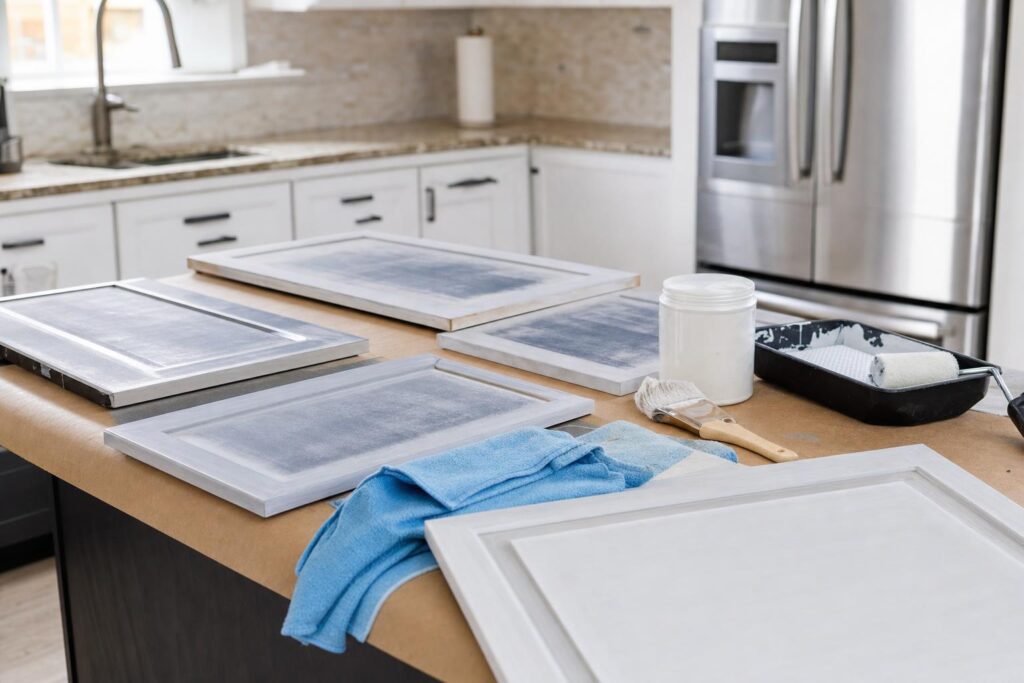
Laminate cabinet refinishing is most limited by surface condition, edge wear, door profile, coating durability, and preparation quality. Paint changes the visible color, but it does not replace damaged laminate, change your cabinet layout, or add modern door construction. A painted finish may be the right choice when the laminate is firmly attached and the doors have simple, clean profiles.
Refinishing can also show wear sooner on high-use doors, drawer fronts, and exposed edges. Poor bonding, sharp corners, grease residue, or rushed laminate cabinet preparation can lead to chipping or peeling. The final result depends on the coating system and application, not paint color alone.
Refacing covers the existing cabinet boxes with new veneer or laminate, then installs replacement doors and drawer fronts. This approach gives you new visible surfaces and more door-style options while keeping the existing cabinet layout. Full replacement removes the old cabinets and allows changes to storage, dimensions, plumbing, and electrical locations.
| Option | Typical cost level | Typical timeline and disruption | Appearance and best use |
|---|---|---|---|
| Refinishing laminate cabinets | Lower | Several days to about one week | limited demolition |
| Cabinet refacing | Mid-range | About one to two weeks | moderate disruption |
| Full cabinet replacement | Highest | Several weeks | major demolition and installation |
When Is Refacing the Better Alternative?
Refacing may be the safer option when the doors are peeling, the particleboard is swollen, the edges have repeated damage, or previous repairs do not match. These conditions can keep paint from forming a dependable finish, even after careful preparation. Inspect the cabinet boxes as well as the doors, since refacing works best when the boxes remain structurally sound.
Replacement doors, drawer fronts, updated hardware, and a new covering over the cabinet boxes create a more uniform result. You can also choose a different door style without removing the existing cabinet layout. Because refacing preserves that layout, it usually involves less demolition than a full kitchen replacement and may reduce the disruption in your home.
If you want added storage, review Custom Cabinets During Refacing: Is It Worth It? before choosing your options. The right solution depends on the laminate’s condition, your project goals, and whether the current layout still serves your kitchen.
When the cabinet boxes are sound but the doors and edges are failing, refacing can provide a more consistent result than laminate cabinet refinishing.
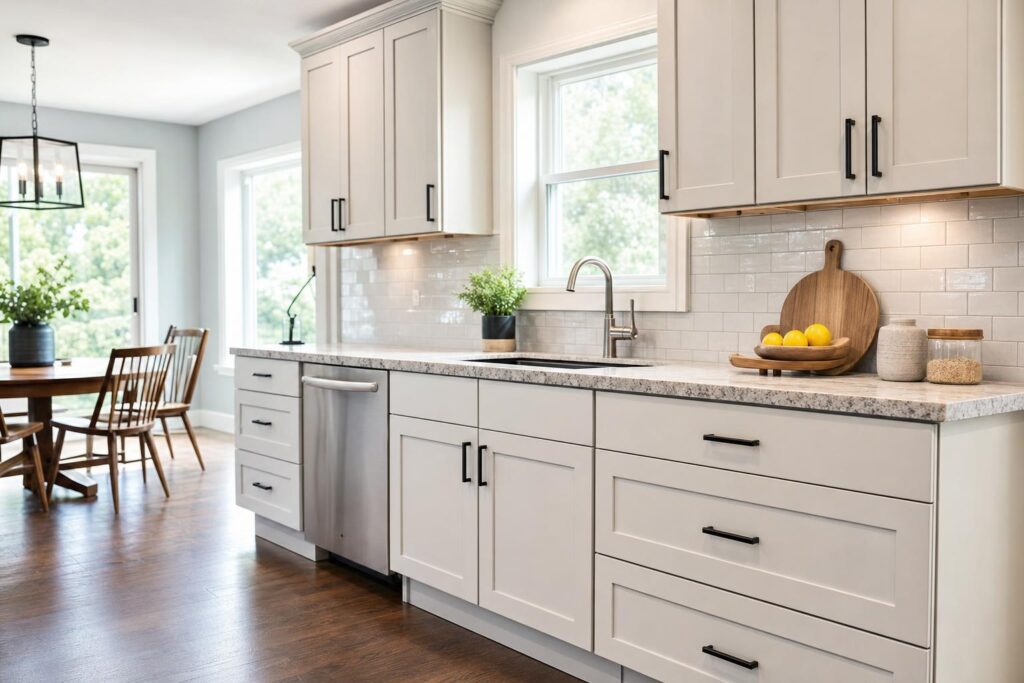
Choosing the Right Finish or Refacing Plan for Your Kitchen
The right plan depends on your cabinet-box condition, existing layout, desired finish, budget, timeline, and tolerance for disruption. If the boxes are sound and the layout works, refinishing laminate cabinets may provide a practical color-focused update. If the surfaces are unstable or you want a larger visual change, refacing or replacement may be the better long-term choice.
Your options can include professional painting, replacement cabinet doors and drawer fronts, new hardware, countertop upgrades, and custom cabinet additions. Refacing covers the existing cabinet boxes with new veneer or another finished material, then adds new doors and drawer fronts. This can modernize your kitchen without changing the existing layout, while selective upgrades can improve storage, function, or worn components.
A Simple Decision Checklist for Homeowners
Start with the cabinet boxes, layout, and parts you want to keep before choosing a finish. An in-home assessment can confirm whether refinishing melamine cabinets is suitable and whether painting is truly the least expensive option over the life of the kitchen.
- Choose professional refinishing when the cabinet boxes and laminate surfaces are stable and you mainly want a new color or sheen.
- Consider refacing when the layout works but the doors, drawer fronts, and visible finishes look outdated or worn.
- Add new hardware when the cabinet style is acceptable but the handles, knobs, or hinges no longer suit your kitchen.
- Plan countertop upgrades when the cabinets can remain but the work surface is damaged, dated, or poorly matched.
- Consider custom cabinet additions when you need more pantry space, wider storage, or a better solution for an unused area.
Full replacement may make more sense when the cabinet boxes are swollen, damaged, poorly built, or unable to support the changes you want. It also creates more disruption and may involve new layout work, plumbing changes, demolition, and a longer project schedule.
Renu Kitchen can help compare these options based on your kitchen’s condition and goals. With 26+ years of experience, custom craftsmanship, fast turnaround, free estimates, and service across New Jersey and parts of New York, the team can explain what fits your home. Learn more about the process in Cabinet Refacing New Jersey: Service Areas and Process before making a decision. The right choice gives you a more useful kitchen with a finish and project scope suited to your situation.
Frequently asked questions
Can laminate cabinets be painted without sanding?
Laminate cabinets should usually be lightly scuffed or deglossed before priming because their smooth surface can prevent paint from bonding securely. Cleaning alone may leave grease, polish, or residue behind. Use a compatible bonding primer and follow the coating manufacturer’s preparation instructions for the specific laminate.
How long does laminate cabinet refinishing last?
The lifespan of laminate cabinet refinishing depends on surface condition, preparation, coating quality, curing time, and daily use. Properly prepared doors may perform well, but edges, corners, and frequently handled areas can wear sooner. Peeling or swollen laminate should generally be repaired or replaced rather than simply painted.
Is refacing better than painting laminate cabinets?
Refacing may be better than painting when laminate is peeling, damaged, or difficult to bond to, while the cabinet boxes and layout remain usable. Refacing applies a new exterior covering and installs replacement doors and drawer fronts. Painting may suit stable surfaces when the primary goal is a color change.
How much does it cost to refinish laminate cabinets?
The cost to refinish laminate cabinets varies with kitchen size, door count, surface condition, repairs, coating system, labor, and whether doors are painted on-site or off-site. A professional estimate is more useful than a broad average because damaged laminate, hardware changes, and additional upgrades can alter the project scope.
Choosing the Right Finish or Refacing Plan for Your Kitchen
Ready to transform your kitchen? Contact us for your free estimate.