Match Cabinet Doors to Existing Cabinets: A Homeowner Guide
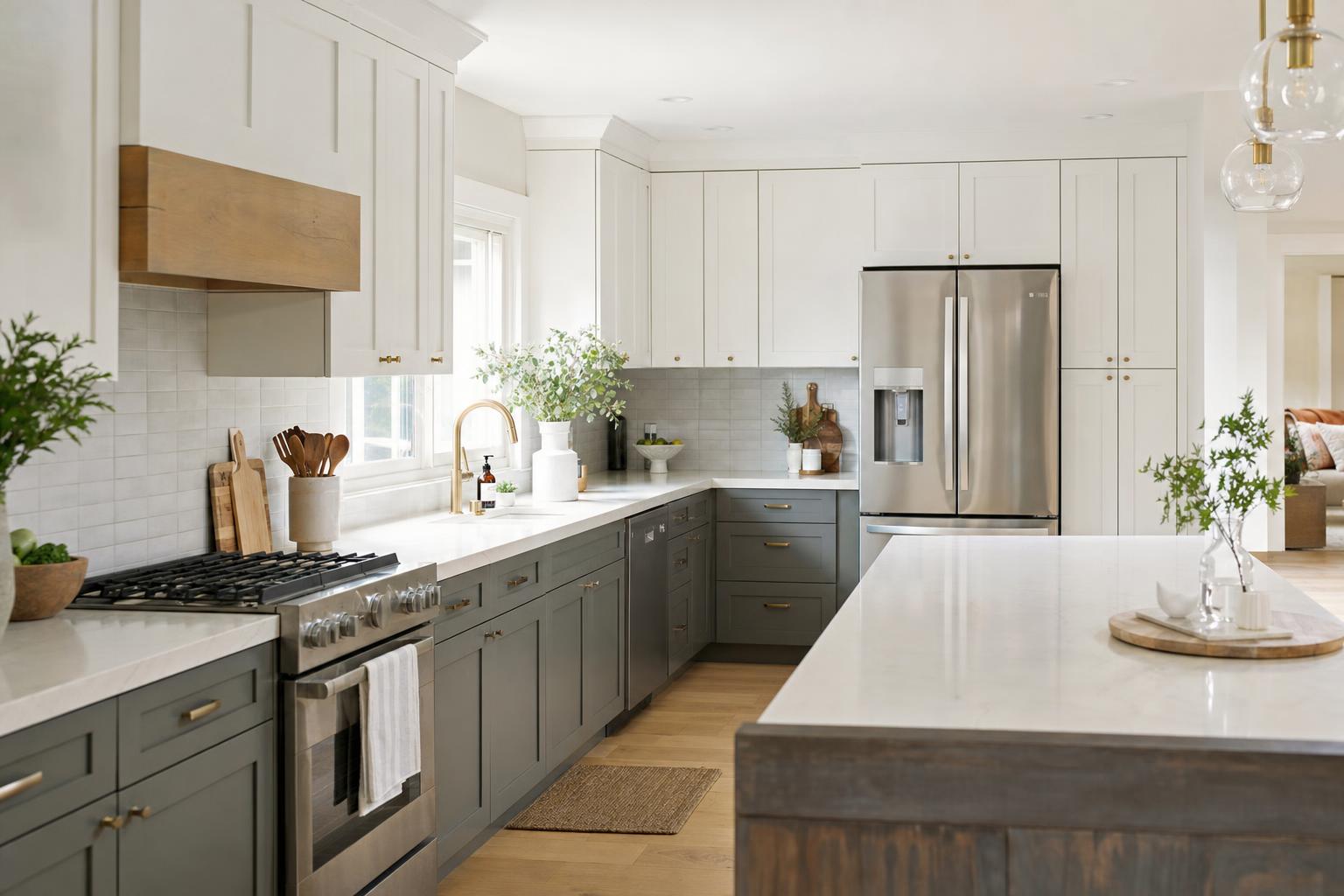
To match cabinet doors to existing cabinets, compare the door measurements, profile, material, finish, hinge placement, and overlay before ordering. Matching replacement cabinet doors is most reliable when the existing cabinet boxes are sound and a professional verifies the details for a consistent fit.
Key takeaways
- Accurate cabinet door measurements must include height, width, thickness, hinge placement, and overlay.
- A door profile describes the shape and detailing on its front, such as a flat panel, raised panel, or shaker design.
- Matching cabinet finishes involves comparing color, sheen, grain direction, and how the material has aged.
- Overlay describes how much a cabinet door covers the face frame or cabinet box around its opening.
- Custom cabinet doors may be the right choice when standard sizes, profiles, or finishes do not match the existing kitchen.
What should you measure before ordering replacement cabinet doors?
Accurate cabinet door measurements require the height, width, thickness, hinge details, overlay, opening direction, and number of doors needed, recorded for each cabinet before you order.
How do you take accurate cabinet door measurements?
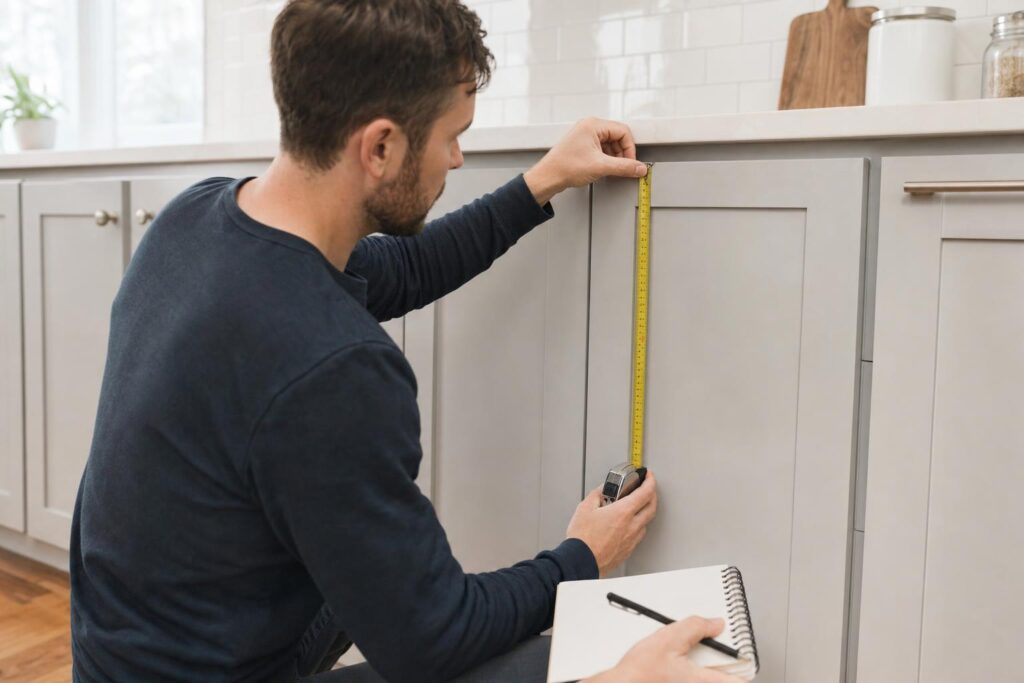
Use a steel tape measure and record each height and width to the nearest fraction of an inch. Measure the existing door from edge to edge, then note its thickness. Older kitchens may have small variations, so measure several doors instead of assuming every opening is identical.
- Label each cabinet opening with a simple number and match that number to your measurement notes.
- Record whether each door is left-hand, right-hand, or reversible where the hinge position allows either orientation.
- Note the hinge type, hinge cup locations, screw locations, and the direction each door opens.
- Record the number of doors needed, along with each drawer front’s height and width.
- Photograph the full kitchen and unusual corners, end cabinets, fillers, and trim before ordering.
Hinge cup locations are the recessed round holes in the back of many European-style doors. Their spacing and distance from the edges must match the hinges or the new doors may require different hardware. Keep your notes and photos together when reviewing custom cabinet doors.
Should you measure the door or the cabinet opening?
Replacement doors may be ordered from the existing door dimensions or from the cabinet opening dimensions, depending on the desired overlay. Overlay is the amount the door covers the cabinet frame, so guessing it can create uneven gaps, binding, or exposed cabinet frames.
Measure the opening when the existing door is missing, damaged, or not a reliable size. Measure the door when you are replacing it with the same overlay and style. For partial replacements or mixed cabinet styles, professional verification is the safest option because small differences can make matching replacement cabinet doors stand out. If drawer fronts are also part of the project, review Replace Kitchen Cabinet Drawer Fronts: A Practical Guide before recording those dimensions.
How do you match a cabinet door profile and finish?
Match a cabinet door profile and finish by comparing its construction, shape, material, color, sheen, edge treatment, and grain with an existing door under different lighting. These details determine whether matching replacement cabinet doors look consistent or noticeably different.
What does a cabinet door profile mean?
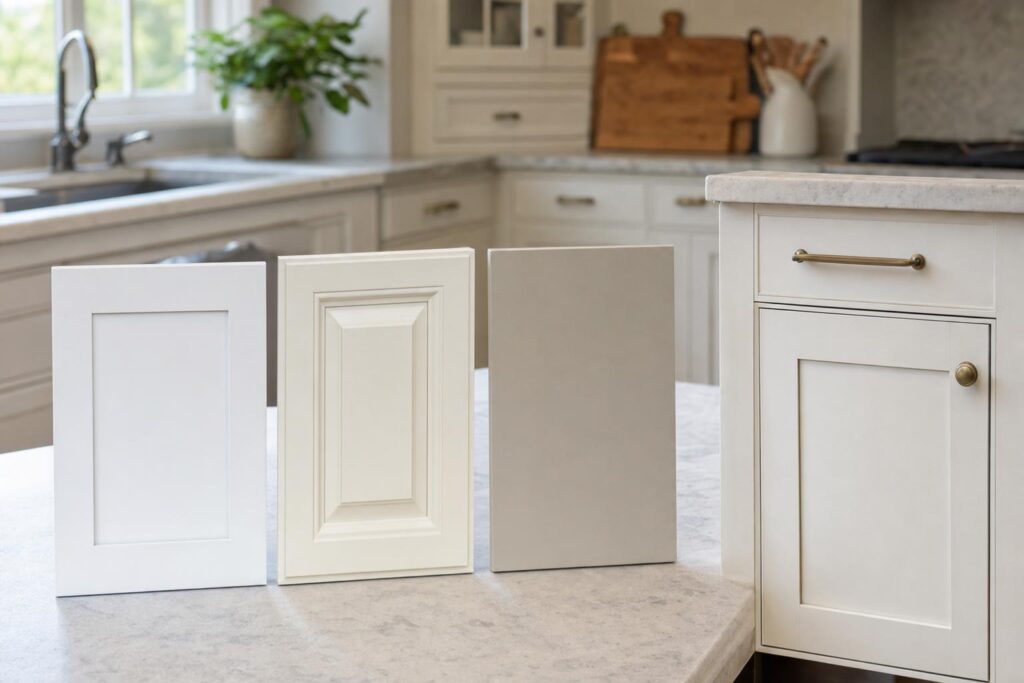
A door profile is the shape and decorative detailing visible on the door front. Shaker doors have a simple frame around a flat center panel. Raised-panel doors have a center panel that stands above the surrounding frame, while flat-panel doors have a recessed or level center panel. Slab doors are completely flat and have no frame or panel detail.
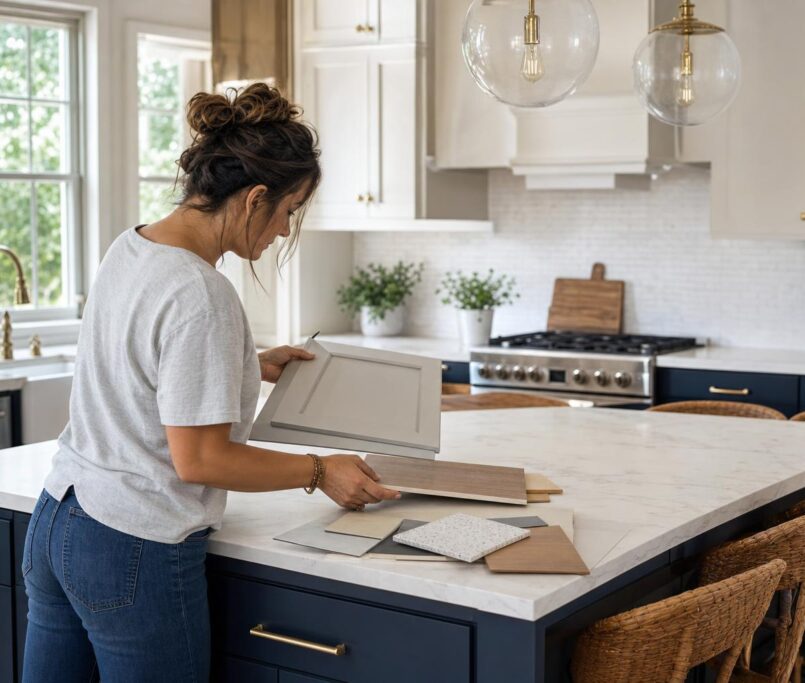
Small differences can change the appearance of an entire kitchen. Compare the rail and stile widths, which are the horizontal and vertical frame pieces, along with the center panel, bevels, routed lines, and edge details. A routed or cathedral profile may include curved or carved details that do not match a basic shaker door, even when the color is similar. Place a physical sample beside an existing door in both natural and artificial light before choosing.
- A shaker sample should match the existing frame width, center panel depth, and corner construction.
- A raised-panel sample should have a similar panel height, bevel, and surrounding frame profile.
- A flat-panel sample should match the panel position and the width of the rails and stiles.
- A slab sample should have the same edge shape and thickness as the existing door.
- A cathedral sample should follow the existing curved top profile and grain direction.
Matching cabinet finishes also requires more than choosing the same color name. Wood species and veneer have natural grain, while laminate and thermofoil provide manufactured surfaces; painted MDF has a smooth, consistent base. Compare color, sheen, edge treatment, grain direction, and natural aging. A small physical sample is more dependable than an online or printed image, since screens, paper, and lighting can shift the apparent color.
If the profile or finish is difficult to identify, Refacing Kitchen Cabinets: What Homeowners Should Know can help you compare related options. A professional can also assess whether custom cabinet doors or refacing will provide the most consistent result.
Does cabinet overlay affect whether new doors will fit?
Yes. Cabinet overlay affects whether new doors fit because it determines each door’s width, height, hinge position, and the visible gaps around the cabinet opening.
What is the difference between overlay and inset cabinet doors?
Overlay is the amount a door covers the cabinet frame or cabinet box around the opening. Full overlay doors cover nearly the entire visible frame, while partial overlay doors leave more of the frame exposed. Inset doors fit inside the opening and sit flush with the cabinet face.
| Door type | Coverage | Appearance | Fitting considerations |
|---|---|---|---|
| Full overlay | Covers nearly all of the frame, often leaving about 1/8-inch between doors | Clean, continuous look with minimal frame showing | Requires accurate door sizes, compatible hinges, and enough clearance for adjacent doors |
| Partial overlay | Covers part of the frame, commonly leaving 1/2 to 1 inch visible | Traditional look with more cabinet frame showing | Door width and hinge placement must match the existing layout |
| Inset | Fits inside the cabinet opening | Flush, furniture-style appearance with an even reveal | Requires precise opening measurements, square cabinet boxes, and inset-compatible hinges |
Face-frame cabinets have a visible wood frame around each opening, so the overlay must be measured from that frame. Frameless cabinets have a finished cabinet box with no front frame, and their doors usually use a larger overlay. In either construction, consistent reveals and gaps matter as much as the door style.
A new door may need compatible hinges, a different drilling pattern, or hinge adjustments to sit correctly. Existing hinges can limit your options, especially when changing from partial overlay to full overlay or inset doors. Small differences can cause rubbing, uneven gaps, or doors that do not close properly.
If the cabinet boxes are sound but the doors no longer suit your kitchen, refacing may offer a practical path. The process can include custom cabinet doors, new drawer fronts, matching cabinet finishes, and hardware while keeping the existing layout. For a broader comparison of project choices, see Cabinet Refacing vs Replacing: Which Is Right for You?. A professional can verify the overlay and hinge details before you order matching replacement cabinet doors.
When should you choose custom cabinet doors or professional fitting?
Choose custom cabinet doors or professional fitting when your openings, profiles, materials, or hardware do not match standard options; choose refacing when the cabinet boxes are sound but the entire visible system looks dated. An acceptable existing layout is also important because new doors will not correct poor cabinet placement or limited storage.
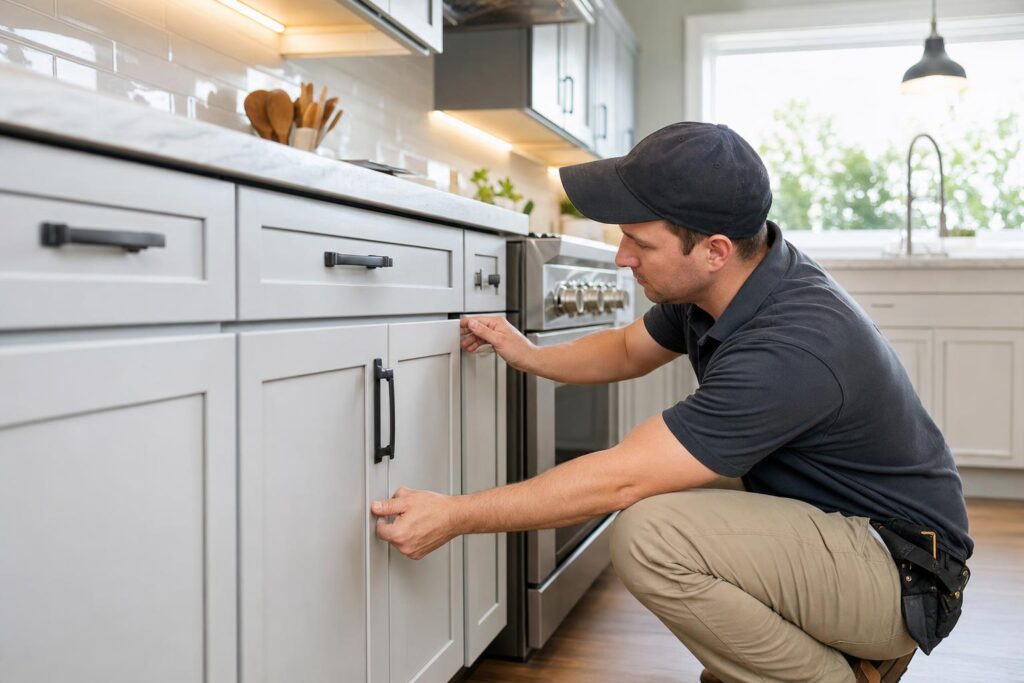
Custom cabinet doors may be needed for odd-width openings, angled cabinets, nonstandard profiles, or discontinued materials. A professional can verify each opening, door thickness, hinge location, overlay, and clearance before production. This reduces alignment problems and helps new doors operate correctly beside the existing ones.
A fitting review should also include finish consistency and drawer front coordination. Professionals compare the door color and sheen in your kitchen’s actual lighting, then check whether drawer fronts, end panels, and exposed cabinet sides need replacement. Matching only the doors can leave the finished kitchen looking uneven.
Can you replace only some cabinet doors?
Yes, you can replace selected cabinet doors when the new profile, finish, overlay, and dimensions closely match the existing doors. This approach may suit a kitchen with one damaged door or a small number of outdated fronts. It is less reliable when the existing finish has faded, the material is discontinued, or wear varies across the kitchen.
- Selective replacement works best when the existing cabinet boxes remain square, stable, and in good condition.
- New doors should match the existing profile, finish, thickness, overlay, and hinge placement.
- Drawer fronts should be reviewed so drawers do not look older than the replacement doors.
- End panels and exposed side panels may need updates for a consistent visible finish.
- Full refacing may provide a more uniform result when aging or wear appears throughout the kitchen.
Refacing replaces the doors, drawer fronts, and visible cabinet surfaces while keeping the existing cabinet boxes and layout. It may be the better choice when you want a coordinated finish instead of a pieced-together look. Related upgrades can include new hardware, a countertop replacement, or custom cabinet additions for storage gaps.
For planning ideas, review Custom Cabinets During Refacing: Is It Worth It?. The right choice depends on the condition of your cabinets, the consistency you want, and whether your current layout still works. ReNU Kitchen can verify the details and help you compare options through a free estimate.
Frequently asked questions
Can you match new cabinet doors to old cabinets?
Yes, new cabinet doors can often match old cabinets when the cabinet boxes are sound and the profile, measurements, overlay, material, and finish are identified accurately. A professional can compare samples, verify hinge locations, and determine whether selective replacement or broader refacing will produce the most consistent result.
How do I know what size replacement cabinet doors to order?
Measure each existing door’s height, width, and thickness, then record hinge placement, opening direction, and overlay. Do not assume every door is identical. If ordering from cabinet opening dimensions, the required door size depends on the overlay and cabinet construction, so professional verification helps prevent fit problems.
What if my cabinet finish is discontinued?
If an original finish is discontinued, an exact match may not be possible because materials age and colors change. You can compare new samples, choose a coordinated finish for all visible doors, or reface the cabinet fronts together. Matching sheen, edge details, and grain direction can make the result look intentional.
Are custom cabinet doors worth the cost?
Custom cabinet doors may be worth the cost when your openings, profile, overlay, or finish are nonstandard. They can provide a more accurate fit than forcing standard sizes into an older kitchen. The right choice depends on the condition of the cabinet boxes, your layout, project goals, and desired level of consistency.
When should you choose custom cabinet doors or professional fitting?
Ready to transform your kitchen? Contact ReNU Kitchen for your free estimate.