
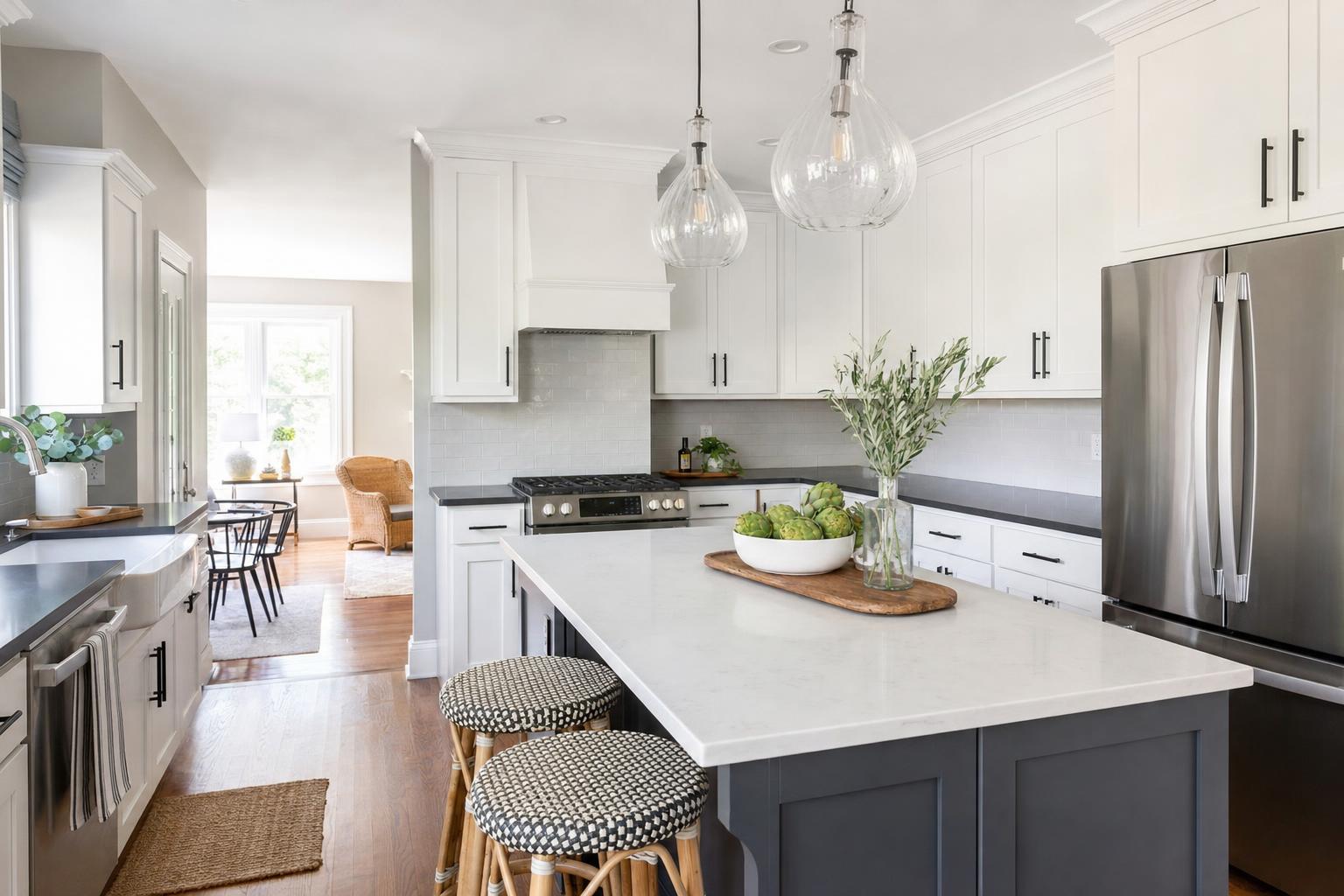
Cabinet Refacing New Jersey: Service Areas and Process
Cabinet refacing New Jersey homeowners choose updates the visible surfaces of sound existing cabinets while keeping the cabinet boxes, meaning the structural frames fixed to the wall. Renu Kitchen evaluates your kitchen’s condition, discusses finish and door options, and completes installation with less layout disruption than a full cabinet replacement.
Key takeaways
- Cabinet refacing keeps structurally sound cabinet boxes and replaces the visible doors, drawer fronts, and exterior finish materials.
- A cabinet refacing consultation should confirm that cabinet boxes are level, secure, dry, and suitable for reuse before materials are selected.
- New door styles, drawer fronts, hardware, and finishes can change a kitchen’s appearance without moving the existing layout.
- Project timing depends on material selection, cabinet condition, kitchen size, and any related countertop, backsplash, or appliance work.
- A local cabinet refacing company should clearly explain service availability, material options, installation steps, and the condition requirements for refacing.
Where Is New Jersey Cabinet Refacing Available?
New Jersey cabinet refacing availability is confirmed by your location, project scope, and a review of your existing cabinets. Service coverage should be based on your town, home access, kitchen size, and installation scheduling, not an unsupported statewide claim. Renu Kitchen reviews these details to determine whether the cabinet refacing New Jersey homeowners request is the right choice for their kitchen.
What homeowners should share before a consultation
Share your town, preferred project timing, and any access details that could affect measuring or installation. Include the approximate cabinet count, the number of doors and drawer fronts, and whether your kitchen includes an island, pantry, or connected area. Photos should show full cabinet runs, corners, islands, appliance openings, and any visible damage.
- Provide clear photos taken from several angles so the cabinet layout and access points are easy to understand.
- Estimate the number of wall cabinets, base cabinets, doors, and drawer fronts in the existing kitchen.
- Describe any desired layout changes, such as moving a cabinet, adding storage, or changing an appliance opening.
- Note your preferred finish, door style, color, and hardware direction before discussing new jersey cabinet refacing options.
- Mention related countertop, backsplash, flooring, plumbing, or electrical plans that may affect scheduling.
These details help establish whether cabinet refacing services are available for your project and support a more accurate conversation about options, timing, and preparation. They also help identify whether the work involves only visible updates or needs a broader kitchen plan.
When existing cabinets may be suitable
Refacing usually starts with sound, securely mounted, and reasonably level cabinet boxes. Cabinet boxes are the structural frames attached to the wall, floor, or each other; they remain in place while installers update doors, drawer fronts, and exposed surfaces.
Water damage, loose construction, or structural failure may make refacing impractical. A major layout change may also point you toward cabinet replacement or another option. Renu Kitchen can review the existing condition and project goals before you schedule installation, so the final choice fits your kitchen rather than a general service-area assumption.

What Does the Cabinet Refacing New Jersey Process Include?
The cabinet refacing New Jersey process includes a kitchen assessment, design selections, site preparation, installation of new visible components, and a final walkthrough.
Refacing means retaining your existing cabinet boxes while installing new doors and drawer fronts and covering exposed cabinet surfaces with a coordinated finish. Drawer fronts are the removable panels on the front of cabinet drawers. Hardware means the handles, pulls, hinges, and related operating components used with your cabinets. Renu Kitchen guides you through selections, measurements, and installation planning.
- During the consultation, Renu Kitchen measures the cabinet openings, reviews your goals, and discusses the existing layout.
- A condition review confirms that the cabinet boxes, shelves, and supporting areas are sound enough for refacing; damaged or unsuitable components may require related work.
- You choose door styles, drawer fronts, finishes, and hardware before materials are ordered.
- Renu Kitchen orders the selected doors, drawer fronts, surface materials, and accessories, with timing based on product availability.
- On-site preparation protects nearby areas, removes selected doors and hardware, and prepares exposed cabinet surfaces before installation of the new components.
- The team installs and adjusts the doors, drawer fronts, finish materials, and hardware, then completes a final review with you to check alignment, operation, and the finished appearance.
Materials and finish selections
Your material choices affect the kitchen’s appearance, care needs, and project cost. Options may include wood or engineered door materials, painted finishes, stained finishes, and laminate surface materials. Laminate is a durable decorative surface layer bonded to a cabinet component, creating a consistent covering for selected doors or cabinet surfaces.
Painted finishes provide a clean, solid color, while stained finishes show more of the material’s natural grain. Decorative hardware, including knobs, pulls, and hinges, can complete the update or change how the cabinets operate. Renu Kitchen helps match these options to your existing counters, flooring, and layout. Timelines vary with kitchen size, selected materials, and related work, so ask for project guidance and a quote based on your home.

Which Kitchen Cabinet Updates NJ Options Fit Your Existing Cabinets?
Kitchen cabinet updates NJ homeowners choose should match cabinet condition and layout goals: refacing changes visible components, refinishing renews existing surfaces, and replacement changes the cabinet system.
Refacing replaces doors, drawer fronts, and exterior coverings while keeping sound cabinet boxes in their current positions. It is generally the right choice when you want a new style or finish without relocating the kitchen layout. Refinishing costs less in some cases, but it keeps the existing door design.
| Comparison point | Cabinet refacing | Refinishing | Cabinet replacement |
|---|---|---|---|
| Existing cabinet boxes | Sound boxes remain | Sound boxes and doors remain | Boxes may be removed and rebuilt |
| Layout changes | Little or none | None | Major or minor changes possible |
| Doors and drawer fronts | Replaced | Existing surfaces renewed | Replaced with new system |
| Typical disruption | Usually several days | Often several days | Commonly one to several weeks |
| Best-fit project goal | Update style and finish | Refresh usable cabinets | Change layout, storage, or structure |
| Another option may be needed | Damaged boxes need evaluation | Worn doors or a new style may require refacing | Sound boxes may make full replacement unnecessary |
Cabinet refacing versus refinishing
Refinishing means cleaning, repairing, sanding or preparing, and applying a new coating to the existing cabinet surfaces. The doors, drawer fronts, and cabinet exteriors stay in place, so this option works when their shape and condition still suit your kitchen. Refacing replaces those visible parts and adds new coverings to the cabinet boxes.
Door condition and style goals often decide between these options. If your doors are solid but the finish is faded, refinishing may be enough. If you want shaker doors, a different profile, or a more durable factory-style finish, refacing provides broader options. For additional guidance, read Cabinet Refacing vs. Replacing Cabinets: What New Jersey Homeowners Should Know.
When cabinet replacement may be necessary
Cabinet replacement may be necessary when boxes have major structural damage, swelling, or ongoing moisture problems. It may also fit kitchens with inaccessible storage, unsafe construction, or a major layout change that requires moving appliances, walls, or plumbing.
Refacing is not the right choice for every kitchen. A local cabinet refacing company should inspect the existing boxes before recommending an option. Your project goals, cabinet condition, and acceptable disruption will determine whether refacing, refinishing, or replacement offers the better path.

How Do You Choose a Local Cabinet Refacing Company?
Choose a local cabinet refacing company that inspects your existing cabinets, explains suitable options, documents the scope, and provides clear guidance on materials, scheduling, and installation. This helps you compare the right choice for your kitchen rather than comparing finishes alone.
During the estimate, discuss the condition of the cabinet boxes, door style, finish, hardware, and access to the work area. Ask how long the project may take, whether countertop work is included, and what the final walkthrough will cover. A clear plan should identify repairs, replacement parts, installation steps, and cleanup.
- Ask which cabinet surfaces, drawer fronts, doors, panels, and hardware are included in the written scope.
- Request physical material samples so you can review color, texture, and finish in your kitchen’s lighting.
- Confirm how cabinet-box repairs will be handled if the existing frames need adjustment or reinforcement.
- Ask about the expected schedule, daily access needs, and how changes could affect the completion date.
- Confirm how floors, walls, countertops, and nearby appliances will be protected during installation.
- Ask whether the company’s own installers will complete the work and who will answer questions on site.
You should also ask how the crew will handle outlets, plumbing areas, appliances, and narrow access points. These details affect preparation and help prevent surprises when cabinet doors and drawer fronts are removed.
Renu Kitchen provides guidance based on your existing cabinets, design goals, and practical project constraints. The right plan may include refacing, new doors and drawer fronts, hardware, countertop upgrades, or custom cabinet additions. A free estimate gives you a clearer basis for comparing options.
What is cabinet refacing? Cabinet refacing replaces the visible cabinet surfaces while keeping sound cabinet boxes in place. It can update doors, drawer fronts, and exposed frame surfaces without changing the existing kitchen layout.
How long does cabinet refacing take? Many projects take several days to a few weeks, depending on kitchen size, materials, repairs, and related work. Ask for a project-specific schedule before installation begins.
Can damaged cabinets be refaced? Minor damage may be repairable, but severely warped, water-damaged, or unstable cabinet boxes may need replacement. An in-home inspection helps determine whether refacing is suitable.
Does cabinet refacing include new hardware? Hardware may be replaced as part of the project, depending on your selected scope. Confirm handle styles, placement, and installation details when reviewing your estimate.
Frequently asked questions
How long does cabinet refacing take in New Jersey?
Cabinet refacing timing depends on the kitchen size, material availability, cabinet condition, and any related countertop or backsplash work. After the consultation and material selections are complete, the installer can provide a project schedule that separates ordering time from the on-site installation period.
Can damaged cabinets be refaced?
Cabinets can be refaced when the cabinet boxes remain structurally sound, securely attached, and free from significant moisture damage. Minor adjustments may be possible, but swollen particleboard, severe water damage, failing joints, or unsafe mounting conditions should be assessed before a refacing scope is approved.
Does cabinet refacing change the kitchen layout?
Cabinet refacing typically keeps the existing kitchen layout because it reuses the cabinet boxes already installed in the room. Homeowners can update doors, drawer fronts, finishes, and hardware, but moving walls, appliances, plumbing, or cabinet locations usually requires a broader remodeling or replacement project.
What should I ask during a cabinet refacing consultation?
Ask whether your existing cabinet boxes are suitable, which door and finish materials fit your goals, what the written scope includes, and how installation will affect kitchen access. You should also ask about project scheduling, surface protection, hardware choices, and coordination with countertops or backsplashes.
How Do You Choose a Local Cabinet Refacing Company?
Request guidance from Renu Kitchen to review your existing cabinets, local project needs, and the refacing options that may be the right choice.