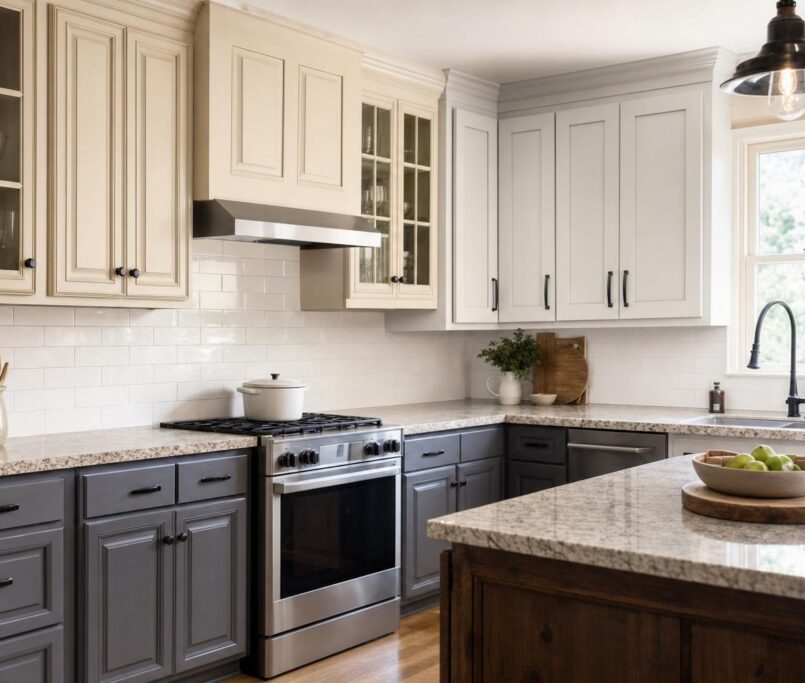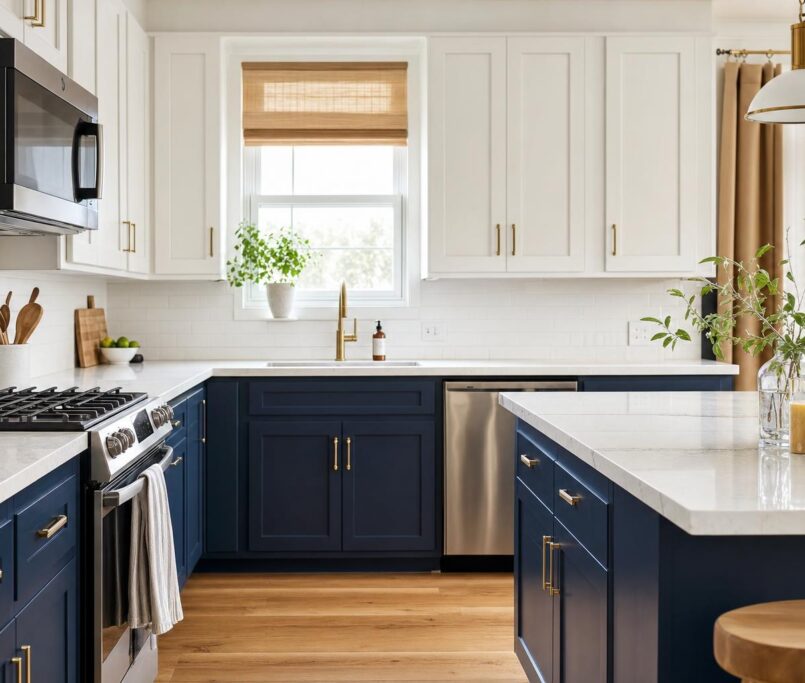

Replace Kitchen Cabinet Drawer Fronts: A Practical Guide
To replace kitchen cabinet drawer fronts, measure each existing drawer carefully, choose compatible replacement drawer fronts, and secure them to the usable drawer boxes. This focused update can refresh your kitchen without changing the cabinet layout, although damaged boxes or a desired layout change may call for broader refacing or remodeling.
Key takeaways
- Replacing drawer fronts updates the visible face of a drawer while preserving a usable existing drawer box.
- Accurate measurements are essential because drawer fronts vary in width, height, thickness, and mounting style.
- Wood, medium-density fiberboard, laminate, and thermofoil are common materials for replacement drawer fronts.
- Matching door style, finish, color, and hardware helps new drawer fronts look intentional beside existing cabinets.
What Does It Mean to Replace Kitchen Cabinet Drawer Fronts?
Replacing kitchen cabinet drawer fronts means removing the visible panels from your drawer boxes and installing new panels while keeping the usable boxes, cabinet boxes, and kitchen layout. The drawer front is the finished panel attached to the front of a drawer box, while the drawer box is the storage compartment that slides into the cabinet. Replacement drawer fronts make sense when the boxes remain square, sturdy, and free from major water or structural damage. This focused update changes the appearance without requiring a full cabinet replacement.
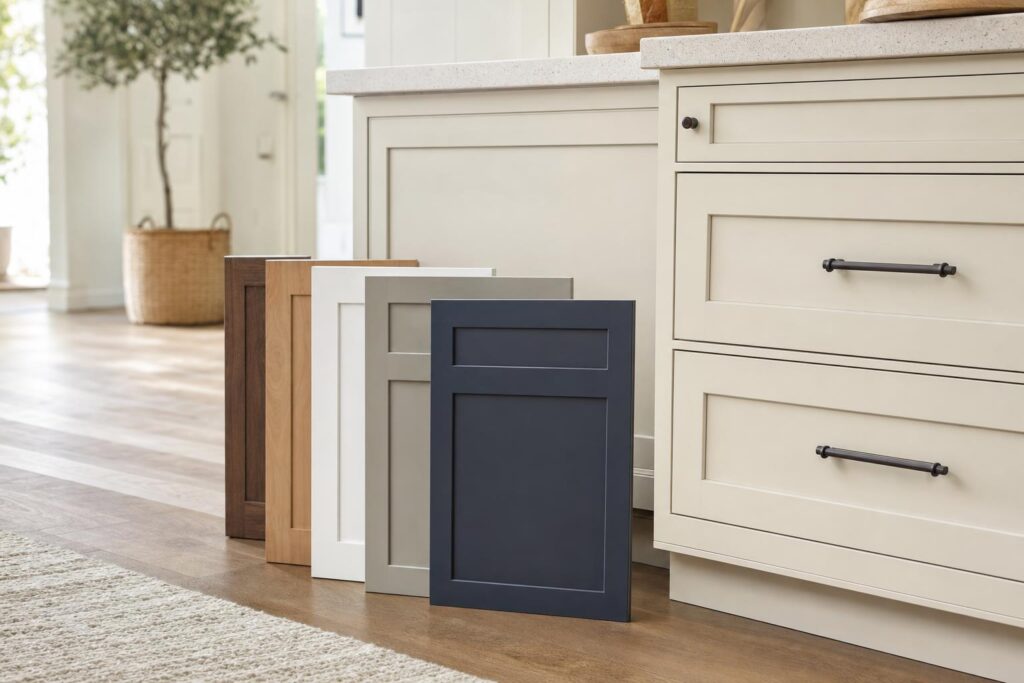
Common front designs include slab, Shaker, raised-panel, and flat-panel styles. Materials may include solid wood, medium-density fiberboard, laminate, or thermofoil. Each option affects the look, maintenance needs, durability, and available colors or finishes. Refinishing is different because it changes the surface treatment on existing components. Refacing commonly updates the cabinet doors, drawer fronts, and exposed cabinet surfaces with new materials. For broader project guidance, read Refacing Kitchen Cabinets: What Homeowners Should Know.
Which Drawer Front Styles and Materials Are Available?
You can choose a drawer front style and material that coordinates with your cabinet doors, countertops, flooring, and backsplash. Solid wood offers natural grain and can be stained or painted, but it needs consistent care and may expand or contract with humidity. Engineered wood provides a smooth, stable surface with many paint options. Laminate offers easy cleaning and consistent color, while thermofoil uses a sealed coating for a smooth, low-maintenance finish. Custom drawer fronts help when your existing dimensions, edge profiles, or finishes are not standard.
- Slab fronts create a simple, flat appearance that suits modern kitchens.
- Shaker fronts use a recessed center panel and suit transitional or traditional designs.
- Raised-panel fronts add a more detailed profile and visual depth.
- Flat-panel fronts provide a clean face with less decoration than raised panels.
- Custom fronts can match unusual drawer sizes, cabinet doors, or existing finishes.
How Do You Measure for New Drawer Fronts?
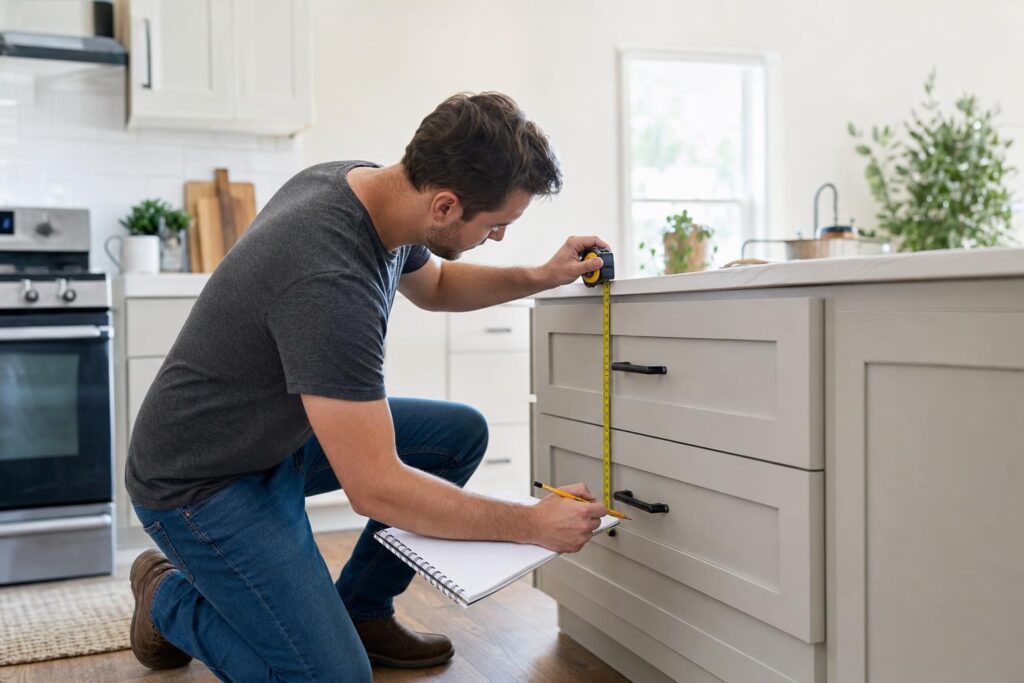
Measure every drawer front individually, recording its width, height, thickness, edge profile, and the space between neighboring fronts before ordering new drawer fronts. Overlay type, drawer construction, and hardware placement all affect the final fit.
Overlay describes how far the drawer front covers the cabinet frame. Partial overlay leaves some frame visible, full overlay covers nearly the entire frame, and inset installation places the front inside the frame opening. Remove one existing front to inspect its screws, mounting clips, drawer box condition, and how the front connects to the box. A consistent visual layout does not guarantee identical measurements, especially in older kitchens or cabinets built in separate sections.
What Measurements Should You Record?
Record width, height, thickness, edge profile, center-to-center hardware spacing, screw locations, and the clearances needed around each front. Label every measurement by cabinet location, such as “left base cabinet, top drawer.” Check opposite or adjacent fronts before ordering, but do not assume they match. A professional may verify measurements when fronts are custom-sized or your kitchen has unusual spacing.
- Measure the visible front from edge to edge, using a tape measure accurate to 1/16 inch.
- Measure the drawer front thickness and note whether the edges are square, eased, or shaped.
- Mark handle holes by measuring center to center, then record their distance from each edge.
- Inspect the drawer box and note screw locations, clips, and any damaged or loose parts.
- Measure the gap between neighboring fronts and confirm the required clearance for opening doors and drawers.
| Measurement | Partial overlay | Full overlay | Inset |
|---|---|---|---|
| Typical frame exposure | About 1/2 to 1 inch remains visible | About 1/4 inch or less remains visible | Front sits inside the opening |
| Clearance target | Usually 1/8 inch between fronts | Usually 1/8 inch between fronts | Often 1/8 inch on each side |
| Main fit concern | Matching existing overlay | Avoiding frame or adjacent-front interference | Exact opening size and square corners |
Accurate measurements also help you compare focused drawer front replacement with broader work. For related planning factors, read Cabinet Refacing Cost: What Affects Your Price?. The right measurement process helps ensure replacement fronts align cleanly with your existing cabinet layout.
How Are Replacement Drawer Fronts Matched and Installed?
Replacement drawer fronts are matched by dimensions, door style, finish, edge detail, overlay, and hardware placement before installation. Matching should include your cabinet doors, end panels, crown molding, countertops, backsplash, and appliances, not the drawer fronts alone. These surrounding features help new drawer fronts look intentional.
Installation usually starts by removing the old fronts and confirming that each drawer box is usable. The installer positions the new front, checks the reveals, attaches it to the drawer box, reinstalls the hardware, and adjusts the slides or mounting points for even alignment. Uneven cabinet frames, worn slides, stripped screw holes, or warped drawer boxes can affect the final result.
Can You Install Custom Drawer Fronts Yourself?
A careful homeowner may install straightforward custom drawer fronts, but accurate positioning and secure attachment are necessary for smooth operation. Useful tools include a drill, screwdriver, measuring tape, level, clamps, and a template for repeatable hardware placement.
DIY installation becomes more difficult when the project includes multiple sizes, specialty hinges or clips, damaged drawer boxes, or existing alignment problems. Professional installation may be the right choice when you want every front to line up consistently across the kitchen. For broader cabinet updates, see Cabinet Refacing New Jersey: Service Areas and Process.
The best approach depends on the condition of your existing cabinets and your comfort with precise work. Properly matched replacement drawer fronts can provide a clean update while keeping your current layout and minimizing disruption.
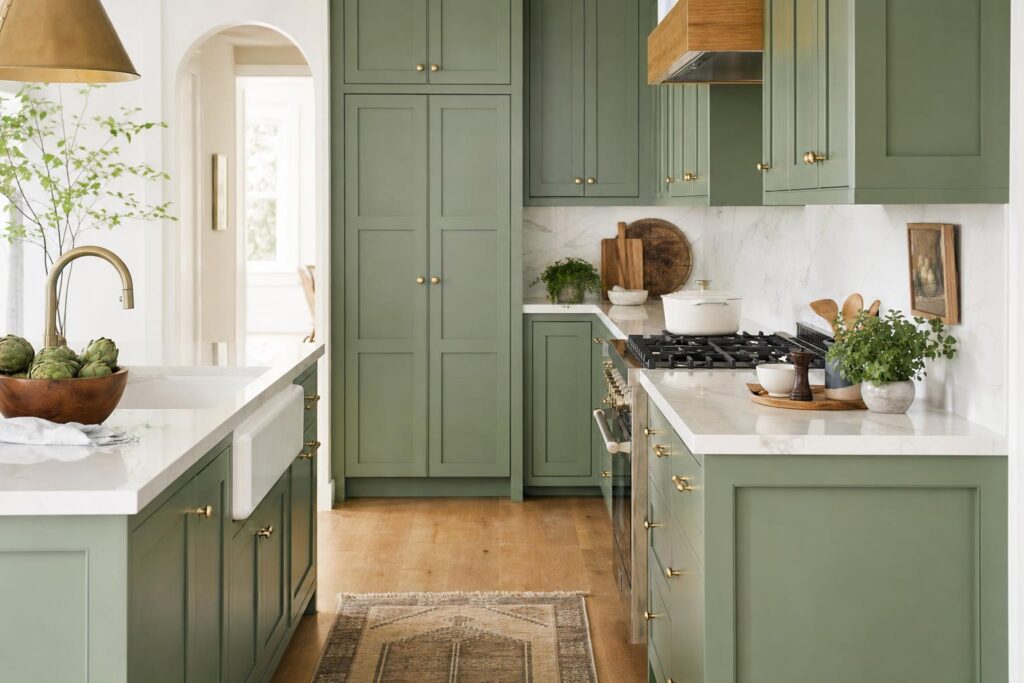
Is Drawer Front Replacement the Right Choice for Your Kitchen?
Drawer front replacement is the right choice when your existing drawer boxes and cabinet layout work well, but the visible fronts look worn or outdated. It updates the kitchen with less cost, time, and disruption than a larger remodeling project.
When Should You Consider More Than Drawer Front Replacement?
Consider more than drawer front replacement when water damage, weak cabinet construction, broken drawer boxes, or failing slides affect the usable parts of the cabinets. Refacing may be better when the doors, exposed cabinet surfaces, and drawer fronts all need a coordinated update. It usually covers more visible surfaces while preserving the existing layout, with more customization and disruption than replacing fronts alone. Cabinet replacement may be appropriate when you need more storage, a different layout, or changes to plumbing, electrical work, or cabinet boxes. Replacement has the broadest scope and may take longer and cost more. For background on the larger option, read Refacing Kitchen Cabinets: What Homeowners Should Know. The right choice depends on your kitchen’s condition and your project goals.
How Can Renu Kitchen Help With Drawer Front Replacement?
Renu Kitchen can assess your existing cabinet boxes, discuss styles and finishes, verify measurements, and coordinate related upgrades. Your project may combine new drawer fronts with cabinet doors, hardware, countertops, or custom cabinet additions when those changes better suit your kitchen. With more than 26 years of experience, the team provides custom craftsmanship, free estimates, and service across New Jersey and parts of New York. This guidance helps you compare practical options and refresh your kitchen while preserving a workable layout.
Frequently asked questions
Can I replace just the drawer fronts on my kitchen cabinets?
Yes, you can replace only the drawer fronts when the existing drawer boxes, slides, and cabinet layout remain usable. The new fronts attach to the existing drawer boxes after careful measurement. If the boxes are damaged, warped, or poorly constructed, repairing or replacing those components may provide a better long-term result.
How do I know what size replacement drawer fronts to buy?
Measure every existing drawer front for width, height, thickness, overlay, and hardware placement rather than assuming all fronts match. Check clearances between neighboring fronts and inspect how each front attaches to its drawer box. A professional measurement can reduce fitting and alignment problems, especially with custom-sized cabinets.
Is replacing drawer fronts cheaper than refacing kitchen cabinets?
Replacing drawer fronts is generally a smaller project than full cabinet refacing because it updates fewer visible components. The price still depends on the number of drawers, material, finish, hardware, measurements, and installation. Refacing may offer better coordination when cabinet doors and exposed cabinet surfaces also look worn.
When should I replace the entire kitchen instead of drawer fronts?
Consider a larger kitchen replacement when the cabinet boxes are damaged, storage is inadequate, or you need to change the layout, plumbing, electrical work, or appliance locations. Drawer front replacement is better suited to kitchens with a workable existing layout and sound cabinet and drawer components that need a visual update.
What Is the Best Next Step for Your Drawer Front Project?
Ready to transform your kitchen? Contact us for your free estimate.