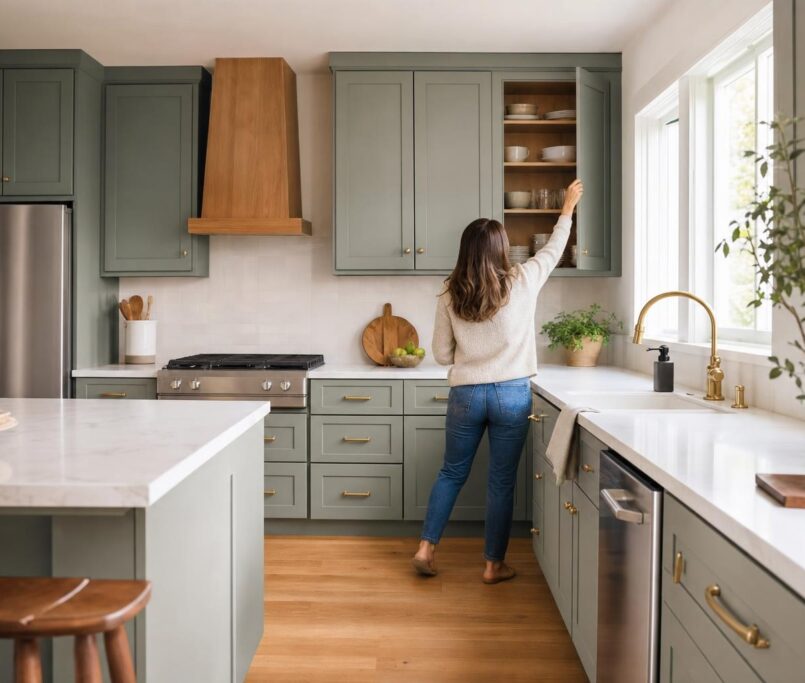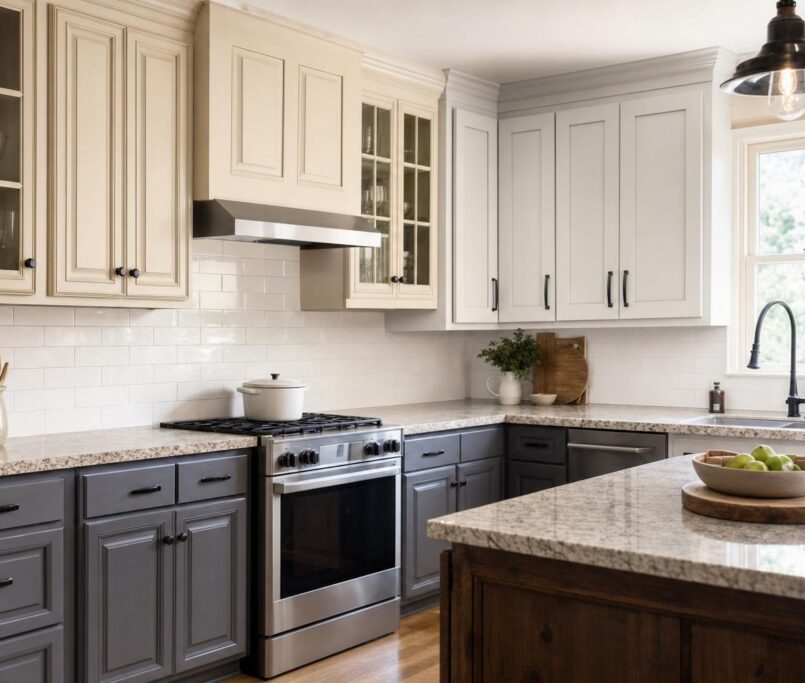

Cabinet Refacing vs Painting: Which Is Better for You?
Cabinet refacing vs painting depends on your cabinet condition, desired appearance, budget, and tolerance for disruption. Refacing usually provides a more durable, complete transformation, while painting may be the right choice when your existing cabinet doors and boxes are sound and you want a lower-cost finish update.
Key takeaways
- Cabinet refacing replaces visible doors, drawer fronts, and exterior coverings while keeping the existing cabinet boxes and layout.
- Painting cabinets changes the color and finish of existing surfaces but does not replace worn doors, drawer fronts, or damaged cabinet structures.
- Refacing generally offers more material, style, and hardware options than painting existing cabinets.
- Painting usually involves extensive cleaning, sanding, priming, and curing time to create a durable finish.
- The right cabinet update depends on cabinet condition, project goals, cost factors, and how much kitchen disruption you can accept.
Cabinet Refacing vs Painting: What Is the Difference?
Cabinet refacing replaces visible cabinet surfaces, while painting cleans, repairs, and coats the existing surfaces with new color. Both cabinet update options can preserve your current layout and avoid the cost and disruption of a full kitchen replacement. The right choice depends on cabinet condition, appearance goals, durability, budget, and how much work you want in your home.
What Does Cabinet Refacing Include?
Cabinet refacing covers the fixed structural compartments that hold your shelves, hinges, and hardware, commonly called cabinet boxes. A refacing project applies new wood veneer or laminate to those boxes, then installs replacement doors and drawer fronts for a coordinated finish. Exposed end panels and toe kicks are also covered or replaced so the visible surfaces match.
You can also update knobs, pulls, hinges, and other hardware during refacing. This approach works well when the cabinet boxes are sturdy, the layout is workable, and you want a more complete change in style or finish. ReNU Kitchen refaces existing cabinets while preserving your workable layout, which can reduce demolition and keep the project focused. For additional planning guidance, read Refacing Kitchen Cabinets: What Homeowners Should Know.
- Refacing can replace outdated doors and drawer fronts without removing sound cabinet boxes.
- New veneer or laminate gives the cabinet boxes a consistent exterior finish.
- Replacement doors can use styles such as shaker, slab, raised panel, or glass-front designs.
- New hardware can complete the update without changing the kitchen’s existing footprint.
- Refacing may be the right choice when your cabinets need a broad visual change and added surface durability.
What Does Painting Cabinets Involve?
Painting cabinets involves degreasing, sanding, repairing, priming, and applying paint to the existing doors, drawer fronts, and cabinet boxes. The finish may be sprayed or brushed, then allowed to cure before normal use. Careful preparation matters because grease, rough edges, and old damage can show through the new coating.
Painting changes color, but it cannot correct every warped door, damaged edge, or weak cabinet box. Painted versus refaced cabinets can both look modern when preparation, materials, and application methods fit the existing kitchen. Painting may suit homeowners who want a lower-cost color change and have sound surfaces, while refacing offers more options when visible components are worn or outdated.
Which Option Looks Better in Your Kitchen?
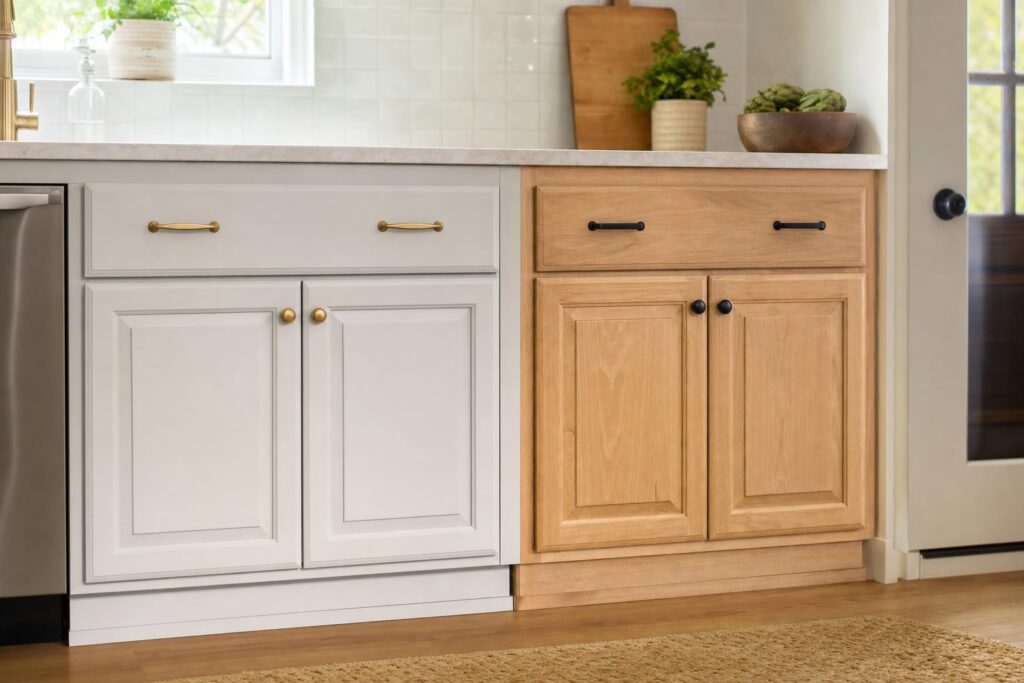
Refacing offers the broader visual transformation, while painting gives your kitchen a color-focused update without changing the cabinet door style. Refacing replaces the visible doors, drawer fronts, and finish on your existing cabinet boxes, so it can make an older layout look newly built.
Painting works well when your doors and boxes have a style you still like. You can choose a new color and sheen, such as satin or semi-gloss, but the original wood grain, profiles, edge details, and exposed cabinet sides remain. Refacing gives you more material choices, including wood veneer, laminate, and thermofoil, along with painted finishes.
| Comparison | Painted cabinets | Refaced cabinets |
|---|---|---|
| Appearance | New color over existing doors and boxes | original profiles remain |
| Materials | Existing wood, MDF, or laminate surfaces with a compatible paint system | Wood veneer, laminate, thermofoil, or factory-finished painted components |
| Style flexibility | Limited to the existing door shape and panel design | Shaker, slab, and raised-panel doors in multiple colors and finishes |
| Visible wear | Chips, brush marks, and worn edges may show over time, especially on busy doors | New surfaces hide many old marks |
New drawer fronts and doors can correct an outdated style that paint alone cannot change. For example, replacing ornate raised-panel doors with clean Shaker doors or flat slab doors creates a different look, even when the cabinet boxes and layout stay in place. This is often the key difference between painted versus refaced cabinets.
Refacing also allows better control of grain direction, color consistency, edge details, and exposed side panels. Matching cabinet accessories matters too, so plan the knobs, pulls, hinges, and finish together; see Kitchen Cabinet Hardware: How to Choose the Right Style for guidance. The right cabinet finish comparison depends on whether you want a simple color change or a coordinated style update across the kitchen.
Is Refacing or Painting Cabinets More Durable?
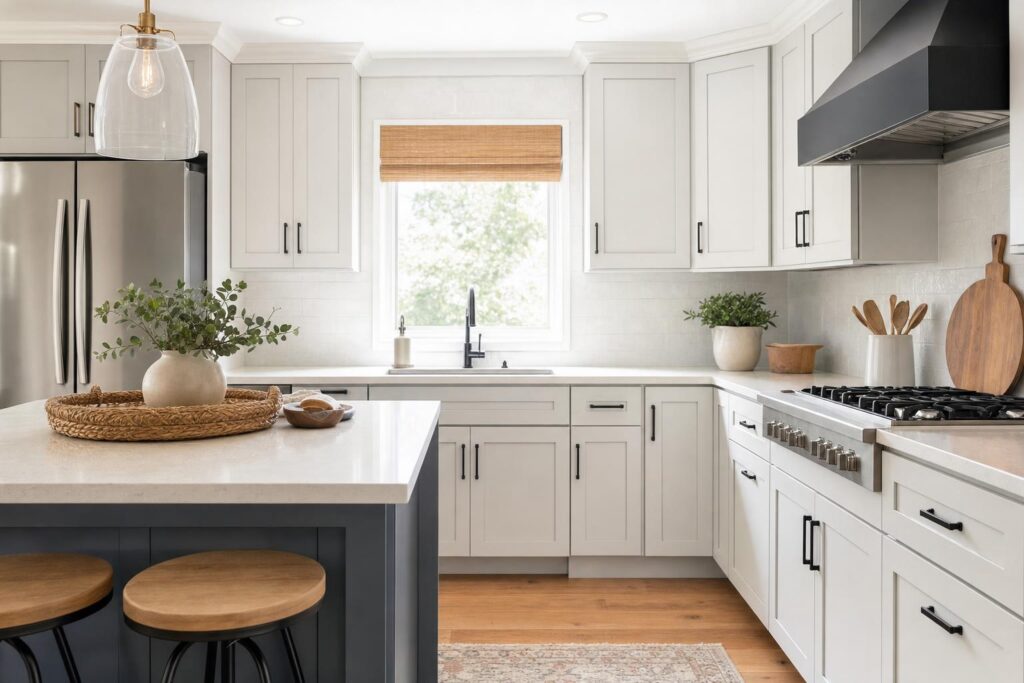
Refacing may provide stronger day-to-day durability than painting when new surfaces and replacement doors are installed correctly. It adds a fresh wear layer, while paint depends more on preparation, finish quality, and careful use.
For painted cabinets, durability starts with thorough degreasing and sanding. The primer must bond to the existing surface, and the finish must suit kitchen use and fully cure before normal handling. Heat, moisture, grease, and impact can cause peeling or chipping, especially around sinks, cooktops, pulls, and knobs.
Refacing covers the cabinet boxes with new laminate, wood veneer, or another approved surface and often includes new doors and drawer fronts. These materials can resist daily wear well, but worn edges, standing water, and hard impacts can still cause damage. Neither refacing nor painting repairs severely damaged, water-swollen, or structurally unsound cabinet boxes.
Both options need gentle care. Use a soft cloth and mild cleaner, remove spills promptly, and avoid abrasive pads or harsh chemicals. Adjust loose hinges and hardware before they strain doors or cause rubbing. For a closer look at the work involved, review Cabinet Refacing New Jersey: Service Areas and Process.
When Should You Repair or Replace Cabinet Parts?
Inspect your cabinets before choosing refacing or painting cabinets. Look for loose hinges, cracked doors, swollen particleboard, broken drawer boxes, and water damage around sinks or plumbing. These problems can affect how well a new finish performs.
- Loose hinges should be tightened or replaced so doors sit correctly and do not pull against the finish.
- Cracked doors may need replacement rather than another coat of paint.
- Swollen particleboard usually indicates moisture damage that a surface finish cannot correct.
- Broken drawer boxes can often be replaced while sound cabinet boxes remain in place.
- Water damage that reaches the cabinet structure calls for professional evaluation.
Replacement doors or drawer fronts can improve appearance and function without removing sound cabinet boxes. Ask a professional to evaluate damage that affects the cabinet structure or kitchen layout, since the right repair may involve more than a finish update.

How Much Do Refacing and Painting Cost?
Painting often has a lower starting cost, while refacing costs more because it includes new exterior materials, replacement doors, drawer fronts, and installation labor. Your final estimate depends on the kitchen’s size, condition, materials, and selected cabinet update options.
A larger kitchen with more doors and drawers requires more preparation, material, and labor. Damaged cabinet boxes may need repairs before either finish is applied. Wood veneer, laminate, or thermofoil refacing materials have different costs, while paint pricing can change with finish complexity, color, spraying, and surface preparation. Geographic labor rates also affect the estimate.
Optional upgrades can change the project price. Hardware replacement, decorative molding, finished end panels, toe kicks, lighting, countertop upgrades, and custom cabinet additions may be included separately. Compare the project price with long-term value, including the expected appearance, finish durability, and the cost avoided by keeping your existing cabinet layout instead of choosing a full replacement.
What Should a Refacing Estimate Include?
A detailed refacing estimate should show what will be measured, supplied, repaired, and installed. It should also make clear which items are included in the quoted work and which are optional. For more information, read Cabinet Refacing Cost: What Affects Your Price? and request guidance based on your kitchen.
- The estimate should list cabinet measurements, door and drawer quantities, and the selected surface materials.
- It should identify edge treatments, finished end panels, toe kicks, moldings, and installation labor.
- It should state whether new hardware, cabinet repairs, and removal or disposal of old materials are included.
- It should describe preparation work, including cleaning, sanding, adjustments, and protection for nearby surfaces.
- It should identify any warranty terms, exclusions, optional upgrades, and payment conditions.
Itemized estimates from ReNU Kitchen can help you compare refacing or painting cabinets on equal terms. The free estimate process can account for your cabinet condition, finish preferences, and add-ons before you decide. Ready to transform your kitchen? Contact us for your free estimate.
How Should You Choose Between Refacing and Painting?
Choose refacing for a broader, more durable style change, and choose painting when your existing kitchen is sound and you mainly want a new color. Your cabinet finish comparison should also consider structure, door style, budget, timeline, and disruption.
A Simple Decision Guide for Homeowners
Painting may be the right choice when your doors and drawer fronts are sound, your cabinet layout works well, and color is the main goal. Refacing may be better when doors look worn or outdated, you want more style options, and the cabinet boxes remain usable. Discuss replacement when boxes have major structural damage, moisture damage, or a layout that no longer fits your needs.
- Inspect the cabinet boxes for loose joints, swelling, water damage, or other structural problems before choosing refacing or painting.
- Choose painting if your existing door shape works and you want a new color, while choosing refacing if you also want new doors, drawer fronts, and a different finish.
- Compare your budget with the level of change you want, since painting usually involves fewer replacement materials while refacing creates a more complete update.
- Consider your timeline and tolerance for disruption, because either project requires preparation and time without normal cabinet access.
- Plan replacement or a larger renovation when the cabinet structure or layout cannot support your intended kitchen design.
Refacing can also work with custom cabinet additions when you need a pantry, storage cabinet, or expanded work area. A countertop upgrade may be considered at the same time so the new cabinet finish and work surface create a coordinated update. These options depend on your existing layout, measurements, and project goals.
ReNU Kitchen can assess your existing cabinets, explain the available options, and provide a free estimate for your kitchen update. The right choice is the solution suited to your budget, timeline, and existing kitchen. Ready to transform your kitchen? Contact us for your free estimate.
Frequently asked questions
Is cabinet refacing better than painting?
Cabinet refacing is often better when you want new doors, drawer fronts, surface materials, and a broader style change while keeping the existing layout. Painting may be better when cabinet doors and boxes are in good condition and you mainly want a different color. The right choice depends on condition, budget, durability, and goals.
Is it cheaper to paint or reface kitchen cabinets?
Painting kitchen cabinets usually costs less at the beginning because it uses the existing doors and surfaces. Refacing costs more because it adds new exterior materials, doors, drawer fronts, and installation. Kitchen size, repairs, finish selection, hardware, and custom additions affect both project estimates.
How long do refaced cabinets last compared with painted cabinets?
The lifespan of refaced or painted cabinets depends on material quality, preparation, installation, use, moisture, and maintenance. Properly installed refacing can provide a durable new exterior, while a professionally prepared painted finish can also last for years. Neither option corrects severely damaged cabinet boxes.
Can you reface cabinets that have already been painted?
Cabinets that were previously painted may be candidates for refacing if the boxes are structurally sound and their surfaces can accept the new material. An installer may need to address peeling paint, grease, uneven surfaces, or damage first. A professional inspection determines whether refacing or repainting is more suitable.
Does cabinet refacing change the kitchen layout?
Cabinet refacing normally keeps the existing cabinet layout, plumbing locations, and appliance arrangement in place. It updates visible cabinet surfaces, doors, drawer fronts, and related components. Homeowners can sometimes add custom cabinets or upgrade countertops, but changing the layout requires separate design and construction planning.
Choose the Cabinet Update That Fits Your Existing Kitchen
Ready to transform your kitchen? Contact us for your free estimate.