Kitchen Cabinet Hardware: How to Choose the Right Style
Kitchen cabinet hardware should match your kitchen’s style, work comfortably with your cabinet doors and drawers, and suit the existing layout. Compare knobs, pulls, finishes, sizes, and cabinet hardware placement before choosing a coordinated update.
Key takeaways
- Knobs are compact and traditional, while pulls offer a longer grip that many homeowners find easier to use.
- The best kitchen cabinet hardware finish coordinates with the faucet, lighting, appliances, and other visible metal details.
- Hardware size should be based on the door or drawer front rather than chosen only by appearance.
- Consistent cabinet hardware placement creates a cleaner look and makes every cabinet easier to operate.
Which Cabinet Knobs and Pulls Fit Your Kitchen Best?
The best cabinet knobs and pulls fit your hand, suit your kitchen style, and work with the existing layout. You can update hardware without replacing structurally sound cabinet boxes. Hardware replacement may be a practical first step before larger changes. Refacing Kitchen Cabinets: What Homeowners Should Know explains how other updates can build on your existing cabinets.
Knobs, Pulls, or a Combination?
Knobs are small pieces you grip with your fingertips, while pulls provide a longer surface for your whole hand. Knobs have a compact appearance and usually require one drilled hole. Pulls need two holes, or a mounting system designed for a single-hole pull, but they can be easier to use if you have limited hand strength.
- Knobs often suit cabinet doors because they keep the door face visually simple.
- Longer pulls work well on drawers because they spread gripping force across the front.
- Pantry doors and wider fronts may be easier to open with a pull sized to their height or width.
- A consistent knob-and-pull pattern can make mixed hardware look intentional.
- Cabinet knobs and pulls can work together in traditional, transitional, and modern kitchens.
Your daily routine and existing cabinet layout should guide the choice. A combination may use knobs on doors and pulls on drawers or larger fronts, while matching pulls throughout can create a cleaner contemporary look. Select a size you can grip comfortably without catching nearby doors.
How Should Hardware Match Your Cabinet Style?
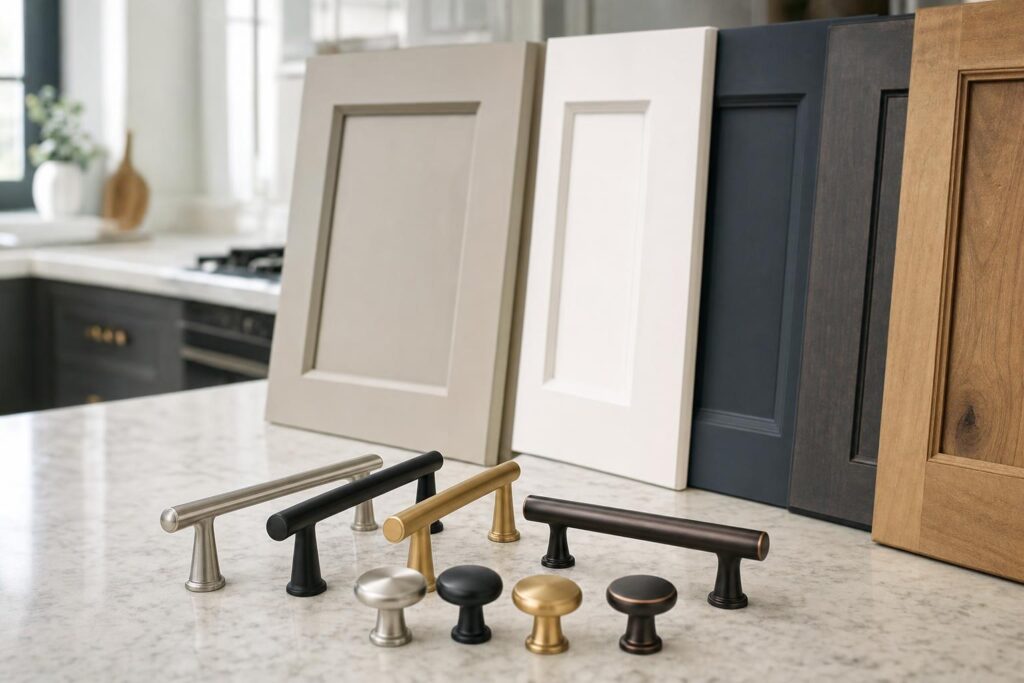
Simple bar pulls and slim edge pulls generally fit contemporary cabinets, while cup pulls often support a classic or farmhouse design. Door profile, cabinet color, and countertop material all affect the overall impression. Raised-panel doors may suit more detailed hardware, while flat doors can handle simple shapes and finishes. Sample each option against your existing doors before ordering, since lighting and nearby surfaces can change how the finish appears. The right choice gives your kitchen a coordinated update without changing its layout.

What Hardware Finish and Material Work With Your Kitchen?
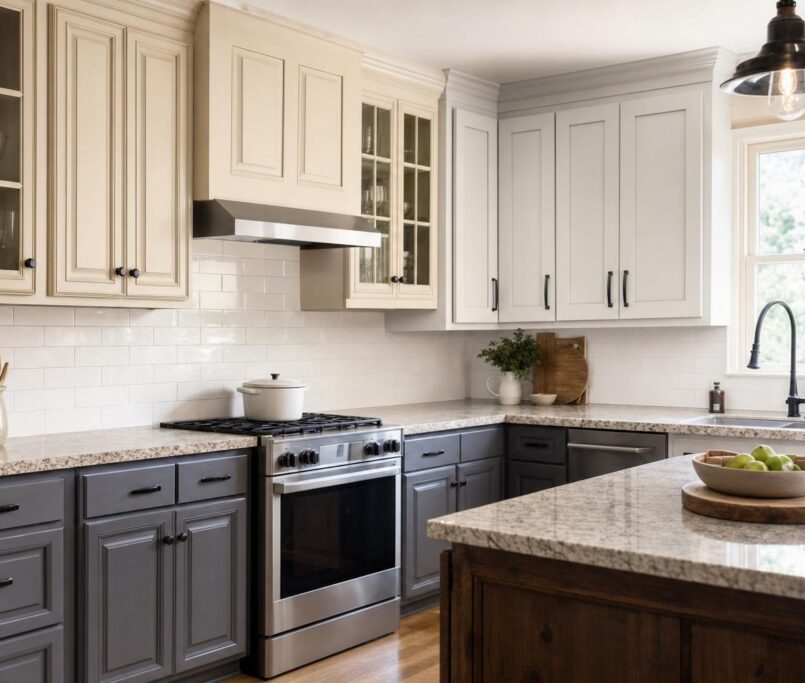
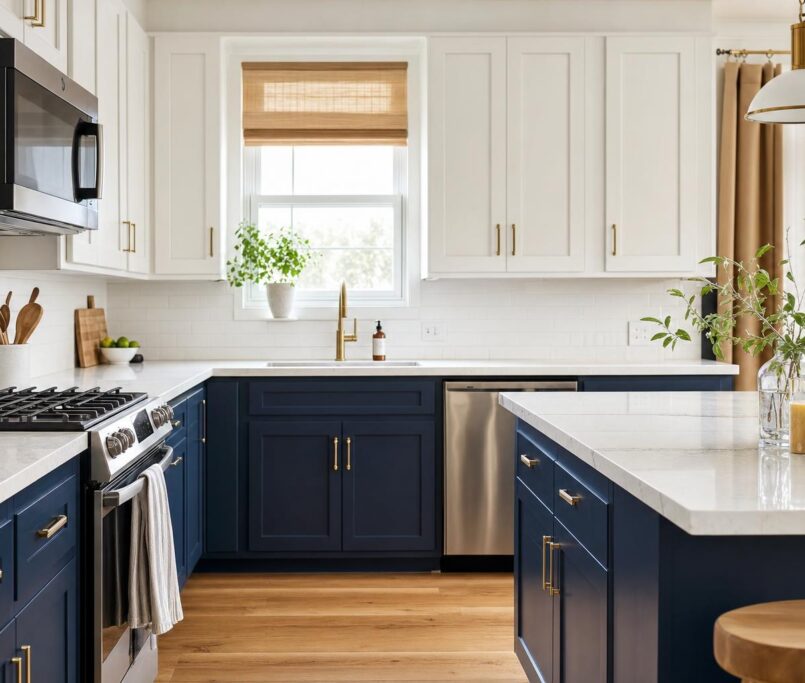
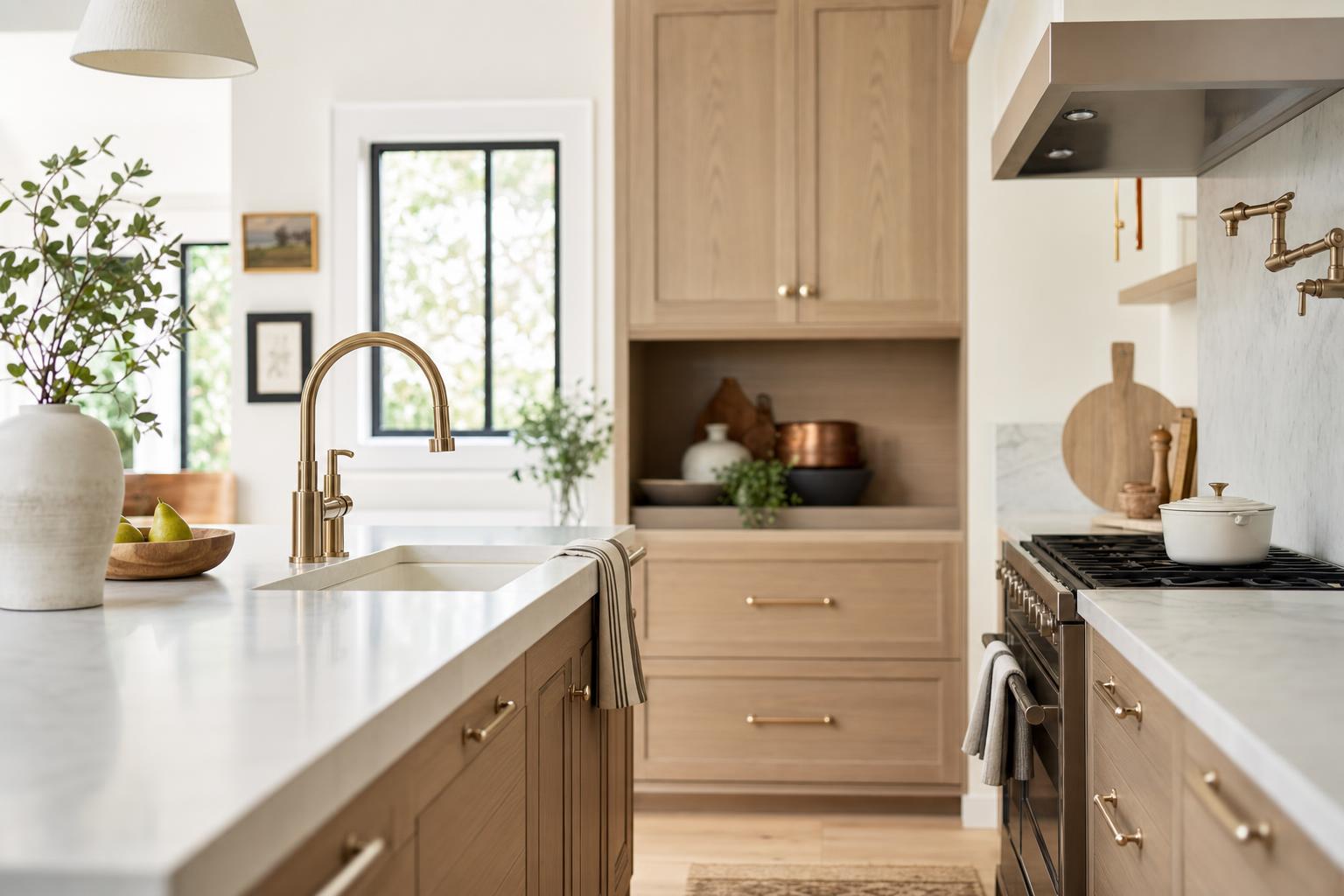
Choose a finish and material that coordinate with your cabinet color, countertops, faucet, lighting, and appliances without adding unnecessary visual contrast. Cool finishes suit gray, white, and blue kitchens, while warm finishes complement cream, wood, and beige tones.
Brushed nickel has a soft, satin surface; chrome is bright and reflective; matte black creates strong contrast; brass adds a warm gold tone; bronze ranges from medium brown to oil-rubbed dark brown; and stainless steel has a clean, silver appearance. Match the overall temperature of the room, or use a deliberate mixed-metal plan. Limiting visible finishes to one or two usually keeps the kitchen coordinated.
| Finish appearance | Best style match | Maintenance considerations | Coordinating kitchen elements |
|---|---|---|---|
| Brushed nickel, soft silver | Transitional and modern | Brushed texture may disguise daily marks | Stainless appliances, gray counters, nickel faucet |
| Chrome, bright silver | Contemporary and traditional | Smooth surface can show fingerprints and water spots | Polished faucet, white cabinets, glass lighting |
| Matte black, nonreflective black | Modern, farmhouse, and industrial | Smooth coating needs gentle cleaning | Black lighting, white cabinets, dark accents |
| Brass or bronze, warm gold to brown | Traditional, transitional, and vintage | Finish may change with use | follow care guidance |
Common hardware materials include zinc, stainless steel, and solid brass. Zinc can offer an affordable option, while stainless steel resists corrosion and solid brass provides substantial weight. Plated finishes place a surface coating over another material, so ask about construction and care before choosing. For broader budgeting context, review Cabinet Refacing Cost: What Affects Your Price?.
Which Kitchen Cabinet Handles Are Easiest to Maintain?
Brushed or textured kitchen cabinet handles may disguise fingerprints better than smooth chrome or polished brass. Material quality matters on frequently used drawers, where thin hardware or weak threads can loosen. Choose handles with secure mounting and screws suited to your cabinet thickness.
- Choose brushed nickel or textured bronze when daily fingerprints are a concern.
- Use stainless steel where moisture and frequent cleaning are expected.
- Confirm that each handle mounts securely without wobbling.
- Check the manufacturer’s cleaning guidance before using household chemicals.
- Keep the visible finish plan consistent across knobs, pulls, faucets, and lighting.
How Do You Choose the Right Hardware Size and Placement?
Choose hardware size by matching the pull to the door or drawer width, then use a consistent cabinet hardware placement pattern that clears edges, frames, walls, and appliances. Center-to-center measurement means the distance between the screw holes on a pull, not the pull’s total length. Measure existing holes before ordering replacement hardware.
Small doors often work well with knobs or pulls around 3 to 5 inches center-to-center. Standard drawers commonly use 5- to 8-inch pulls, while wide drawers may need longer pulls or two evenly spaced pulls for comfortable use. Tall pantry doors usually suit pulls around 8 to 12 inches center-to-center, depending on the door height. These are starting points, not fixed rules.
Cabinet hardware placement is the consistent location where each knob or pull is installed. Knobs and pulls on upper doors are usually placed near the lower corner, while base-door hardware sits near the upper corner. Drawer pulls are commonly centered on the drawer front, and appliance panels generally follow the nearby cabinet pattern. If you are also changing cabinet doors or refacing, review the full layout through Cabinet Refacing New Jersey: Service Areas and Process before drilling new holes.
A Practical Hardware Placement Checklist
Test each location before making permanent holes. Painter’s tape or a temporary cardboard template lets you check comfort, alignment, and clearance while standing at the counter.
- Measure clearance from the door edges, cabinet frames, adjacent walls, and nearby appliances before marking holes.
- Keep matching doors and drawers aligned at the same visual height across the existing layout.
- Check that the pull length and center-to-center measurement suit the door or drawer width.
- Confirm the screw length matches the cabinet thickness and that any backplate fits without covering an edge.
- Open nearby doors and drawers together to verify that handles do not collide.

Is Hardware Replacement the Right Update for Your Existing Kitchen?
Hardware replacement is the right update when your cabinet doors, drawer fronts, and cabinet boxes remain sound and you want a focused appearance change. If surfaces are worn or your kitchen needs broader improvements, combine new hardware with refacing, replacement doors, drawer fronts, countertops, or custom additions.
Start by checking the cabinet condition and layout. Loose hinges, swollen edges, peeling laminate, or dated door styles may point to a more complete update. A practical decision should also weigh your budget, desired design change, project timing, and tolerance for disruption.
When Should You Combine Hardware With Refacing?
Combine hardware with refacing when the existing cabinet boxes and layout work well, but the visible surfaces no longer fit your home. Refacing applies new exterior surfaces to those boxes, while matching door, drawer front, and hardware styles create a coordinated transformation. You can also add a countertop or custom cabinet section when the kitchen needs more storage or workspace.
ReNU Kitchen refaces suitable existing kitchens while preserving the layout and cabinet boxes, which may reduce the work compared with full replacement. Compare the cost, timing, and disruption of targeted updates with the scope of a new kitchen. Our guide, Refacing Kitchen Cabinets: What Homeowners Should Know, explains the process in practical terms.
- Choose hardware replacement alone when your cabinet doors and drawer fronts are solid and only the style feels dated.
- Consider refacing when cabinet surfaces show peeling, stains, or wear but the cabinet boxes remain structurally suitable.
- Coordinate replacement doors and drawer fronts when the existing styles, profiles, or finishes cannot support your design goal.
- Add a countertop when the work surface is damaged, outdated, or no longer fits the updated color scheme.
- Discuss custom cabinet additions when you need more storage without changing the entire kitchen layout.
ReNU Kitchen provides custom craftsmanship, free estimates, and guidance for homeowners across New Jersey and parts of New York. The right choice depends on your existing kitchen, goals, and budget, and a clear comparison can help you plan a useful update with less disruption.
Frequently asked questions
Should kitchen cabinet hardware match the faucet?
Kitchen cabinet hardware does not have to exactly match the faucet, but the finishes should look intentional together. Homeowners can use the same finish for a unified appearance or combine metals by repeating each finish elsewhere, such as in lighting, appliances, or accessories.
Are knobs or pulls better for kitchen cabinets?
Neither option is universally better. Knobs provide a compact, classic look and work well on many doors, while pulls offer more leverage on drawers and larger fronts. The best choice depends on comfort, cabinet style, hand strength, and the consistency of the overall layout.
How do I measure cabinet pulls before buying them?
Measure the center-to-center distance between the pull’s screw holes, not the pull’s total length. Record this measurement for every existing pull because sizes can vary. If you are drilling new holes, use a template and confirm clearances before installing the hardware.
Can new hardware update cabinets without refacing?
Yes, new hardware can refresh structurally sound cabinet doors and drawers without refacing. However, hardware cannot hide worn finishes, damaged surfaces, or an outdated door style. ReNU Kitchen can help compare hardware replacement with refacing and other updates during a free estimate.
Choose the Hardware That Fits Your Kitchen and Goals
Ready to transform your kitchen? Contact us for your free estimate.