Cost to Reface Kitchen Cabinets: Pricing and Estimates
The cost to reface kitchen cabinets commonly depends on cabinet size, materials, door and drawer choices, hardware, labor, and any layout changes. A professional estimate gives you the most useful price because it accounts for your existing cabinet boxes, selected finishes, project options, and installation conditions.
Key takeaways
- The cost to reface kitchen cabinets is shaped by kitchen size, materials, labor, hardware, and project complexity.
- Cabinet refacing keeps the existing cabinet boxes while replacing visible doors, drawer fronts, and exterior surfaces.
- Laminate, thermofoil, and wood veneer offer different balances of price, appearance, durability, and customization.
- Replacing damaged cabinet boxes or changing the kitchen layout can move a project beyond standard refacing.
- A written estimate should identify materials, labor, hardware, additions, exclusions, and the expected project timeline.
What Determines the Cost to Reface Kitchen Cabinets?
The cost to reface kitchen cabinets depends on the existing cabinet boxes, project size, materials, labor, and selected options. Refacing covers the structural cases with new doors, drawer fronts, and finish instead of replacing the complete cabinet system. A broad planning range can help, but a project-specific estimate is more useful because access and installation conditions vary. Review Cabinet Refacing Cost: What Affects Your Price? for additional cabinet refacing pricing factors.
Which cabinet parts affect your estimate most?
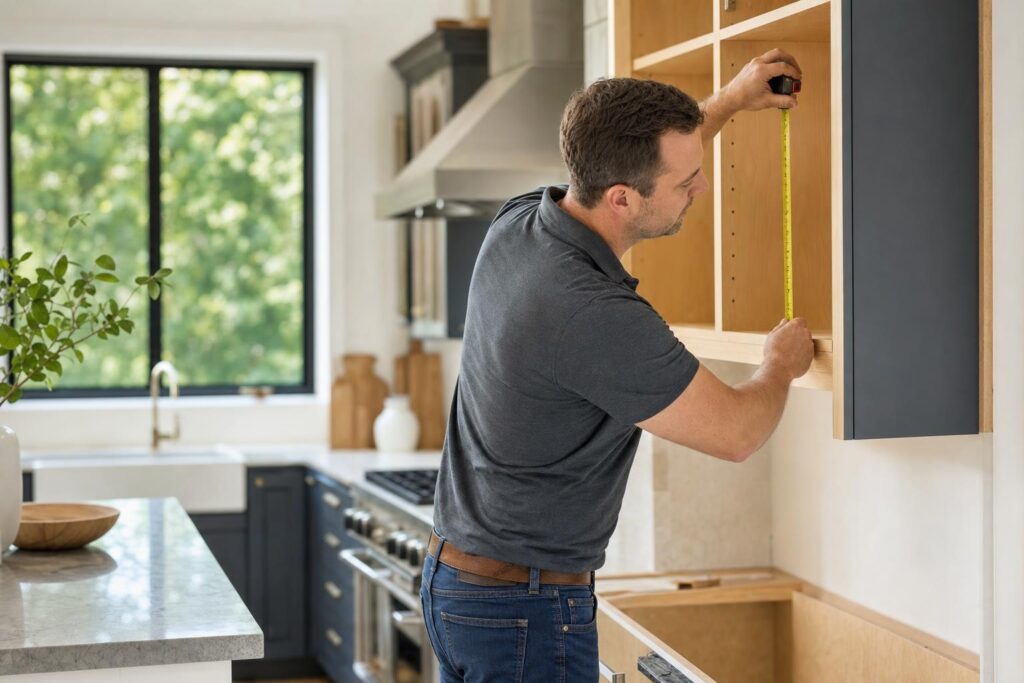
Cabinet boxes are the existing structural cases that hold your shelves, doors, and drawers. Your door count, drawer front count, exposed sides, end panels, and trim all affect material quantities and installation labor. Finish material, edge details, and hardware also change the kitchen cabinet refacing price. Solid-color laminates, wood veneers, decorative edges, and new pulls or knobs each offer different options.
- More doors and drawer fronts require more measuring, fabrication, and installation time.
- Finished exposed sides and end panels add coverage where cabinet boxes can be seen.
- Islands, tall pantry units, and corner cabinets can increase material use and installation complexity.
- Custom cabinet additions expand the scope beyond covering the existing cabinet boxes.
Why do kitchen layouts and condition matter?
A sound, square, usable layout is usually a strong candidate for refacing because the existing structure can remain in place. Water damage, swelling from moisture, poor construction, or other structural problems may require repair or replacement before new surfaces are installed. Keeping the existing layout generally limits demolition, reduces disruption, and helps control refacing versus replacement cost. Access also matters; tight rooms, limited parking, stairs, and difficult work areas may add time. Your refacing cabinet estimate should account for these conditions rather than rely on a universal price. The right choice depends on your cabinet condition, project goals, and available options.
Which Materials and Options Change a Kitchen Cabinet Refacing Price?
The kitchen cabinet refacing price changes with your surface material, door design, hardware, drawer upgrades, and how closely new finishes must coordinate with the countertop. Refacing covers exposed cabinet surfaces and replaces doors and drawer fronts while retaining suitable existing cabinet boxes.
Which refacing materials are available?
Laminate is a manufactured surface available in consistent colors, wood patterns, and solid designs. Thermofoil and rigid thermofoil are smooth, factory-made coverings that are easy to clean, while rigid thermofoil offers a firmer surface for some door styles. Wood veneer is a thin layer of real wood applied over a stable substrate, giving you natural grain without solid-wood construction throughout. Painted or stained wood provides more color and grain customization, but finish selection and preparation can affect the refacing cabinet estimate.
- Laminate offers consistent colors and patterns with simple day-to-day maintenance.
- Thermofoil provides a smooth, cleanable surface in selected colors and door profiles.
- Rigid thermofoil gives you a durable manufactured option with a more substantial feel.
- Wood veneer shows real wood grain and can be stained for a natural appearance.
- Painted or stained wood allows more customization but may require added finishing work.
Material selection affects appearance, maintenance, durability, and customization. Your door style also changes the price: a simple slab door usually requires less work than a raised-panel design, full overlay doors cover more of the cabinet face, and inset details require tighter fitting and careful installation. Color, grain direction, and matching end panels can add labor when the finish must continue across multiple surfaces. Refacing Kitchen Cabinets: What Homeowners Should Know explains how these choices fit into the larger project.
Replacing knobs and pulls, adding soft-close hinges, or upgrading drawer boxes and slides increases the project scope but can improve daily use. Countertop coordination matters as well, especially when new cabinet colors, edge details, or side panels must work with an existing surface. The right options depend on your goals, cabinet condition, and desired refacing versus replacement cost.
How Does Refacing Compare With Replacement Cost?
Refacing usually costs less and causes less disruption than full replacement because it keeps your existing cabinet boxes and layout, while replacement removes and rebuilds more of the kitchen. The right refacing versus replacement cost depends on cabinet condition, design changes, materials, and related work.
| Category | Cabinet refacing | Full cabinet replacement |
|---|---|---|
| Scope | New door and drawer fronts, plus a veneer or laminate covering on existing boxes | Existing cabinets are removed and new boxes, doors, and drawers are installed |
| Cost drivers | Finish, door style, hardware, box repairs, and added cabinets | Cabinet construction, layout, demolition, installation, countertops, and added trades |
| Disruption | Usually limited demolition and a shorter installation period | More demolition, removal, and coordination over a longer project |
| Layout | Keeps the current cabinet locations and storage plan | Allows new cabinet sizes, storage locations, and work zones |
| Best-fit conditions | Stable boxes and a layout you already like | Damaged cabinets or a required layout change |
When is refacing the right choice?
Refacing may be the right choice when your cabinet boxes are solid, level, and free from major water or structural damage. Homeowners who like their current work triangle and storage locations often choose it for a faster visual update without removing the entire kitchen. Refacing cannot create new storage locations or correct every structural problem, but custom additions may expand storage in selected areas.
- Inspect the cabinet boxes for swelling, loose joints, water damage, and sagging before choosing a finish.
- Confirm that the existing layout provides enough storage and suitable appliance locations.
- Compare door styles, drawer fronts, hardware, and surface materials with your project goals.
- Ask whether countertops, plumbing, electrical work, flooring, or appliances will affect either project.
- Request a written refacing cabinet estimate that separates cabinet work from related upgrades.
Replacement may be more appropriate when the boxes have extensive structural damage or when you need to move walls, appliances, plumbing, or major storage areas. Either project can include countertop, plumbing, electrical, flooring, or appliance costs, so compare the complete scope rather than cabinet pricing alone. For project details, review Cabinet Refacing New Jersey: Service Areas and Process. The best option is the one that fits your kitchen’s condition, layout, budget, and timeline.
What Should a Refacing Cabinet Estimate Include?
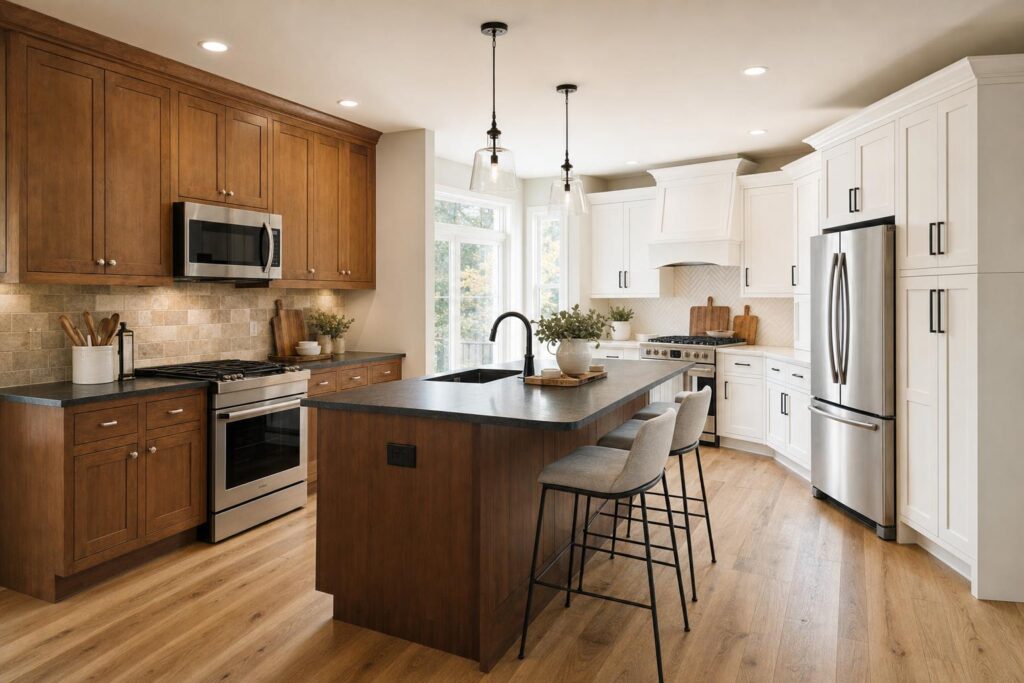
A refacing cabinet estimate should show the materials, labor, optional work, exclusions, and expected project conditions in writing. An in-home consultation lets the professional inspect cabinet boxes, measure openings, and discuss your goals before pricing the work.
- The estimate should identify doors, drawer fronts, exposed surfaces, end panels, trim, and hardware.
- It should separate labor from removal, delivery, installation, and cleanup.
- Optional work should be listed separately, including custom cabinet additions, drawer upgrades, countertop replacement, and layout-related changes.
- Written exclusions and product specifications should identify what is not included and which materials, finishes, and sizes were selected.
Before approving the work, review the estimate line by line and ask questions about anything unclear. Product details and exclusions help prevent misunderstandings when your existing kitchen has unusual dimensions or conditions.
How can you prepare for an estimate?
Prepare questions, photos, rough measurements, and a short list of your priorities before the appointment. Ask whether the price includes installation, hardware, finishing details, disposal, and cleanup. Confirm the material, door style, color, warranty information, and expected timeline.
Discuss your existing layout and any storage concerns, such as deep drawers or pull-out shelves. Tell the consultant whether you plan to replace the countertop or need repairs before refacing. For hardware ideas, review Kitchen Cabinet Hardware: How to Choose the Right Style before choosing knobs or pulls.
What can make the final price different?
Concealed damage, uneven walls, inaccessible areas, and changes after approval can alter the project scope. Selected upgrades and custom dimensions may also change material quantities or labor time, especially for cabinet additions, drawer upgrades, or layout-related work.
Ask the contractor to explain any condition that could affect the price before work begins. If additional work becomes necessary, review a revised written estimate and approve it before that work starts. Clear guidance helps you compare options and choose the right solution for your kitchen.
How Can ReNU Kitchen Help You Plan Your Cabinet Refacing Project?
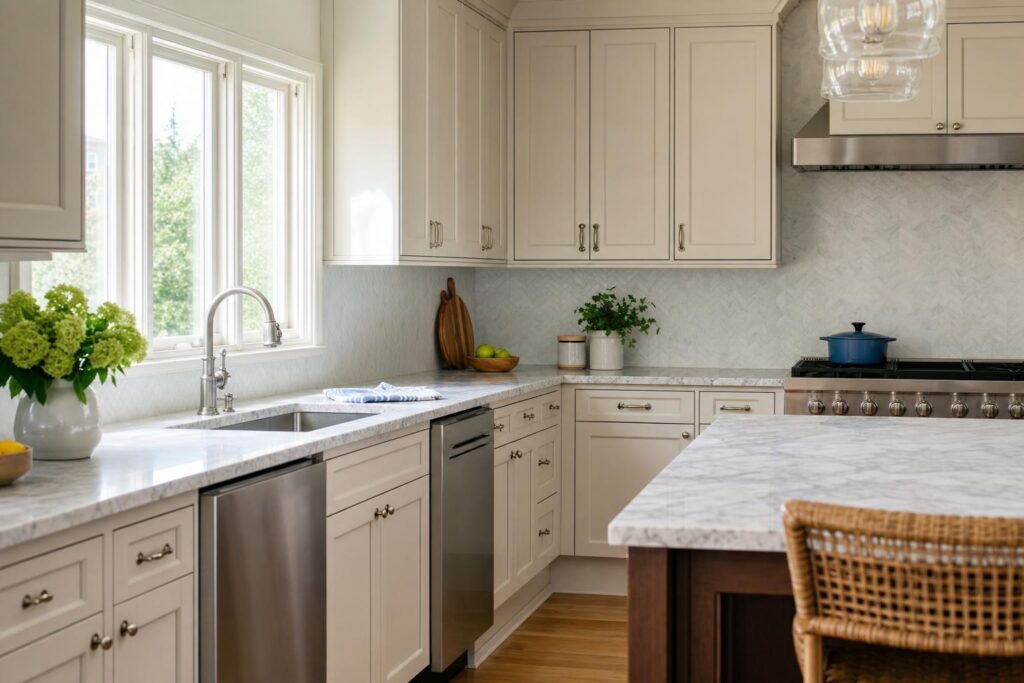
ReNU Kitchen helps you plan cabinet refacing by evaluating your existing cabinet boxes, explaining practical materials and options, and preparing a free estimate for your kitchen. This guidance connects the project’s condition, layout, budget, timeline, and desired result to a realistic plan.
The cabinet boxes must be structurally sound for refacing, since the process updates the visible surfaces rather than replacing the entire cabinet system. ReNU Kitchen can help you compare door styles, drawer fronts, finishes, and hardware, then identify changes that fit your space and cabinet refacing pricing goals. If your layout works well, keeping it may reduce the time, cost, and disruption of a full replacement.
Your project can include more than new cabinet surfaces. Services include cabinet door replacement, drawer front replacement, hardware replacement, countertop upgrades, and custom cabinet additions when you need more storage or a better fit. These options allow you to address worn components or improve function while keeping much of your existing kitchen in place.
ReNU Kitchen brings more than 26 years of experience to each project, along with custom craftsmanship and a fast turnaround. Homeowners also receive a free estimate and the benefit of a company known for 5-star customer satisfaction, without treating one solution as right for every kitchen.
From Freehold, New Jersey, ReNU Kitchen serves homeowners across New Jersey and parts of New York. The best refacing cabinet estimate reflects your cabinet condition, existing layout, selected materials, budget, timeline, and the result you want. Ready to transform your kitchen? Contact us for your free estimate.
Frequently asked questions
Is it cheaper to reface or replace kitchen cabinets?
Refacing is often less expensive than replacing kitchen cabinets because it keeps suitable cabinet boxes and avoids much of the demolition, disposal, and reconstruction involved in replacement. The final comparison depends on materials, cabinet quantity, hardware, repairs, countertops, layout changes, and whether the existing boxes are structurally sound.
What is included in cabinet refacing?
Cabinet refacing typically includes new doors and drawer fronts, new exterior coverings for exposed cabinet surfaces, matching end panels, and updated trim. The project may also include hardware, soft-close hinges, drawer upgrades, countertops, or custom additions when those items are included in the written scope.
How long does kitchen cabinet refacing take?
Many refacing projects take less time than full cabinet replacement because the existing layout and cabinet boxes remain in place. The schedule depends on kitchen size, material availability, custom door and drawer requirements, countertop work, repairs, and installation conditions. Your contractor should provide a project-specific timeline.
Can cabinets be refaced if the layout stays the same?
Yes, keeping the existing layout is one of the main reasons homeowners consider refacing. The cabinet boxes must still be stable, reasonably square, and free from serious water or structural damage. Refacing changes the visible finish and components, but it does not automatically add storage locations or correct major construction problems.
How Can ReNU Kitchen Help You Plan Your Cabinet Refacing Project?
Ready to transform your kitchen? Contact ReNU Kitchen for your free estimate at (732) 890-9911.