Thermofoil vs Wood Veneer Cabinets: Best Fit?
Thermofoil vs wood veneer cabinets comes down to appearance, maintenance, durability, and the conditions in your kitchen. Thermofoil offers a smooth, consistent surface that is easy to clean, while wood veneer provides natural grain and can be the right choice when warmth and visual character matter most.
Key takeaways
- Thermofoil cabinet doors use a heat-fused vinyl surface over a manufactured core and offer consistent color and simple cleaning.
- Wood veneer cabinet doors use a thin layer of real wood over a stable core and provide natural grain variation.
- Thermofoil generally handles routine moisture and cleaning well but may be vulnerable to heat near ovens and appliances.
- Wood veneer can develop a richer appearance over time but needs prompt attention to spills and appropriate cleaning products.
- Both materials can work well during cabinet refacing when the existing cabinet boxes and kitchen layout are sound.
On this page
What Are Thermofoil and Wood Veneer Cabinet Doors?
Thermofoil and wood veneer are cabinet door and drawer front surfaces applied over a manufactured or wood-based core. Thermofoil uses a heat-fused vinyl film formed over medium-density fiberboard (MDF) or a similar manufactured core. The film creates a smooth, consistent finish with limited variation between doors.
Wood veneer is a thin layer of real wood applied over plywood, particleboard, or another stable cabinet core. Its grain gives your kitchen natural variation and warmth, while the core provides the strength and stability needed for everyday use. Both materials are available as cabinet refacing surface options.
During refacing, the exposed cabinet doors and drawer fronts are removed and replaced. The installer covers the existing cabinet boxes with matching veneer or another finished material, so the main layout stays in place. This approach can update the kitchen without removing every cabinet or rebuilding the room.
Your existing cabinet boxes should be structurally sound, reasonably level, and able to support new doors and hardware. Significant water damage, swollen particleboard, severe sagging, or weakened mounting areas may require cabinet replacement or repairs before refacing begins. A professional assessment can help determine whether refacing fits your kitchen.
How Does Cabinet Refacing Work With These Materials?
Cabinet refacing starts with accurate measurements of the existing openings, cabinet boxes, and drawer sizes. You choose the door style, surface, color, edge details, and hardware before the new thermofoil cabinet doors or wood veneer cabinet doors are ordered. The installer then protects the work area, prepares the cabinet boxes, and fits the new doors, drawer fronts, and finished panels.
Handles, knobs, hinges, and edge treatments affect both the function and finished appearance. You can also pair the refacing work with a countertop upgrade or custom cabinet additions when your storage needs have changed. Your existing layout can usually remain in place, which means less demolition than a full kitchen replacement. For more planning guidance, read Refacing Kitchen Cabinets: What Homeowners Should Know.
- Thermofoil provides a uniform, easy-to-clean surface over an MDF or similar manufactured core.
- Wood veneer uses a thin layer of real wood to create visible grain over a stable cabinet core.
- Refacing replaces the exposed doors and drawer fronts while keeping suitable cabinet boxes in place.
- Cabinet boxes with major water damage or structural weakness may not be suitable for standard refacing.
- New hardware, countertops, and custom additions can change the finished look and function of the updated kitchen.
How Do Thermofoil and Wood Veneer Compare in Appearance?
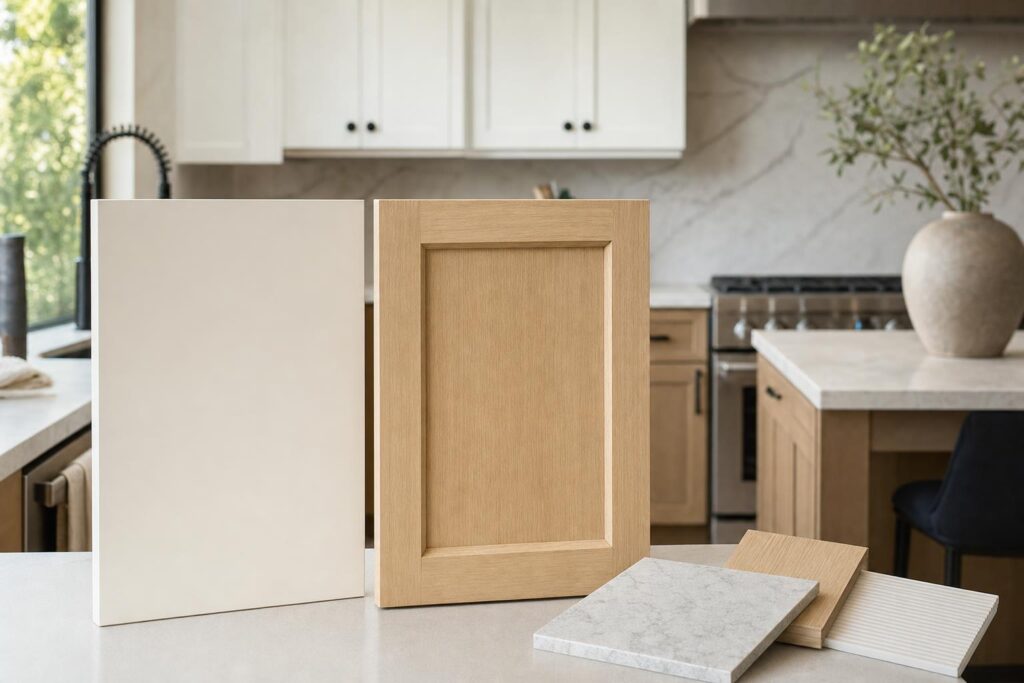
Thermofoil and wood veneer differ most in visual consistency: thermofoil cabinet doors have a smooth, even color, while wood veneer cabinet doors show natural grain, knots, and tonal variation.
Thermofoil can create a clean, consistent appearance across the entire kitchen. Its surface often suits contemporary slab doors, simple shaker profiles, and painted-looking finishes in white, gray, blue, or other solid colors. The uniform finish also makes it easier to coordinate multiple doors and drawer fronts.
Wood veneer adds visual texture and natural character because each sheet has its own grain pattern and color shifts. It works well in warm wood kitchens, furniture-inspired designs, and shaker doors where the grain can support the shape of the profile. Veneer may look more distinctive, but the variation means nearby doors will not match as evenly as thermofoil.
Door construction affects the final result as much as the surface material. A slab door keeps the finish simple and uninterrupted, while a shaker or raised profile adds shadow lines around the center panel. Grain direction, edge banding, and hardware also matter: vertical grain can make doors appear taller, matching edge banding creates a finished look, and knobs or pulls can reinforce either a modern or traditional style.
Which Style Works Better for Your Existing Kitchen?
Thermofoil may be the right choice if you want uniform color, modern simplicity, or a surface that is easy to coordinate with other finishes. Wood veneer may fit better when you want natural warmth, visible grain, or a furniture-inspired appearance. Your existing layout, flooring, backsplash, appliances, and countertop should guide the decision so the new doors look connected to the rest of the room.
- Thermofoil suits contemporary kitchens with slab doors, simple shaker profiles, and painted-looking finishes.
- Wood veneer suits kitchens where natural grain and warm wood tones are central to the design.
- A horizontal grain direction can make wide drawer fronts look more intentional.
- Brushed nickel, black, brass, and other hardware finishes can change how either surface reads.
- Matching edge banding helps both materials look complete from the side and at the corners.
Physical samples are important when you compare cabinet finishes. Review thermofoil and veneer samples beside your countertop, backsplash, flooring, and appliances under both daytime and evening lighting. A surface that looks neutral in a showroom may appear warmer, cooler, darker, or brighter in your kitchen.
If you are also comparing refacing with painting, Cabinet Refacing vs Painting: Which Is Better for You? can help clarify which option suits your existing cabinet boxes and design goals. The best cabinet refacing surface options are the ones that support your layout, preferred style, and desired level of visual variation.
Which Cabinet Surface Is More Durable and Easier to Maintain?
Thermofoil cabinet doors are usually easier to maintain, while wood veneer cabinet doors can offer stronger repair options and lasting character when properly sealed and cared for. Both surfaces handle normal kitchen use, but neither should face standing moisture, direct heat, abrasive cleaning, or repeated impact.
Thermofoil has a sealed, nonporous surface that resists routine splashes, fingerprints, and grease. You can usually wipe it clean without special products. Its main weakness is heat and edge damage: excessive heat, steam, or poor installation conditions can cause the vinyl surface to lift or separate from the cabinet door.
Wood veneer is a thin layer of real wood applied over a stable core. A quality finish helps it resist everyday moisture and stains, but the surface may show water marks, scratches, fading, or color changes over time. Small damage may be blended or repaired more easily than damage to thermofoil, although deep impact can affect the veneer and the material beneath it.
| Comparison area | Thermofoil | Wood veneer | Practical consideration |
|---|---|---|---|
| Appearance and wear | Consistent color with minor surface scratches visible | Natural grain may show gradual color change or wear | Choose the finish that hides daily marks best in your kitchen |
| Moisture | Handles routine splashes but edges must be dried | Sealed veneer resists moisture, but standing water can leave marks | Wipe spills promptly around sinks and dishwashers |
| Heat and steam | Excessive heat may loosen or separate the surface | Direct heat can discolor or damage the finish | Use ventilation and heat shields near ranges and ovens |
| Cleaning and damage | Mild cleaner removes grease, but scratches and impact damage remain visible | Soft cleaning protects the finish, and some minor wear may be repairable | Avoid abrasive pads and harsh chemicals |
| Repair and kitchen conditions | Damaged areas may require door or drawer-front replacement | Finish repairs may be possible, depending on damage and color | Both work best with stable temperatures and careful installation |
Use a soft, damp cloth for regular cleaning, followed by prompt drying. A mild household cleaner can help with grease, but test it in an unseen area first. Avoid abrasive pads, scouring powders, bleach, solvents, and harsh chemicals that can dull or weaken the finish.
- Wipe routine splashes, fingerprints, and grease from the surface before they dry.
- Dry cabinet doors and drawer fronts after cleaning, especially near the sink and dishwasher.
- Keep toaster ovens, air fryers, and other heat-producing appliances away from cabinet surfaces.
- Run the range hood during cooking and use heat shields where cabinets sit beside a range or oven.
- Address lifting edges, swollen areas, deep scratches, or loose hardware before the damage spreads.
The right care plan depends on the surface and the condition of your existing cabinets. For a broader look at how surface work differs from replacement of cabinet parts, read Cabinet Refinishing vs Refacing: Key Differences Explained.
Thermofoil may be the right choice for a smooth, low-maintenance kitchen with controlled heat and moisture. Wood veneer may fit better when you want natural variation and the option for certain finish repairs. Professional guidance can help you compare cabinet refacing surface options for your layout and daily use.

What Should You Consider Before Choosing a Refacing Finish?
Before choosing a refacing finish, confirm that your cabinet boxes, hinges, shelves, and layout are worth keeping, then compare project goals, kitchen conditions, budget, and material options.
Refacing works best when the existing cabinet structure is sound and the layout functions well. First, decide whether you want cosmetic modernization, improved storage, better hardware, countertop coordination, or a larger layout change. Use this process to compare cabinet finishes:
- Inspect the cabinet boxes for water damage, swelling, loose joints, or other structural problems that a new surface will not correct.
- Confirm that the existing hinges, shelves, and storage arrangement still support how you use the kitchen.
- Identify whether you need new drawer fronts, accessories, countertops, or custom cabinet additions.
- Note heat-producing appliances, direct sunlight, humidity, heavy cooking, children, and pets that may affect surface selection.
- Request a detailed estimate covering materials, preparation, installation, timeline, cleanup, and warranty information.
Project costs vary with kitchen size, door and drawer count, material selection, edge details, accessories, countertops, and custom additions. For more planning context, review Cost to Reface Kitchen Cabinets: Pricing and Estimates before comparing estimates.
When Is Refacing a Better Fit Than Replacement?
Refacing may be the right choice when your cabinet layout works well and the cabinet boxes remain structurally sound. You can update the visible surfaces without removing the entire kitchen, which typically means less disruption than a full replacement.
Replacement makes more sense when you need major layout changes, extensive storage revisions, or repairs to damaged cabinet structures. Refacing cannot correct cabinets that are badly warped, weakened by water, or poorly arranged for your needs.
A refacing project can include new thermofoil cabinet doors or wood veneer cabinet doors, matching drawer fronts, updated hardware, and countertop upgrades. Custom cabinet additions may also provide more storage while allowing you to keep much of the existing layout.
How Can You Compare Estimates for Thermofoil or Veneer?
Compare the material specification, core construction, edge treatment, installation scope, and cleanup rather than price alone. Ask how the installer will handle heat zones, seams, existing damage, and door alignment before approving the work.
Review full-size samples in your kitchen’s lighting, and ask to see completed projects with similar cabinet styles. A detailed estimate should make clear which surfaces are included, how preparation is handled, and what warranty information applies. The best finish is the one that suits your kitchen’s condition, use, budget, and long-term plans.
Which Is Right for Your Kitchen: Thermofoil or Wood Veneer?
Thermofoil is the right choice for a consistent, low-maintenance modern kitchen, while wood veneer is better for homeowners who want natural warmth and visible grain variation. Neither surface is automatically best for every kitchen.
Choose thermofoil cabinet doors when you want a smooth, uniform finish with predictable color across the room. This surface may suit busy households that prefer simple cleaning and a streamlined style. It can also be a practical option when you want your cabinet refacing project to have a clear, consistent appearance.
Choose wood veneer cabinet doors when real-wood character matters more than perfect uniformity. The thin wood layer shows natural grain, color changes, and pattern variation, giving your kitchen a warmer and more traditional feel. Veneer may be the right choice when you want the refaced cabinets to look distinctive rather than identical.
A Simple Decision Checklist for Homeowners
Start by asking whether your existing layout works and whether the cabinet boxes are structurally sound. Refacing changes the visible surfaces, not the basic cabinet arrangement, so the existing boxes need to support the project. Then compare the finish with your cleaning habits, household use, kitchen conditions, and desired timeline.
- Keep the existing layout when it provides enough storage, usable work space, and convenient access to appliances.
- Confirm that the existing cabinet boxes are solid, level, and suitable for new doors, drawer fronts, and coverings.
- Choose a uniform, streamlined look if predictable color and easy day-to-day cleaning are your main priorities.
- Choose a natural, varied look if visible grain, real-wood warmth, and character matter most.
- Consider heat, moisture, household use, and your desired timeline before selecting thermofoil or wood veneer.
- Review the complete estimate, including hardware, countertops, drawer fronts, and any custom cabinet additions.
ReNU Kitchen evaluates your existing kitchen and explains the available cabinet refacing surface options before work begins. We can coordinate new surfaces with hardware replacement, countertop upgrades, replacement drawer fronts, or custom additions while keeping disruption manageable.
With more than 26 years of experience, ReNU Kitchen provides free estimates from Freehold to homes across New Jersey and parts of New York. The best finish depends on your cabinet quality, kitchen conditions, style, budget, and project goals. Ready to transform your kitchen? Contact us for your free estimate.
Frequently asked questions
Are thermofoil cabinets better than wood veneer cabinets?
Neither material is universally better. Thermofoil suits homeowners who want a consistent finish, simple cleaning, and a modern appearance. Wood veneer suits homeowners who prefer real-wood grain and natural variation. The right choice depends on heat exposure, moisture, design goals, maintenance habits, existing cabinet condition, and the complete refacing estimate.
Can thermofoil cabinet doors be used near an oven?
Thermofoil cabinet doors can be used near an oven when properly installed and protected from excessive heat. Heat may cause the vinyl surface to loosen or separate over time. Use the oven as directed, maintain ventilation, consider a heat shield where appropriate, and ask the installer how the design handles nearby heat.
How do you clean wood veneer cabinet doors?
Clean wood veneer cabinet doors with a soft, lightly damp cloth and a mild cleaner approved for the finish. Wipe spills promptly and dry the surface rather than leaving moisture around edges or seams. Avoid abrasive pads, harsh chemicals, excessive water, and waxes that the manufacturer does not recommend.
Is cabinet refacing suitable for thermofoil or wood veneer?
Cabinet refacing is suitable for either thermofoil or wood veneer when the existing cabinet boxes are structurally sound and the layout still works. The process typically replaces doors and drawer fronts and covers exposed cabinet surfaces. An inspection helps identify water damage, alignment issues, and any areas needing repair before installation.
Which Is Right for Your Kitchen: Thermofoil or Wood Veneer?
Ready to transform your kitchen? Contact ReNU Kitchen for your free estimate.