Refacing Cabinets and Countertops: A Complete Guide
Refacing cabinets and countertops together can give your kitchen a more complete update without changing the existing layout. The usual sequence is to finalize cabinet materials and countertop selections first, remove the old countertop, complete the refacing work, and install the new countertop after accurate measurements.
Key takeaways
- Cabinet refacing updates existing cabinet boxes with new doors, drawer fronts, and exterior surfaces while preserving the current layout.
- Countertop replacement is usually coordinated after cabinet decisions but installed after final measurements are taken.
- Quartz, granite, solid surface, laminate, and butcher block each offer different costs, maintenance needs, and visual qualities.
- Accurate measurements must account for walls, appliances, sinks, backsplashes, overhangs, and the thickness of the selected countertop.
- Coordinating cabinet refacing with a kitchen countertop upgrade can reduce duplicated labor and create a more consistent finished design.
What Does Refacing Cabinets and Countertops Involve?
Refacing cabinets and countertops involves covering existing cabinet boxes with new finished material, replacing the doors and drawer fronts, and installing a new countertop on the current layout. Cabinet refacing updates the visible cabinet surfaces without removing the cabinet framework. Countertop replacement changes the work surface while keeping the existing cabinet arrangement in place.
This cabinet and countertop renovation is suitable when the cabinet boxes are sound, the layout works for your daily needs, and you want a faster, more affordable update than a full kitchen replacement. You can coordinate cabinet colors, door styles, hardware, sink details, and countertop materials for a consistent result. The project still allows practical upgrades, such as new drawer fronts, added cabinets, or improved storage in selected areas.
When Is This Combination the Right Choice?
This combination may be the right choice when your existing cabinets are level, firmly attached, and free from major swelling, rot, or loose joints. A coordinated update can replace dated doors, drawer fronts, hardware, and counters while preserving the kitchen’s working layout.
- Solid cabinet boxes show no significant water damage, sagging, or structural movement.
- The existing layout provides suitable work zones, storage, and appliance locations.
- New doors, drawer fronts, hardware, and countertops can create the style you want.
- You want less demolition and disruption than a complete kitchen replacement.
- The cabinet structure or plumbing does not require major changes.
Replacement may be more appropriate when water damage has weakened the cabinet boxes, the layout creates poor traffic flow, or plumbing and appliance locations must change. A full replacement also makes sense when you need a different cabinet footprint or substantially more storage. For background on the cabinet portion of this work, read Refacing Kitchen Cabinets: What Homeowners Should Know.
The right choice depends on your cabinet condition, layout, project goals, and budget. A careful evaluation can show whether refacing and a kitchen countertop upgrade will provide the durable, coordinated update your kitchen needs.
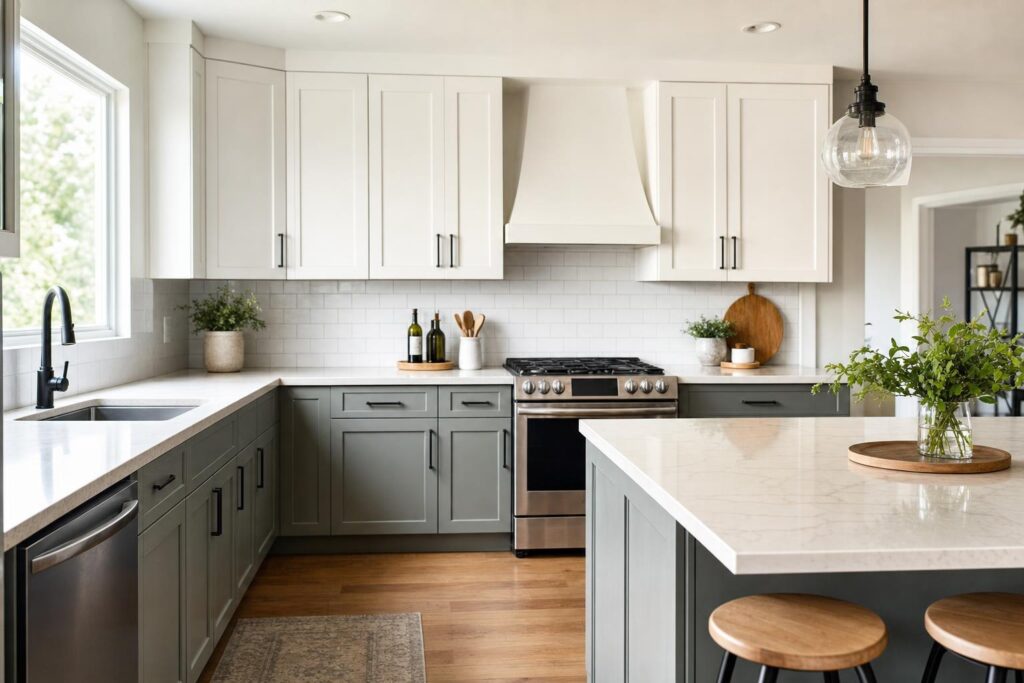
How Should You Sequence Cabinet Refacing and Countertop Replacement?
Sequence cabinet refacing and countertop replacement by approving the design first, removing the old countertop, preparing the cabinets, taking final measurements, and installing the new countertop last. This order supports accurate fitting and coordinated work.
Begin with a consultation to review your existing cabinet boxes, layout, appliances, sink, faucet, backsplash, and countertop options. Approve the cabinet materials and countertop selection before ordering products. A new countertops with refacing project works best when each trade knows the planned finish, edge profile, sink style, and appliance locations.
A Practical Project Timeline
The project usually follows these steps, although the schedule depends on material availability, custom details, and contractor scheduling. Confirm appliance, sink, faucet, and backsplash decisions before final measurements. The countertop fabricator needs finished cabinet surfaces to create an accurate template.
- Complete the consultation and approve the cabinet design, countertop material, hardware, sink, faucet, and related selections.
- Order cabinet doors, drawer fronts, veneer, countertop slabs, and other materials after the design is approved.
- Remove the existing countertop and prepare the cabinet boxes, including repairs, leveling, and installation of new cabinet surfaces.
- Take final countertop measurements after refacing is complete and the cabinets are ready to support the new top.
- Fabricate the countertop, then install it with the sink, faucet, backsplash, appliances, and plumbing connections as scheduled.
Refacing commonly takes several workdays, while countertop fabrication may require additional time after templating. During demolition, your sink may be disconnected, and the kitchen may have limited or no water access. Plan for temporary meal preparation until installation and plumbing are complete.
The refacing company should coordinate with the countertop fabricator, plumber, electrician, and appliance installers. Electrical or plumbing changes should be scheduled before the countertop arrives. For a closer look at the refacing process, review Cabinet Refacing New Jersey: Service Areas and Process.
The right sequence may change for unusual layouts or custom cabinet additions, so confirm the work schedule with every contractor before demolition begins. Careful coordination helps your cabinet and countertop renovation stay organized, accurate, and easier to manage.
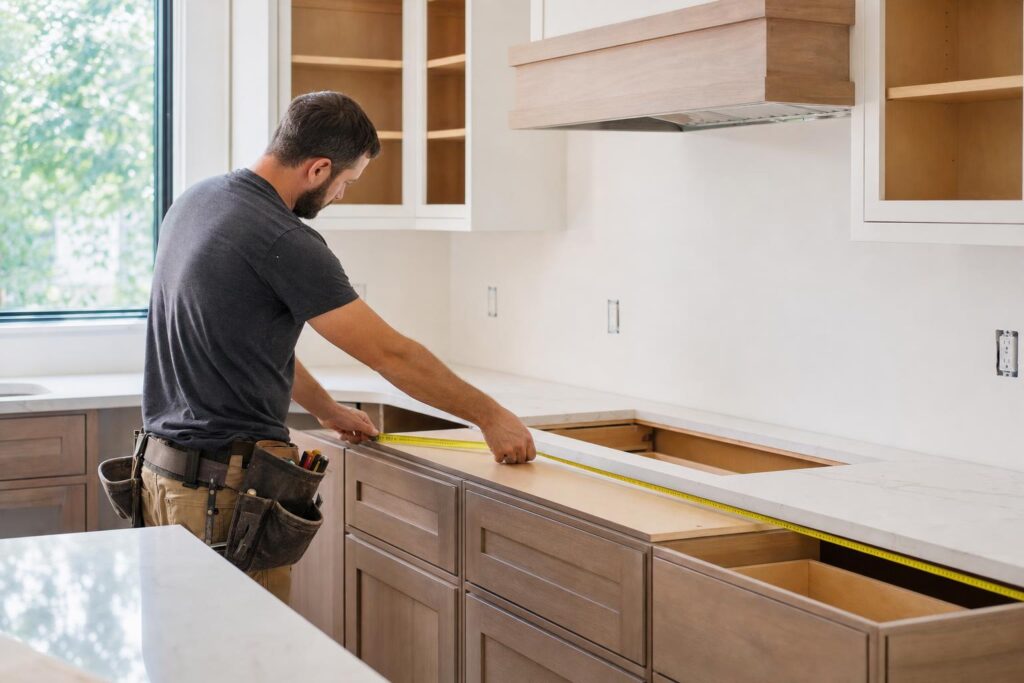
Which Countertop Material Works Best With Refaced Cabinets?
Quartz or solid surface usually works best with refaced cabinets when you want durable, low-maintenance performance, while granite, laminate, or butcher block may be the right choice for a specific style, budget, or care routine.
Quartz offers consistent color, strong everyday durability, and simple cleaning without sealing. Granite provides natural variation and heat resistance but may need sealing according to the manufacturer’s guidance. Solid surface has a smooth, repairable finish with inconspicuous seams. Laminate keeps a kitchen countertop upgrade affordable and offers many patterns, but it needs protection from heat and sharp objects. Butcher block adds warmth and can be sanded or refinished, yet it requires regular care around moisture.
| Material | Durability and maintenance | Style and planning considerations |
|---|---|---|
| Quartz | High durability | clean with mild soap |
| Granite | High durability | clean gently |
| Solid surface | Good durability | easy cleaning |
| Laminate | Moderate durability | protect from heat, cuts, and water |
| Butcher block | Good durability with ongoing oiling and moisture control | Warm wood appearance |
How Do Countertop Options Affect the Design?
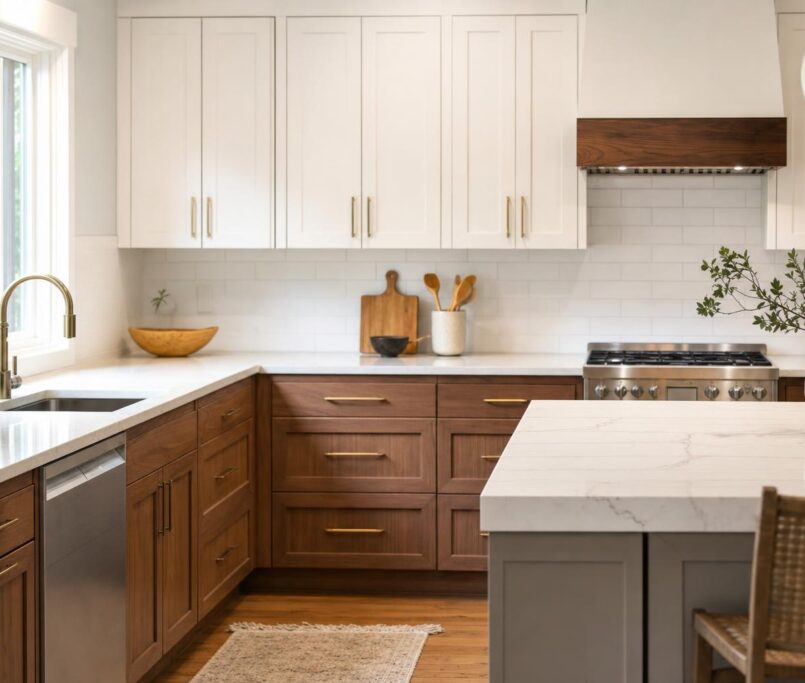
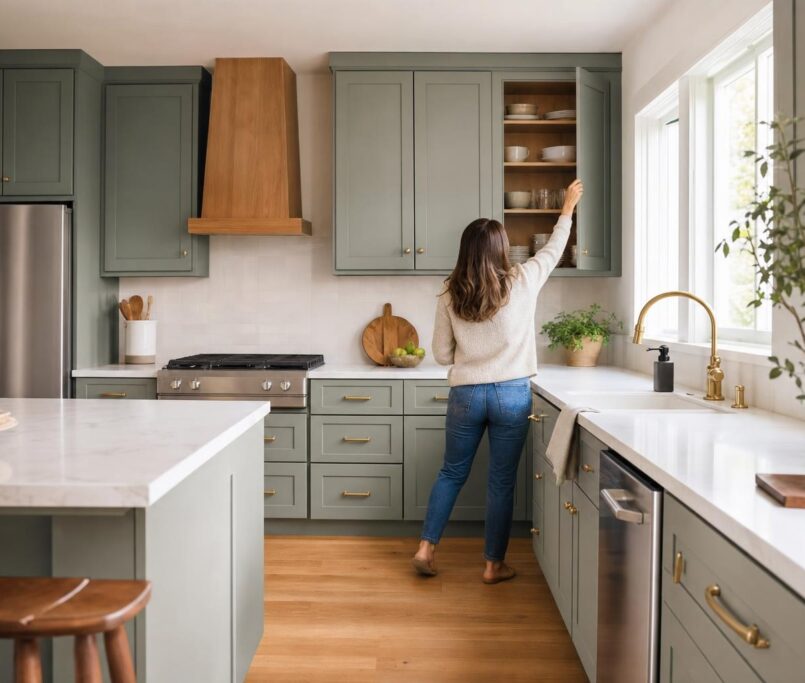
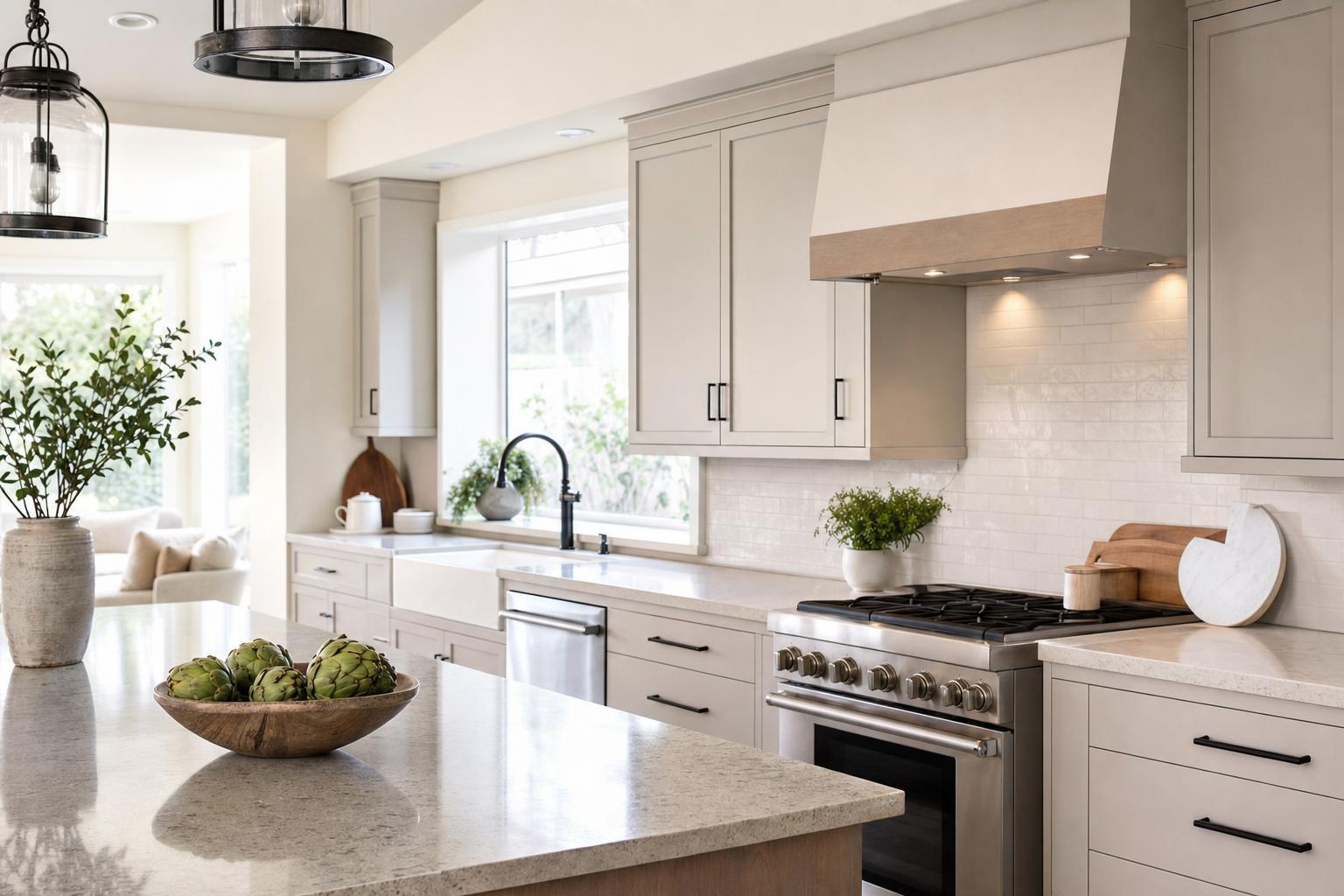
Warm countertops coordinate well with wood-grain, cream, or tan cabinet finishes. Cool gray or white surfaces suit painted white, blue, green, or gray cabinets, while dark counters create contrast against light refaced doors. Laminate can match either look through wood, stone, or solid-color patterns.
Edge profiles, backsplash material, sink configuration, and hardware shape the finished design. A simple eased edge suits modern refacing, while a thicker edge adds visual weight. Undermount sinks create a clean line, and a full-height backsplash uses more material but protects the wall. Review cabinet doors, flooring, walls, hardware, and countertop samples together before choosing. See Cabinet Refacing Cost: What Affects Your Price? when setting the project budget.
- View countertop samples beside your actual cabinet door and flooring samples.
- Confirm whether the existing cabinets can support the countertop’s thickness and weight.
- Plan seams around sinks, corners, and appliance openings.
- Choose the overhang based on seating and support requirements.
- Match the backsplash and hardware to the complete cabinet and countertop renovation.
What Maintenance Should You Expect?
Quartz and solid surface generally need only mild soap, water, and prompt cleanup. Natural stone, including granite, may require sealing based on the product and manufacturer’s instructions. Ask how the selected slab should be cleaned before installation.
Butcher block needs protection from standing water, especially near sinks, and periodic oiling or refinishing. Laminate should stay dry at exposed seams and should not contact hot pans directly. Countertop thickness, seams, and overhangs also affect installation planning, so your refacing contractor should review existing supports before ordering materials.
What Measurements and Coordination Details Matter Most?
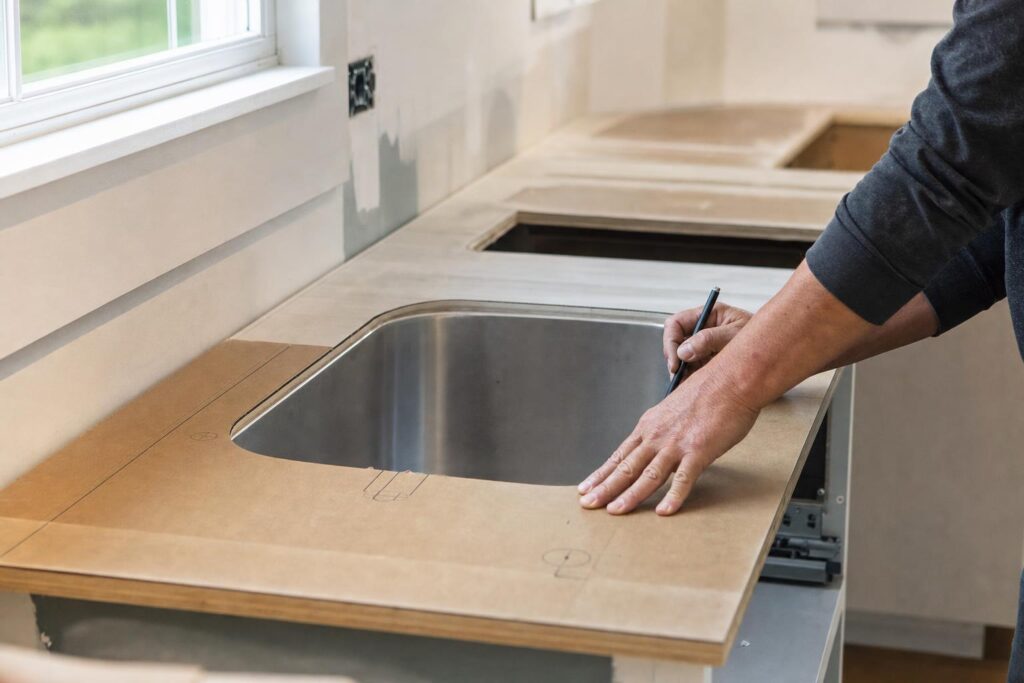
Accurate measurements and clear coordination details are essential for a smooth cabinet refacing countertop replacement project. Record the full cabinet run, wall irregularities, countertop depth, overhangs, seams, and backsplash height. Walls are rarely perfectly straight, so the countertop fabricator needs site-specific dimensions rather than assumptions.
Confirm the locations and measurements of the sink, faucet, cooktop, range, dishwasher, and refrigerator before fabrication. Outlet locations also matter because a new backsplash or countertop may change access around receptacles. During the templating visit, the fabricator measures the existing cabinets and walls after demolition or preparation. Do not rely only on old countertop dimensions, which may not reflect changes to cabinet faces, walls, appliances, or sink openings.
Ask who will disconnect and reconnect plumbing, appliances, garbage disposals, and electrical components. Clarifying these responsibilities helps prevent delays and makes the cabinet and countertop renovation easier to schedule.
Questions to Ask Before Work Begins
Before work begins, confirm who handles demolition, disposal, plumbing, appliance movement, and backsplash removal. Ask about material lead times, seam placement, warranty coverage, and the expected time without a functioning sink. Get a written scope that names the doors, drawer fronts, hardware, countertops, and any custom cabinet additions. If you are choosing new pulls or knobs, Kitchen Cabinet Hardware: How to Choose the Right Style can help you compare practical options.
- The contractor will identify who disconnects and reconnects the sink, faucet, disposal, and dishwasher.
- The scope will state who moves appliances and protects them during installation.
- The countertop plan will show seams, overhangs, sink openings, and backsplash height.
- The schedule will identify expected material lead times and installation days.
- The written agreement will list refacing, replacement parts, hardware, and custom additions.
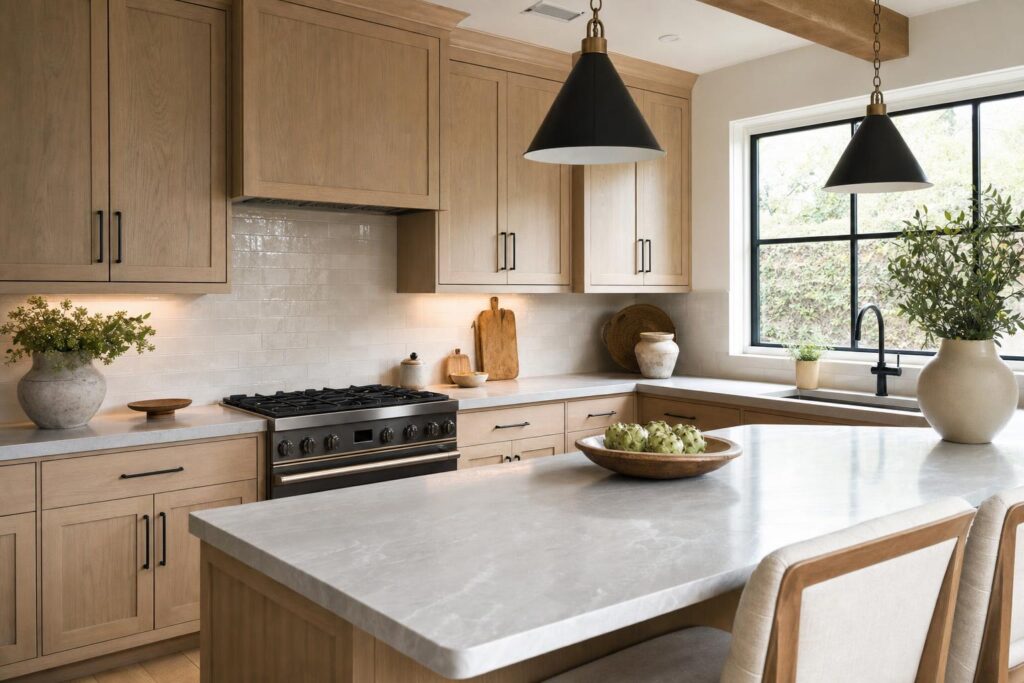
How Can You Plan a Smooth Cabinet and Countertop Renovation?
Plan a smooth cabinet and countertop renovation by confirming your kitchen’s condition, layout, design goals, budget, timing, and preferred maintenance before approving materials or installation.
Start by checking the cabinet boxes, which are the existing cabinet frames. They should be solid, level, and free from significant water damage. Refacing may be the right choice when the layout works and the boxes remain sound. If storage needs or traffic flow must change, custom cabinet additions may be worth considering.
Your budget should account for cabinet finishes, door and drawer front styles, hardware, countertops, sink, faucet, backsplash, and installation. Also decide how much disruption you can manage and whether you prefer a surface that needs regular sealing or simple daily cleaning. These choices help keep the cabinet and countertop renovation focused.
A Simple Decision Checklist
Review the complete scope and estimate before materials are ordered. ReNU Kitchen can guide you through practical options for an existing layout, including finishes, replacement parts, countertop materials, and coordinating details.
- Choose a cabinet finish and door style that suit your room, then confirm the drawer fronts will match.
- Select hardware with the correct size and placement for your doors and drawers.
- Coordinate the countertop, sink, faucet, and backsplash using physical samples when possible.
- Confirm the expected work schedule, access needs, and how long the kitchen may be unavailable.
- Review the full scope, measurements, allowances, and estimate before ordering materials.
Samples can look different under kitchen lighting, so compare them beside your flooring, appliances, and wall color. Matching the cabinet finish with the countertop, hardware, sink, faucet, and backsplash creates a more consistent result than choosing each item separately.
ReNU Kitchen brings more than 26 years of experience in cabinet refacing and custom craftsmanship. The company provides free estimates for homeowners in New Jersey and can explain the options that fit your existing kitchen. The right choice depends on your kitchen’s condition and your priorities, including budget, timing, appearance, and maintenance.
Frequently asked questions
Can you replace countertops without replacing kitchen cabinets?
Yes, homeowners can replace countertops while keeping existing kitchen cabinets when the cabinet boxes are structurally sound and the layout still works. Accurate measurements, appliance clearances, sink openings, and cabinet support must be checked before fabrication. Refacing the cabinets at the same time can create a more coordinated finished appearance.
Should countertops be installed before or after cabinet refacing?
Countertops are generally installed after cabinet refacing and final templating. The refaced cabinet surfaces can affect finished dimensions, and the fabricator needs accurate measurements for walls, overhangs, sinks, and appliances. Scheduling both trades together helps reduce mistakes and limits the time your kitchen is disrupted.
How long does cabinet refacing and countertop replacement take?
The timeline depends on cabinet size, material availability, custom additions, countertop fabrication, and trade scheduling. Many projects involve consultation, ordering, cabinet preparation, templating, fabrication, and installation over several stages. Your contractor should provide a project schedule and explain when the sink and kitchen work areas will be unavailable.
What countertop is easiest to maintain with refaced cabinets?
Quartz and solid surface countertops are commonly selected for relatively simple daily care, although every material requires manufacturer-approved cleaning. Granite may need periodic sealing, while butcher block needs protection from moisture and heat. Laminate is also practical for many kitchens, but its surface requires care around seams and hot objects.
Is cabinet refacing cheaper than a complete kitchen remodel?
Cabinet refacing is often less costly than replacing the entire kitchen because the existing cabinet boxes and layout remain in place. The final price still depends on doors, drawer fronts, materials, hardware, countertop selection, custom additions, and labor. A detailed estimate is the best way to compare options for your kitchen.
How Can You Choose the Right Kitchen Update?
Ready to transform your kitchen? Contact ReNU Kitchen at (732) 890-9911 for your free estimate.