Shaker Cabinet Doors: How to Choose the Right Style
Shaker cabinet doors are a practical choice when you want a clean, adaptable kitchen style without replacing the existing layout. To choose the right option, compare the door profile, color, material, hardware, maintenance needs, and the condition of your current cabinet boxes.
Key takeaways
- Shaker cabinet doors have a flat center panel framed by four simple rails and stiles.
- Shaker style cabinets can suit traditional, transitional, farmhouse, and modern kitchens.
- Painted white, gray, blue, green, and wood-tone finishes are common Shaker cabinet door colors.
- The condition of your existing cabinet boxes determines whether refacing is a practical option.
What Are Shaker Cabinet Doors, and Why Are They Popular?
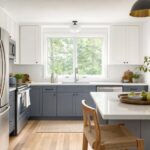
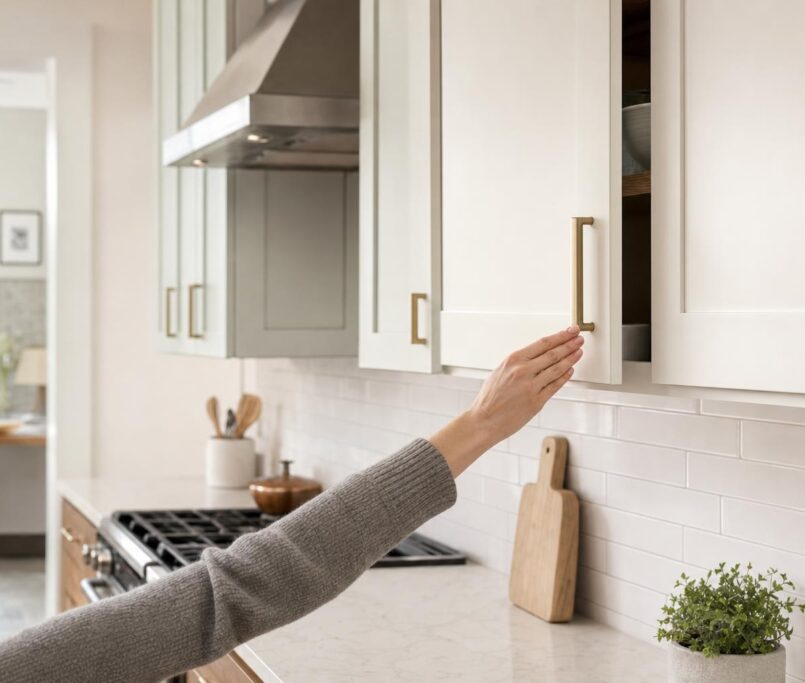
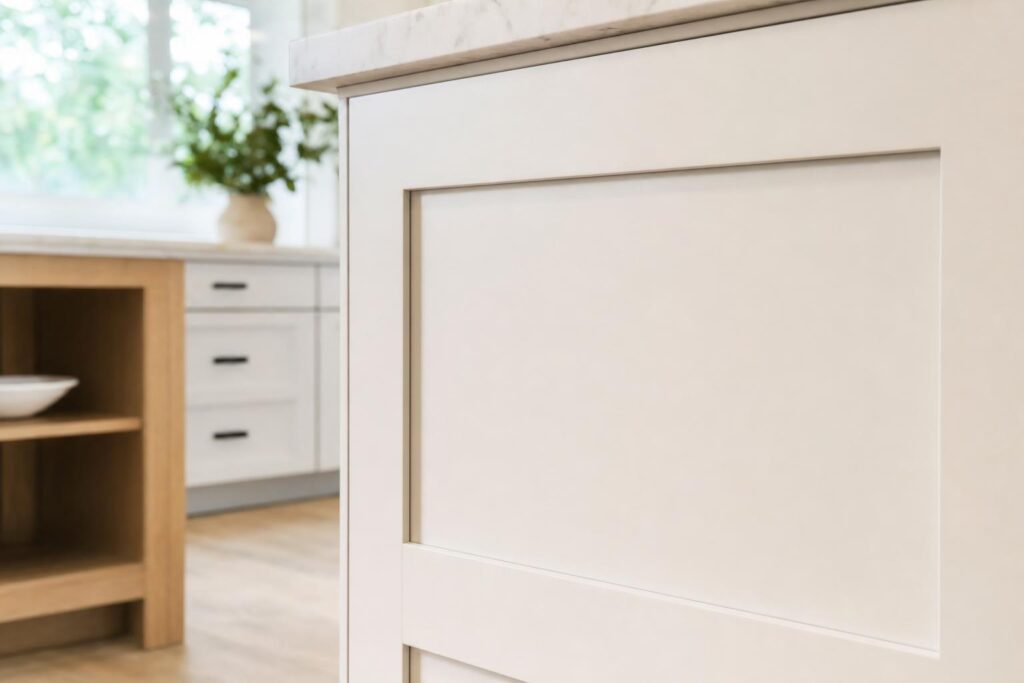
Shaker cabinet doors have a flat center panel framed by four narrow pieces called rails and stiles. This simple construction gives Shaker style cabinets a clean appearance that works with traditional, transitional, farmhouse, and contemporary kitchens.
The design comes from early American furniture made for function rather than decoration. Its restrained profile remains popular because it can look warm or modern depending on the color, hardware, countertop, and lighting you choose. A replacement door changes the door itself, while refinishing updates the existing surface without changing its profile.
During cabinet refacing, Shaker doors can coordinate with your existing cabinet boxes, drawer fronts, countertops, backsplash, and flooring. Renu Kitchen can evaluate your current layout and recommend a refacing approach that fits the condition of the boxes and your project goals. For more planning guidance, read Refacing Kitchen Cabinets: What Homeowners Should Know.
How Do Shaker Doors Differ From Other Cabinet Profiles?
Shaker doors use a simple framed panel, while raised-panel doors have a center section that projects outward. Flat-panel doors have a smooth slab or recessed center, and ornate profiles add curves, bevels, or decorative routing. Door width, edge detail, and drawer-front design also affect the finished appearance.
A full overlay door covers nearly all of the cabinet frame, creating cleaner lines and less visible cabinet structure. A partial overlay leaves more of the frame exposed and can support a more traditional appearance. Your existing layout and cabinet box condition help determine which option is practical.
- A narrow Shaker frame creates a lighter, more streamlined appearance.
- A wider frame gives the door a stronger traditional presence.
- Matching drawer fronts help keep the refaced kitchen visually consistent.
- Simple hardware supports modern Shaker doors, while knobs and detailed pulls suit traditional kitchens.
Will Shaker Cabinet Doors Fit Your Kitchen’s Style and Layout?
Yes, shaker cabinet doors can fit most kitchens when the existing layout, cabinet boxes, room proportions, and remodeling goals support the profile. Small kitchens often benefit from simple doors and low-contrast finishes, while ceiling height and cabinet arrangement help determine whether narrow or wider rails look balanced.
Are Modern Shaker Doors or Traditional Shaker Cabinets Better?
Neither option is universally better; the right choice depends on your home’s architecture and desired level of contrast. Traditional Shaker cabinets suit framed details, warm wood, decorative hardware, and classic countertops such as marble-look quartz. Modern Shaker doors use narrow rails, full overlay construction, simple pulls, and low-contrast colors with solid-surface countertops or slab backsplashes. Door style should also coordinate with drawer front replacement and hardware replacement.
| Kitchen character | Shaker door direction | Recommended hardware | Countertop direction |
|---|---|---|---|
| Traditional | Wider rails and warm painted or wood finishes | Bin pulls, knobs, or cup pulls | Marble-look quartz or natural stone |
| Modern | Narrow rails and full overlay doors | Simple bar pulls in matte black or brushed metal | White, gray, or concrete-look quartz |
| Transitional | Medium rails with a soft neutral finish | Mixed knobs and pulls | Low-pattern quartz or butcher block |
What Should You Check Before Ordering Replacement Doors?
Confirm each opening before ordering replacement doors, especially when refacing existing cabinets. Professional measuring reduces mismatched gaps, hinge problems, and installation delays.
- Measure every door and drawer-front opening precisely.
- Record hinge placement, opening direction, and the required overlay.
- Check drawer-front dimensions and appliance clearances.
- Confirm cabinet boxes are square, dry, securely attached, and structurally sound.
- Review ceiling height, cabinet spacing, and planned countertop changes.
Refacing may be appropriate when the layout works and cabinet boxes remain sound. Damaged boxes, moisture problems, or a poorly planned layout may require replacement; see Cabinet Refacing vs Replacing: Which Is Right for You?. Countertop upgrades and custom cabinet additions can complete the plan without changing every cabinet.
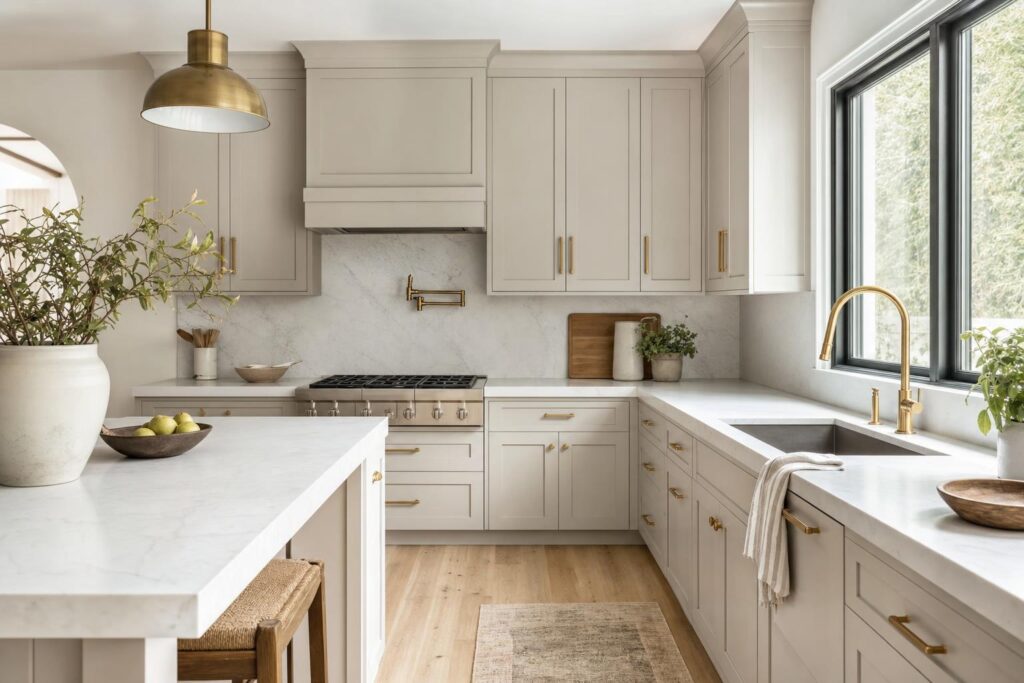
Which Shaker Cabinet Door Colors and Materials Should You Choose?
Choose Shaker cabinet door colors and materials by considering your kitchen’s light, size, existing finishes, daily use, budget, and preferred maintenance level.
White and off-white doors keep smaller kitchens feeling open, while gray adds a softer contrast. Navy, green, and black create stronger focal points and work best when balanced with lighter walls, counters, or flooring. Stained wood suits traditional Shaker cabinets and shows natural grain and variation. Two-tone doors, such as white uppers with navy or wood lowers, can add interest without changing the layout.
Natural light affects how every color appears throughout the day. Compare samples beside your backsplash, countertops, flooring, and wall color rather than choosing a shade in isolation. Painted MDF is a smooth engineered fiberboard commonly used for painted doors, while hardwood provides natural grain and variation. Plywood components offer layered wood construction, and thermofoil or laminate provide practical, uniform surfaces in a range of colors. Ask about cleaning needs, edge details, and durability for your household.
How Do You Match Door Color With Counters and Hardware?
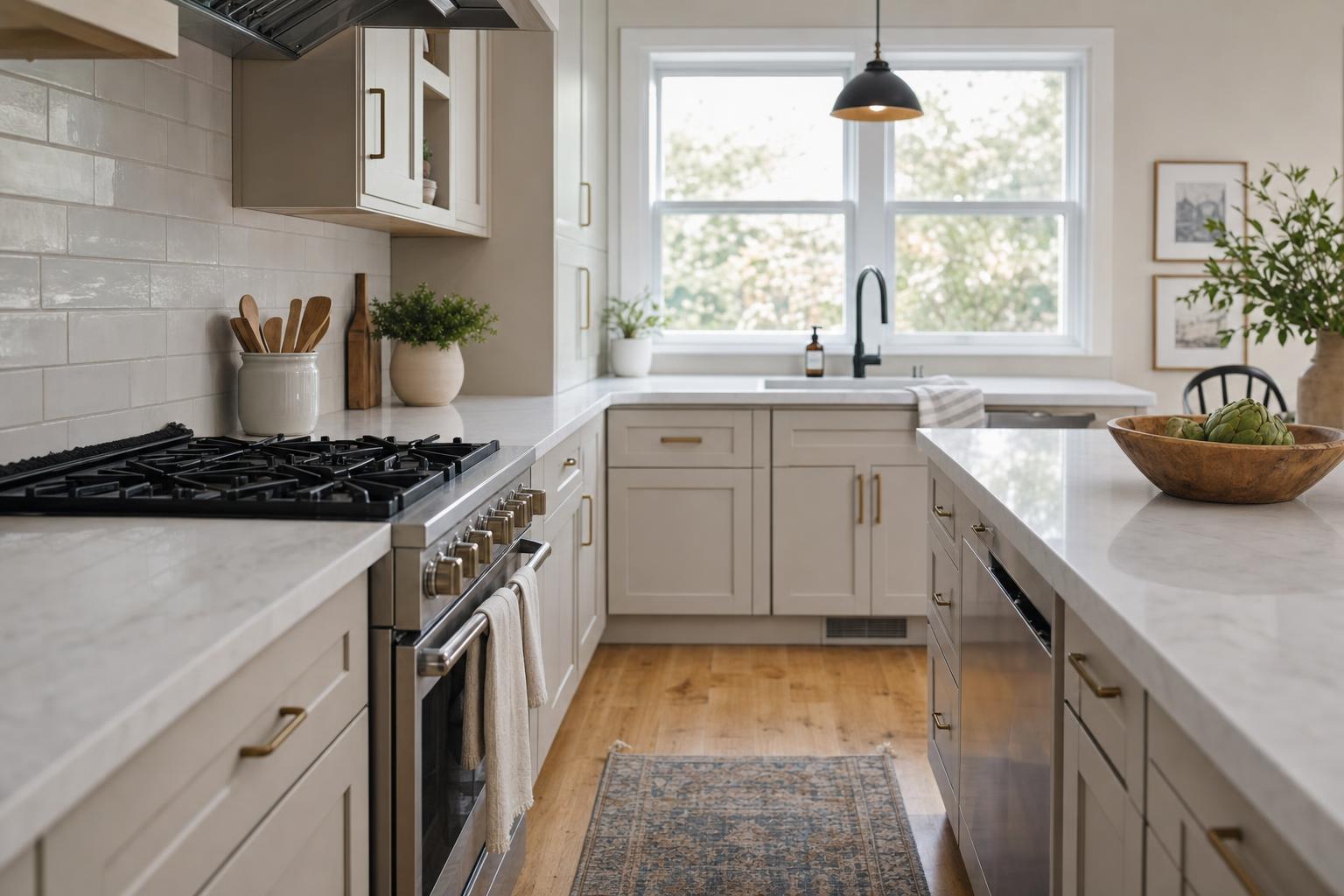
Coordinate undertones instead of matching every surface exactly. Warm counters and flooring usually pair well with cream, green, wood, brass, or bronze, while cool gray surfaces often suit white, gray, navy, or matte black. Hardware changes the character of the same door color: brushed nickel feels clean and versatile, matte black looks sharper, brass adds warmth, and bronze creates a more traditional effect. Renu Kitchen can guide you through finish combinations during a free estimate.
- Use white or off-white doors when you want light colors to reflect more daylight in a smaller kitchen.
- Choose stained wood when visible grain and natural variation matter more than a uniform painted finish.
- Consider two-tone Shaker cabinet doors when you want contrast without adding visual clutter.
- Review painted MDF, hardwood, plywood, thermofoil, and laminate samples against your existing finishes.
- Test physical samples because screens and showroom lighting can distort color.
For more guidance on coordinating knobs and pulls, read Kitchen Cabinet Hardware: How to Choose the Right Style. The right combination depends on your existing cabinet boxes, design goals, and maintenance expectations.
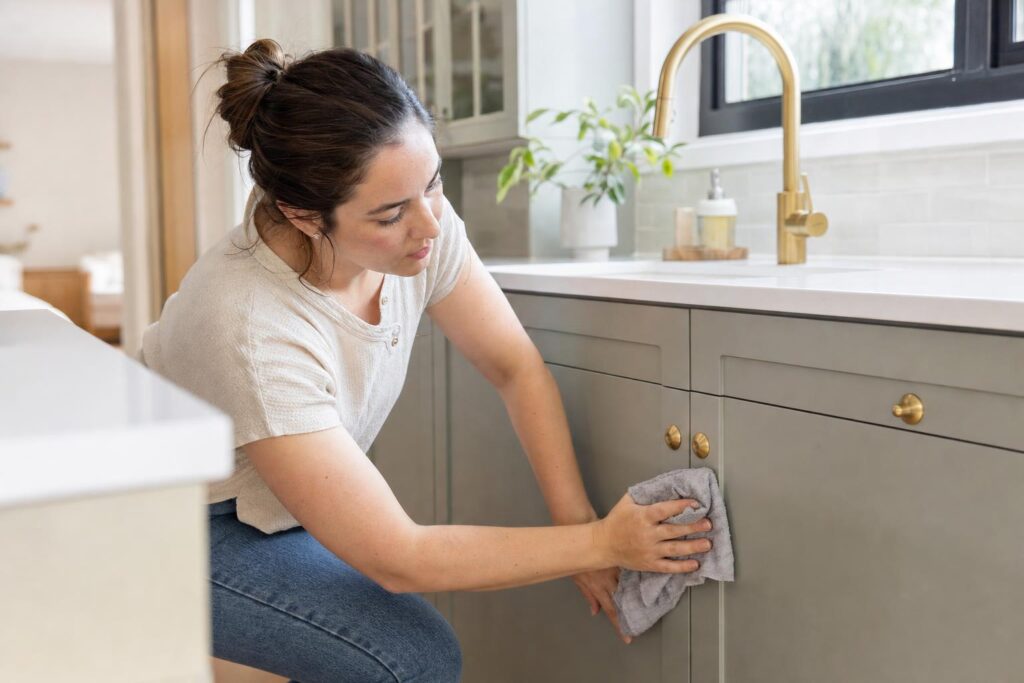
How Do You Maintain Shaker Cabinet Doors After Installation?
Maintain Shaker cabinet doors with a soft damp cloth, mild soap when needed, and prompt drying; avoid abrasive cleaners. This simple routine helps protect the finish and keeps traditional Shaker cabinets looking clean.
Dust and grease can collect inside the door frame’s corners, especially near the range and sink. Wipe these areas regularly, and control moisture because standing water or repeated dampness may damage finishes, edges, and joints.
- Wipe doors with a soft damp cloth rather than a rough sponge.
- Use mild soap only when grease or buildup does not come off with water.
- Dry door surfaces, edges, and areas around the sink immediately.
- Check hinges and pulls occasionally, then tighten loose screws carefully.
- Keep abrasive powders, harsh solvents, and saturated cloths away from the finish.
Painting and refinishing change the surface of your existing doors, but they do not replace damaged doors or alter their construction. Refacing replaces the doors and drawer fronts while covering the cabinet boxes with matching veneer or laminate, which can provide a more consistent final appearance with less disruption than full replacement. For more detail, read Cabinet Refacing vs Painting: Which Is Better for You?.
When Is Refacing the Right Choice for Shaker Doors?
Refacing may be the right choice when your cabinet boxes are sound and your current layout works. You keep the existing footprint while updating the doors, drawer fronts, finish, and often the hardware.
Full replacement makes more sense when the boxes need structural repairs, you want a new footprint, or your storage needs major changes. A professional estimate can account for door count, drawer fronts, hardware, countertops, and custom cabinet additions. ReNU Kitchen has more than 26 years of experience serving homeowners in Freehold, New Jersey, throughout New Jersey, and parts of New York. The right option depends on your cabinet condition, goals, and tolerance for project disruption.
Frequently asked questions
Are Shaker cabinet doors still in style?
Yes, Shaker cabinet doors remain popular because their simple framed profile works across traditional, transitional, farmhouse, and modern kitchens. Their clean lines are easy to pair with different countertops, backsplashes, hardware finishes, and appliances, so homeowners can update the surrounding materials without changing the basic cabinet style.
What is the most popular color for Shaker cabinets?
White and soft off-white remain widely chosen colors for Shaker cabinets because they reflect light and coordinate with many countertops and backsplashes. Gray, blue, green, natural wood, and two-tone combinations are also common. The best color depends on the kitchen’s lighting, finishes, size, and the atmosphere you want.
Are Shaker cabinet doors easy to clean?
Shaker cabinet doors are generally easy to clean with a soft damp cloth and mild soap when necessary. Their inside frame corners can collect dust or grease, particularly near cooking areas, so wipe those edges regularly. Avoid abrasive pads, harsh chemicals, and standing moisture that may damage the finish.
Can you reface cabinets with Shaker doors?
Yes, cabinets can often be refaced with Shaker doors when the existing cabinet boxes are structurally sound and the current layout works for the homeowner. Refacing typically combines new doors and drawer fronts with a new exterior finish. A professional assessment confirms measurements, condition, hardware, and any needed additions.
How Do You Maintain Shaker Cabinet Doors After Installation?
Ready to transform your kitchen? Contact us for your free estimate.