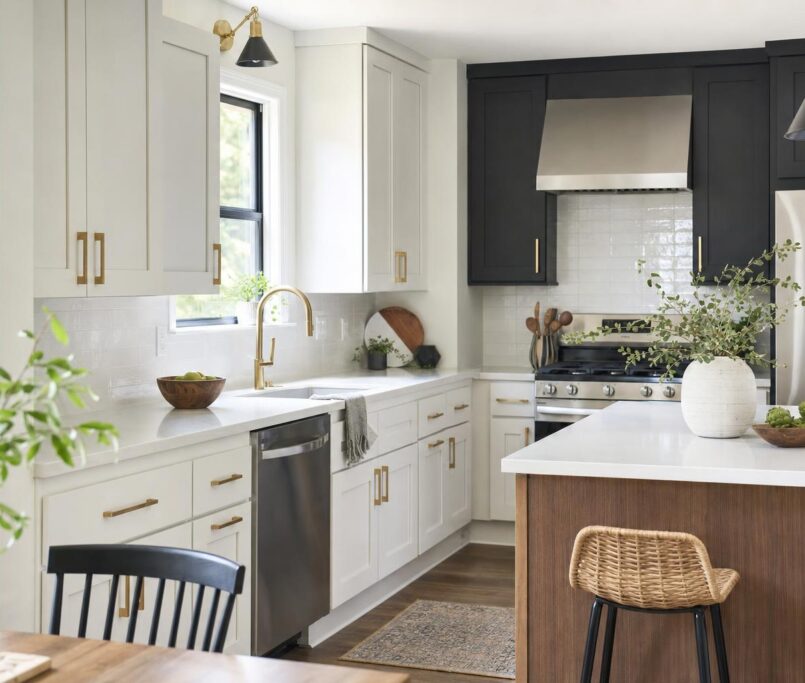
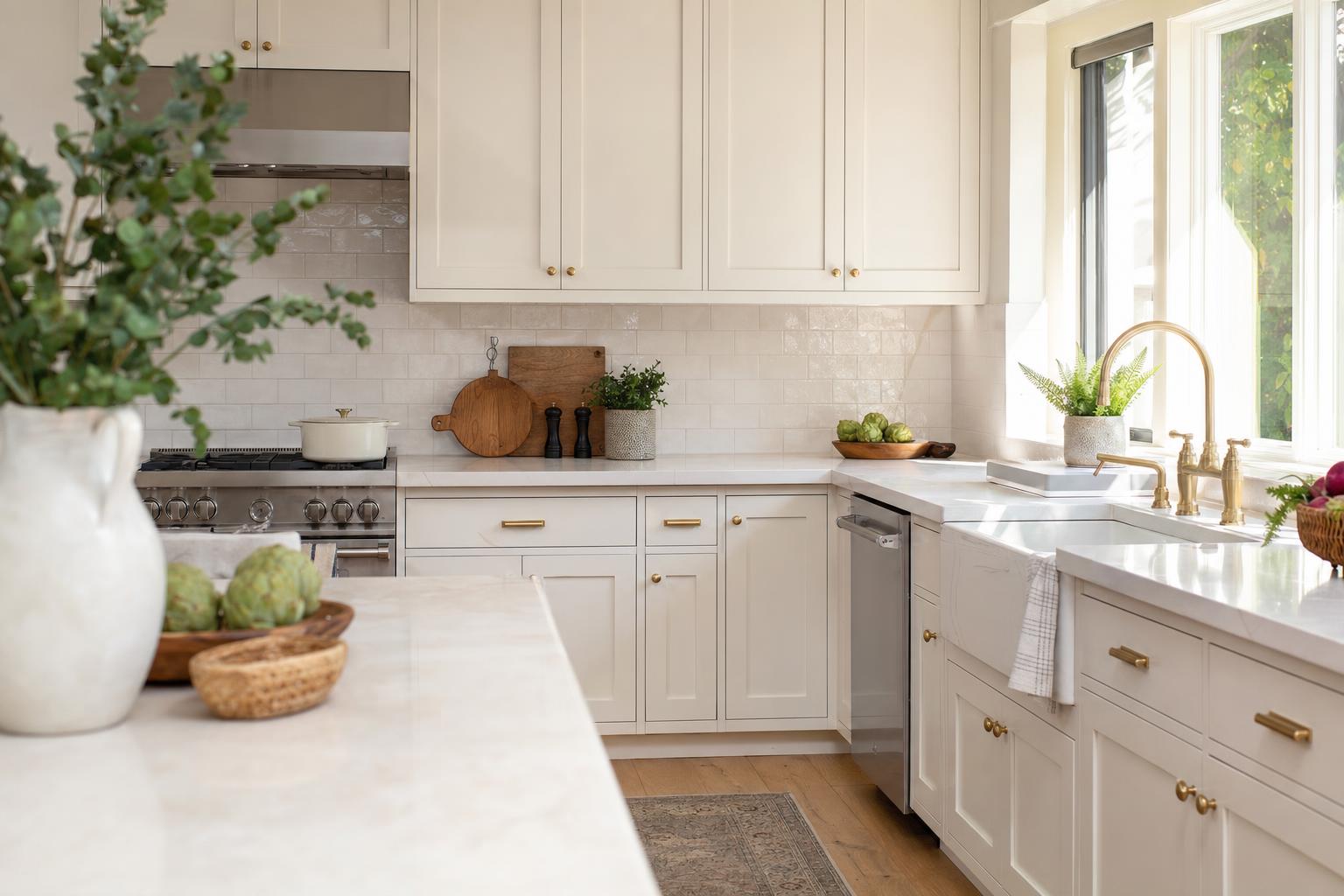
Can You Reface Old Kitchen Cabinets? Key Considerations
Yes, you can reface old kitchen cabinets when the cabinet boxes are structurally sound, dry, and still support the existing layout. Refacing old cabinets may be the right choice when you want updated doors, drawer fronts, finishes, and hardware without replacing the entire kitchen, but severe damage or a poor layout may require another solution.
Key takeaways
- Cabinet refacing works best when existing cabinet boxes are solid, level, dry, and securely attached.
- Water damage, severe warping, pest damage, and failing particleboard can prevent successful cabinet refacing.
- The existing kitchen layout usually remains in place during refacing, so the process will not solve major workflow problems.
- Replacing doors, drawer fronts, hardware, and selected cabinet components can modernize an older kitchen without full replacement.
- A professional inspection can distinguish between a good refacing candidate and a cabinet system needing more extensive renovation.
Can You Reface Old Kitchen Cabinets If the Boxes Are Still Solid?
Yes, solid, dry, securely attached cabinet boxes are generally suitable for refacing, even when the kitchen is several decades old. A cabinet box is the existing cabinet structure, including its sides, top, bottom, and shelves. If these parts remain sound, you can usually update exposed surfaces with new veneer or laminate, then install new doors and drawer fronts.
Suitable cabinets have level boxes, working hinges, stable shelves, and secure attachment to the wall. Refacing old cabinets usually keeps the existing layout, so the sink, appliances, and storage positions stay in place. That makes refacing different from full cabinet replacement, which removes the existing boxes and may change the kitchen’s footprint.
What does cabinet box condition tell you?
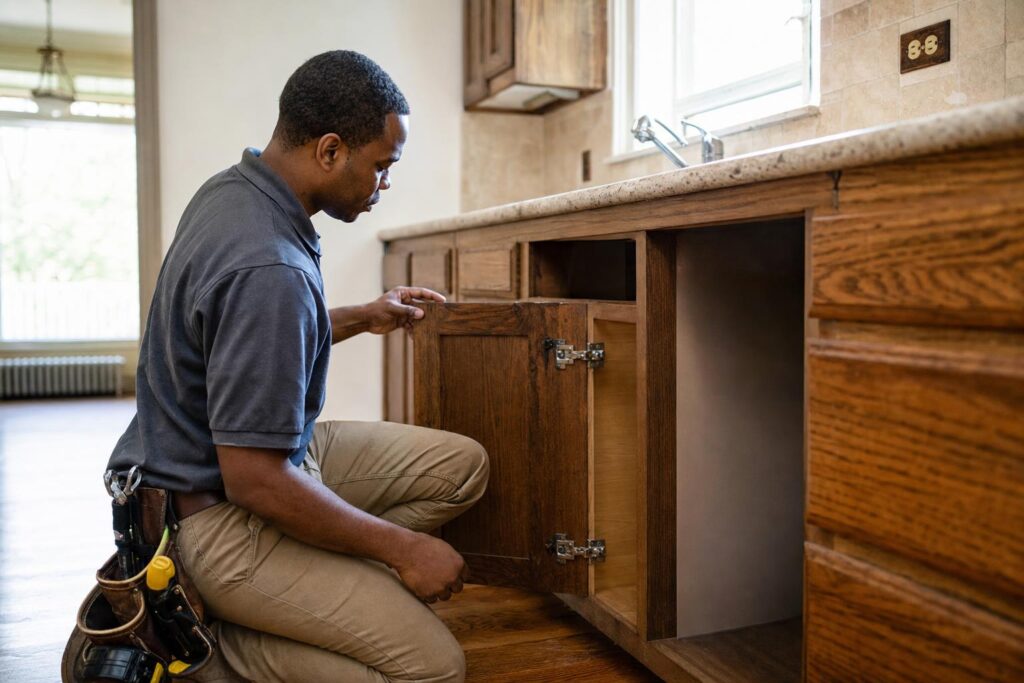
Cabinet box condition shows whether the existing structure can support a new finish and hardware. Open each door and drawer, then check for sagging, loose joints, cracked sides, soft cabinet bottoms, or shelves that shift under light pressure. Inspect the sink-base cabinet and lower corners closely because leaks, standing water, and movement often appear there first.
- The cabinet boxes should sit level without visible leaning or gaps between adjoining units.
- Wall cabinets should remain securely attached, with no pulling away from the wall or movement when you open a door.
- Shelves should stay firmly supported and should not bow, split, or wobble.
- Cabinet sides and bottoms should feel hard and solid rather than soft, swollen, or crumbly.
- Hinges and drawer slides should work properly or have a repairable mounting area.
Cosmetic wear does not necessarily mean structural failure. A dated color, scratched finish, or worn doors can often be addressed through refacing, while damaged boxes require closer evaluation. For practical guidance on materials, process, and planning, read Refacing Kitchen Cabinets: What Homeowners Should Know.
A professional inspection can confirm whether your existing cabinets are a good candidate before work begins. If the boxes are dry, stable, and compatible with your goals, refacing may provide an efficient old cabinet renovation without removing a sound layout.
What Damage Means Old Cabinets Cannot Be Refinished or Refaced?
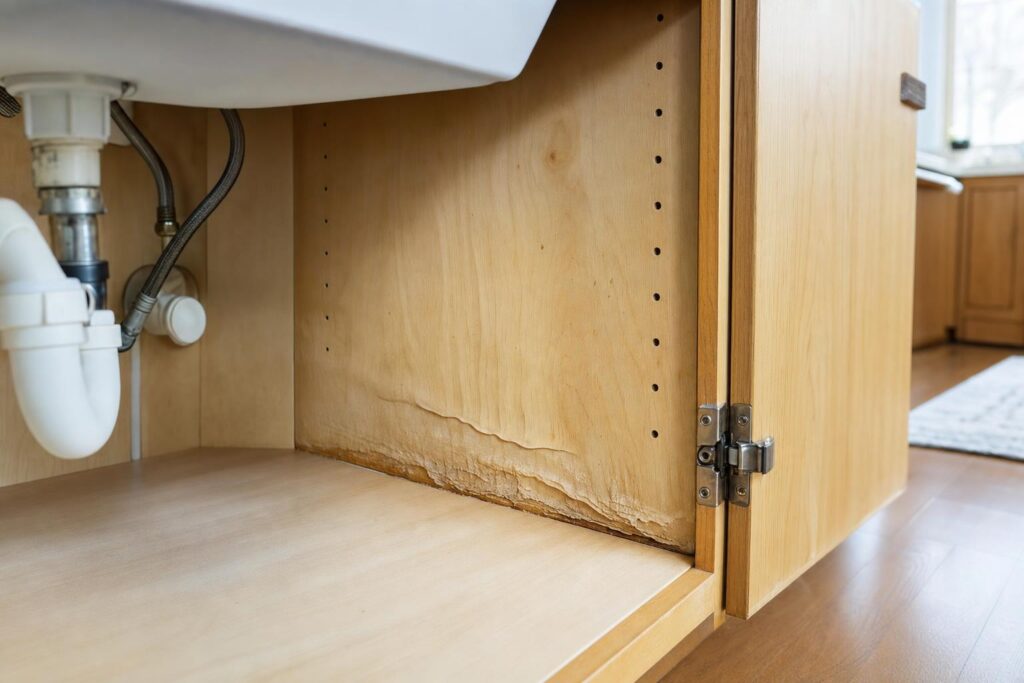
Severe water damage, extensive warping, crumbling materials, or unstable cabinet boxes can make refacing unsuitable. Refinishing means cleaning, repairing, and recoating your existing doors and surfaces. Refacing goes further by applying new veneer to the cabinet boxes and installing new doors and drawer fronts. Minor scratches, dated finishes, and isolated hardware problems may still fit an old cabinet renovation. For budgeting guidance, see Cabinet Refacing Cost: What Affects Your Price?.
When cabinets cannot be refaced
When cabinets cannot be refaced, the cabinet boxes usually show damage that affects their strength, shape, or attachment to the wall. Warning signs include soft cabinet bottoms, severe twisting, missing supports, and failed screws or other fasteners. New doors and veneer cannot correct a box that is no longer stable or square. Resolve any active plumbing leak before refacing begins, especially around the sink and dishwasher.
- Inspect for swollen particleboard, mold, or crumbling material caused by a sink leak.
- Check whether cabinets are pulling away from the wall or separating at their joints.
- Look for termite damage, missing supports, and fasteners that no longer hold.
- Note widespread delamination, where the cabinet surface has separated from its core.
Localized damage may sometimes be repaired or replaced, but widespread damage calls for a broader evaluation. A cabinet professional can determine whether one shelf, side panel, or base section can be replaced without disturbing the rest of the kitchen. Mold, active moisture, and termite damage must be addressed at the source before cosmetic work continues.
Can minor damage be repaired before refacing?
Yes, isolated damage may be repaired before refacing when the remaining cabinet box is sound. Options include replacing one damaged shelf, reinforcing a loose joint, or replacing a single cabinet component affected by moisture. The right repair depends on the material, location, extent of damage, and your final appearance goals. A visible color or texture difference may affect whether repair or replacement is the better choice.
Will Refacing Old Cabinets Work With Your Kitchen Layout?
Refacing old cabinets works best when your existing layout is functional and you want a style update rather than a major redesign. It keeps cabinet boxes, appliances, plumbing, and most storage zones in their current locations.
This approach can suit kitchens where the work triangle and cabinet spacing already support daily use. You can replace doors and drawer fronts, add new hardware, upgrade the countertops, or add a custom cabinet where you need more storage. These changes update the room without rebuilding every cabinet.
Refacing has limits when your goals involve moving an island, removing walls, relocating appliances, or creating substantially more storage. Those changes may require new cabinet sizes, electrical or plumbing work, and a different layout. In that situation, full cabinet replacement may provide more flexibility than refacing old cabinets.
Which kitchen goals fit refacing?
Refacing may be the right choice when your kitchen works well but looks dated. Coordinated door finishes, replacement drawer fronts, updated hardware, and a new countertop can create a consistent design without changing the footprint. Selective custom cabinet additions can fill an open wall or improve storage in one area.
Start by considering whether your cabinet locations and workflow already suit your daily routines. If they do, changing the style without changing the footprint can reduce disruption compared with a full replacement. For hardware ideas, see Kitchen Cabinet Hardware: How to Choose the Right Style.
| Option | What changes | Structural scope | Disruption and suitable project goals |
|---|---|---|---|
| Refacing | Doors, drawer fronts, finish, hardware, and sometimes countertops | Existing cabinet boxes remain | select custom additions may be added |
| Refinishing | Existing doors, drawer fronts, and cabinet surfaces are cleaned, repaired, and recoated | Cabinet boxes and components remain | door style usually stays the same |
| Full cabinet replacement | New cabinet boxes, doors, drawer fronts, and interior storage components | Layout, cabinet sizes, and storage zones can be redesigned | Greater disruption |
The right choice depends on your cabinet box condition, storage needs, and project goals. A professional evaluation can confirm whether refacing provides the updates you want while preserving a layout that already works.

How Should You Evaluate an Older Kitchen Before Refacing?
Homeowners should inspect the cabinet structure, moisture, layout, storage needs, and desired updates before requesting a refacing estimate. This review helps determine whether old cabinet renovation can deliver the changes you want without replacing the existing cabinet boxes.
Start with a simple evaluation of the kitchen. Open doors and drawers, check the areas under the sink, and note any swelling, loose parts, staining, or musty odors. Measure unusual cabinet spaces and list the storage problems you want to solve.
- Check each cabinet box for solid panels, secure joints, level installation, and damage that could affect new doors or drawer fronts.
- Inspect plumbing areas and nearby walls for active leaks, past water damage, swelling, or moisture that must be corrected before refacing.
- Review the existing doors and drawer fronts for worn finishes, broken hinges, poor fit, and styles you may want to replace.
- Consider whether the current layout gives you enough counter space, work space, appliance access, and storage for your household.
- Set project priorities by separating essential repairs from desired updates such as new hardware, countertops, lighting, or custom cabinet additions.
Your cabinet box condition is only one part of the decision. A professional visit can identify repair needs, replacement components, finish options, and details such as whether the existing boxes can accept new doors and drawer fronts. It can also show whether refacing provides enough value compared with replacing selected cabinets or changing the layout.
Bring your storage concerns and preferred style to the estimate appointment. Photos, measurements, and a short list of must-have updates can make the discussion more useful. You can also review the steps involved in Cabinet Refacing New Jersey: Service Areas and Process before the visit.
ReNU Kitchen brings more than 26 years of experience and custom craftsmanship to kitchen refacing projects. The company provides free estimates, a fast turnaround in many situations, and service across New Jersey and parts of New York. Ask for guidance on materials, finish options, repairs, and the expected project schedule.
The right choice depends on your kitchen’s condition, budget, available time, tolerance for disruption, and whether the existing layout works. A careful evaluation helps you choose an old cabinet renovation plan that fits your needs and gives your kitchen useful improvements without unnecessary replacement.
Frequently asked questions
How old can kitchen cabinets be and still be refaced?
Kitchen cabinets do not have a fixed age limit for refacing. Older cabinets can be suitable when their boxes are dry, level, securely attached, and structurally sound. The condition of the materials matters more than the installation date. A professional inspection can identify repairs or replacements needed before new surfaces are installed.
Is it better to reface or replace old kitchen cabinets?
Refacing is often better when the existing layout works and cabinet boxes remain solid. Full replacement may be better when cabinets have widespread structural damage, poor storage, or a layout that no longer suits the kitchen. The right choice depends on condition, design goals, budget, disruption, and desired customization.
Can damaged cabinet boxes be repaired before refacing?
Some damaged cabinet boxes can be repaired before refacing, especially when the problem is isolated to a shelf, joint, hinge area, or small panel. Extensive swelling, rot, severe warping, or crumbling particleboard may require cabinet replacement instead. The repair must restore stability before new veneer, doors, or drawer fronts are added.
Does cabinet refacing change the kitchen layout?
Cabinet refacing generally does not change the kitchen layout. The existing cabinet boxes, appliance locations, plumbing, and storage zones typically remain in place while exposed surfaces, doors, drawer fronts, and hardware are updated. If you need walls removed, appliances relocated, or substantially different storage, a larger renovation may be appropriate.
Find the Right Option for Your Older Kitchen
Ready to transform your kitchen? Contact us for your free estimate.