Cabinet Refacing Materials: Best Options for Your Kitchen
The best cabinet refacing materials depend on your budget, desired appearance, maintenance preferences, and the condition of your existing cabinet boxes. Wood, laminate, rigid thermofoil, and veneer each offer different benefits, so comparing durability, care, and design flexibility can help you choose the right option.
Key takeaways
- Cabinet refacing materials include door, drawer front, and veneer products used to update existing cabinet boxes.
- Wood offers natural grain and repairability, while laminate and thermofoil provide consistent finishes and straightforward maintenance.
- Refacing veneer options include real wood veneer, laminate, and engineered materials that cover visible cabinet surfaces.
- The condition of your existing cabinet boxes and the kitchen layout should be evaluated before choosing a refacing material.
- Renu Kitchen can coordinate cabinet doors, drawer fronts, hardware, countertops, and custom additions as part of a refacing project.
What are the main cabinet refacing materials?
The main cabinet refacing materials are real wood, wood veneer, laminate, and rigid thermofoil for visible surfaces and replacement doors. Refacing replaces your existing doors and drawer fronts, then covers the cabinet boxes, or cabinet frames, with a matching surface.
Cabinet door materials and cabinet box coverings are related but not always the same product. Doors and drawer fronts may use solid wood, MDF, laminate, or thermofoil, while exposed cabinet sides and face frames often receive wood veneer or laminate sheets. Common finish categories include painted, stained, textured, matte, and high-gloss surfaces.
- Real wood provides natural grain and can be stained or painted, but it needs consistent care and may cost more.
- Wood veneer uses a thin layer of real wood over a stable core, giving you natural grain with less material than solid wood.
- Laminate uses a decorative printed layer bonded to a durable surface, with consistent color and simple maintenance.
- Rigid thermofoil is a molded vinyl film sealed over an MDF core, creating smooth doors with few visible seams.
- Painted finishes offer broad color choices, while stained finishes show more of the wood pattern beneath.
For more background on the process, read Refacing Kitchen Cabinets: What Homeowners Should Know before comparing your options.
How do door and drawer front materials differ?
Doors and drawer fronts are the most visible design elements in your kitchen, so their material strongly affects the finished style. Solid wood shows natural grain and can support detailed profiles. MDF is a smooth, stable engineered fiberboard that works well with paint. Laminate cabinet doors provide consistent color and resist everyday wear, while thermofoil doors use a molded vinyl surface over MDF for a smooth, easy-care finish.
Construction is only part of the appearance. Hinge style, door edge profiles, and hardware such as pulls and knobs change how each material looks once installed. Your selected finish, whether painted, stained, matte, textured, or high-gloss, should also work with the counters and flooring.
What are refacing veneer options?
Veneer is a thin decorative layer applied over a stable surface, such as an existing cabinet box or engineered panel. Real wood veneer shows authentic grain and can offer a warm stained appearance, although it may need more careful cleaning. Laminate veneer uses a printed pattern, so its color and grain stay more consistent across the kitchen and usually require simple maintenance.
The veneer should coordinate with your selected doors and drawer fronts in color, texture, and sheen. Matching these surfaces helps the refaced kitchen look intentional instead of pieced together. The right choice depends on your existing boxes, design goals, and preferred care routine.
Which cabinet materials offer the best appearance and design flexibility?
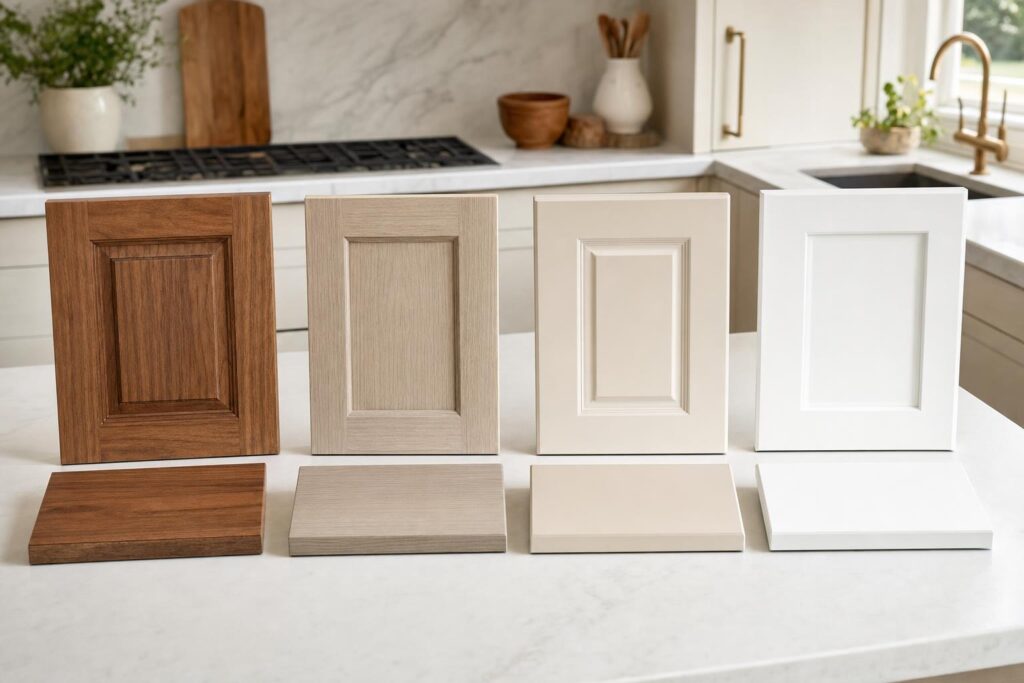
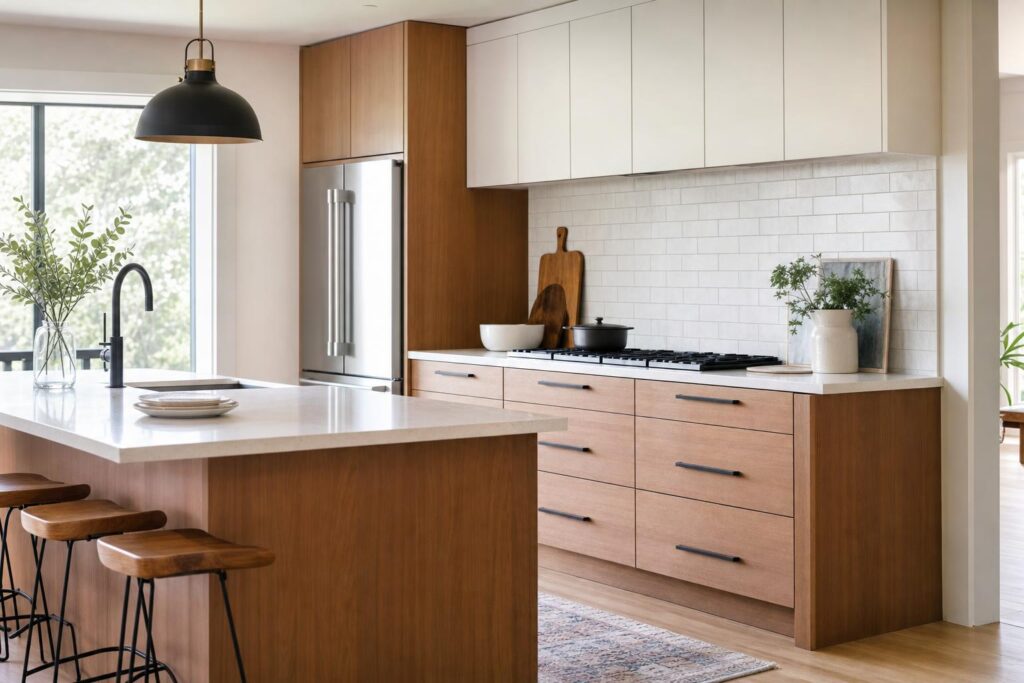
Wood, veneer, laminate, and thermofoil can all provide attractive, flexible finishes, so the right cabinet refacing material depends on your kitchen style, color goals, and preferred level of visual variation. Natural wood shows real grain and subtle differences from door to door, while painted finishes create a more uniform appearance.
Painted wood or veneer supports soft whites, deep greens, warm neutrals, and other custom colors. Solid-color laminate cabinet doors offer consistent results across doors, drawer fronts, and cabinet sides. Printed or textured patterns can reproduce wood grain, stone-inspired looks, or other surfaces without the variation of natural wood.
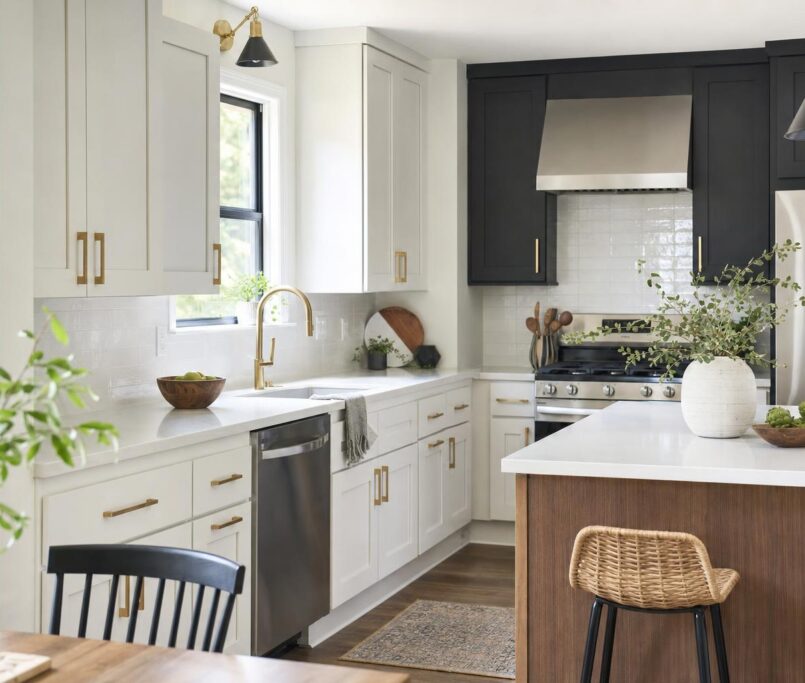
Your design can match every visible surface or use contrast for more definition. For example, you might pair light doors with a darker island, or coordinate cabinet sides and trim with the doors while choosing contrasting drawer fronts. Refacing veneer options also make it easier to cover exposed cabinet boxes so the finished kitchen looks intentional.
How should you match materials to your kitchen style?
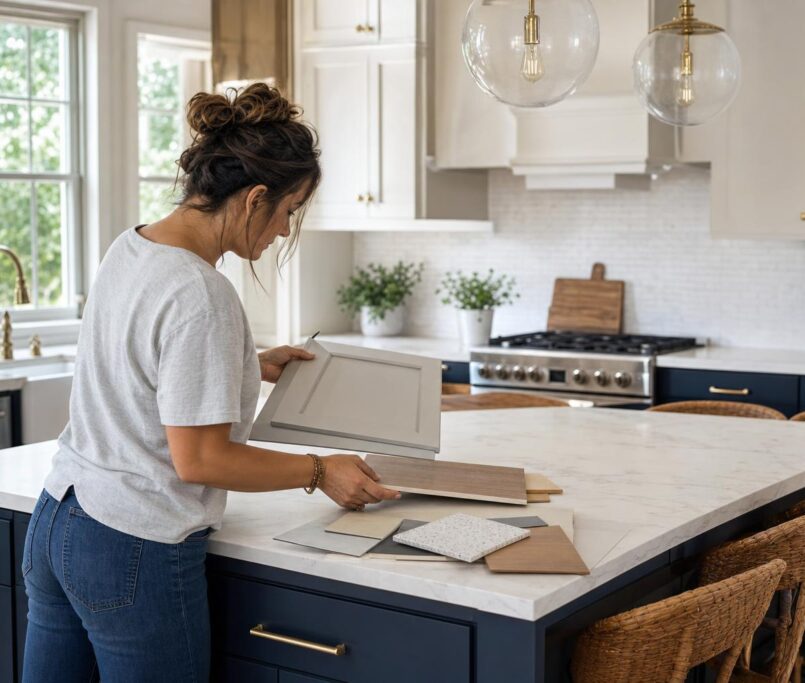
Match wood grain and raised-panel profiles with warmer, traditional kitchens; choose flat-panel doors, matte finishes, and consistent colors for a contemporary direction. Transitional kitchens often combine simple profiles with subtle wood grain or a restrained painted finish. View physical samples beside your flooring, countertops, backsplash, and lighting before choosing.
- Natural wood grain works well when you want visible variation and a warm, traditional character.
- Raised-panel doors add depth and suit classic kitchens with detailed trim.
- Flat-panel doors create clean lines for contemporary and transitional layouts.
- Matte solid colors reduce glare and keep the design visually consistent.
- Textured patterns can add interest when you want more detail without a raised profile.
Door profiles, edge details, and color should also work with your hardware. The right pulls or knobs can reinforce a contemporary, transitional, or traditional direction; see Kitchen Cabinet Hardware: How to Choose the Right Style for guidance. Samples help you compare these choices in your actual kitchen rather than under showroom lighting.
No single material is best for every home. The right choice is the one that supports your desired style, coordinates with existing finishes, and gives you the appearance and design flexibility your kitchen needs.
How durable and easy to maintain are different refacing materials?
Wood, veneer, laminate, and thermofoil can all perform well when properly installed, but laminate and thermofoil usually need the least care, while wood offers easier spot repair. Daily use, moisture, heat, and the quality of sealed edges affect how long any material looks its best.
| Appearance | Maintenance | Durability | Design flexibility |
|---|---|---|---|
| Wood | Wipe spills promptly | use a mild cleaner approved for the finish | may need refinishing over time |
| Veneer | Clean with a soft cloth and manufacturer-appropriate mild cleaner | avoid soaking edges | Real-wood surface can scratch or chip, while sealed edges help limit moisture damage |
| Laminate | Low-maintenance surface | wipe with a soft cloth and mild cleaner | avoid abrasive pads |
| Thermofoil | Simple routine cleaning with a soft cloth and approved mild cleaner | keep heat away from doors | Smooth surface resists stains and moisture, but excessive heat may cause peeling or separation |
Wood cabinet refacing needs attention around sinks, dishwashers, and ranges because standing water and heat can affect the finish. Veneer has a thin real-wood surface over a stable backing, so deep scratches may be harder to repair without replacing the panel. Laminate and thermofoil are practical for busy kitchens, but damaged edges, peeling, or heat exposure may require a replacement door or drawer front.
Proper installation makes a major difference. Tight seams, correctly applied adhesive, and sealed edges help keep moisture from reaching the cabinet boxes or the material backing. No cabinet material is completely damage-proof, so wipe spills promptly and use trivets near high-heat appliances.
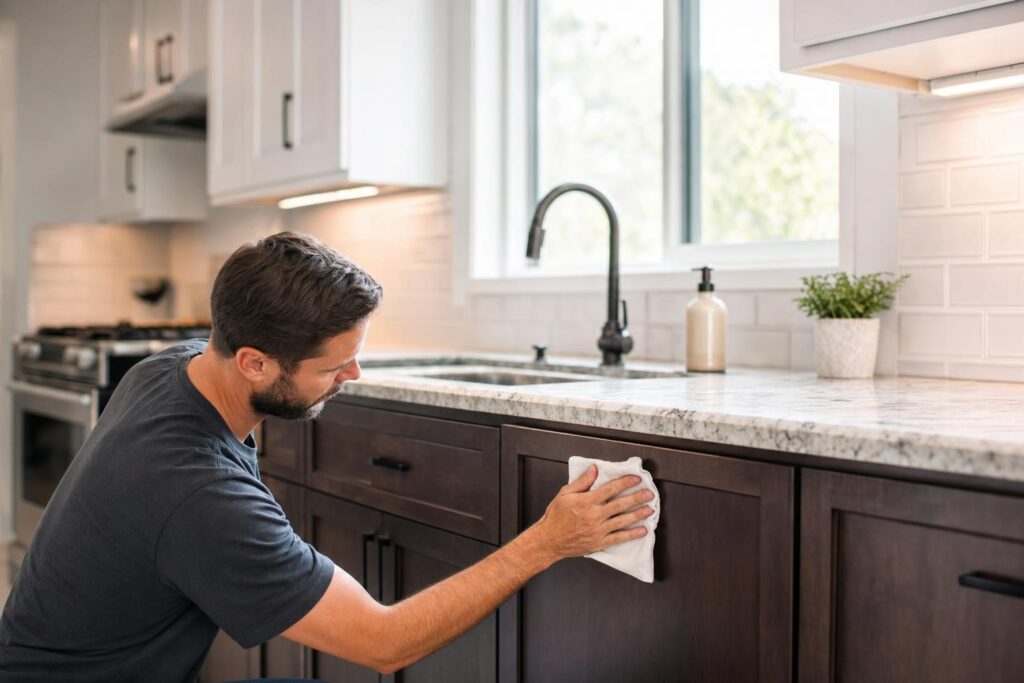
For routine care, remove dust with a soft cloth and clean marks with a manufacturer-appropriate mild cleaner. Avoid bleach, harsh degreasers, abrasive sponges, and excess water unless the product instructions specifically allow them. Your material choice can also affect the overall project price, along with door style, hardware, and countertop work; Cabinet Refacing Cost: What Affects Your Price? explains these factors.
The right choice depends on how you use your kitchen, the moisture and heat around each cabinet, and whether you prefer simple cleaning or easier future repair. A professional review of your existing cabinet boxes and layout can help you choose refacing materials that balance appearance, care, and everyday durability.
How do you choose the right material for an existing kitchen?
Choose the right material by matching your cabinet boxes, budget, household use, project timing, and desired level of customization. The best option must also suit your kitchen’s moisture, sunlight, cleaning, and daily wear.
Start by inspecting the existing cabinet boxes, hinges, drawer operation, moisture damage, and layout. Refacing works best when the boxes are structurally sound and the layout already functions well. If the boxes are damaged or the layout needs major changes, replacement or custom additions may be more practical.
- Inspect the cabinet boxes for swelling, loose joints, water damage, and areas that cannot hold new material.
- Test every hinge and drawer to identify worn hardware, sticking parts, or damaged openings.
- Compare material samples against your budget, cleaning needs, children, pets, sunlight, and moisture exposure.
- Confirm whether replacement doors, drawer fronts, hardware, countertops, or custom cabinet additions belong in the project scope.
- Review the full proposal, measurements, samples, timing, and care requirements before approving the work.
When is wood cabinet refacing the right choice?
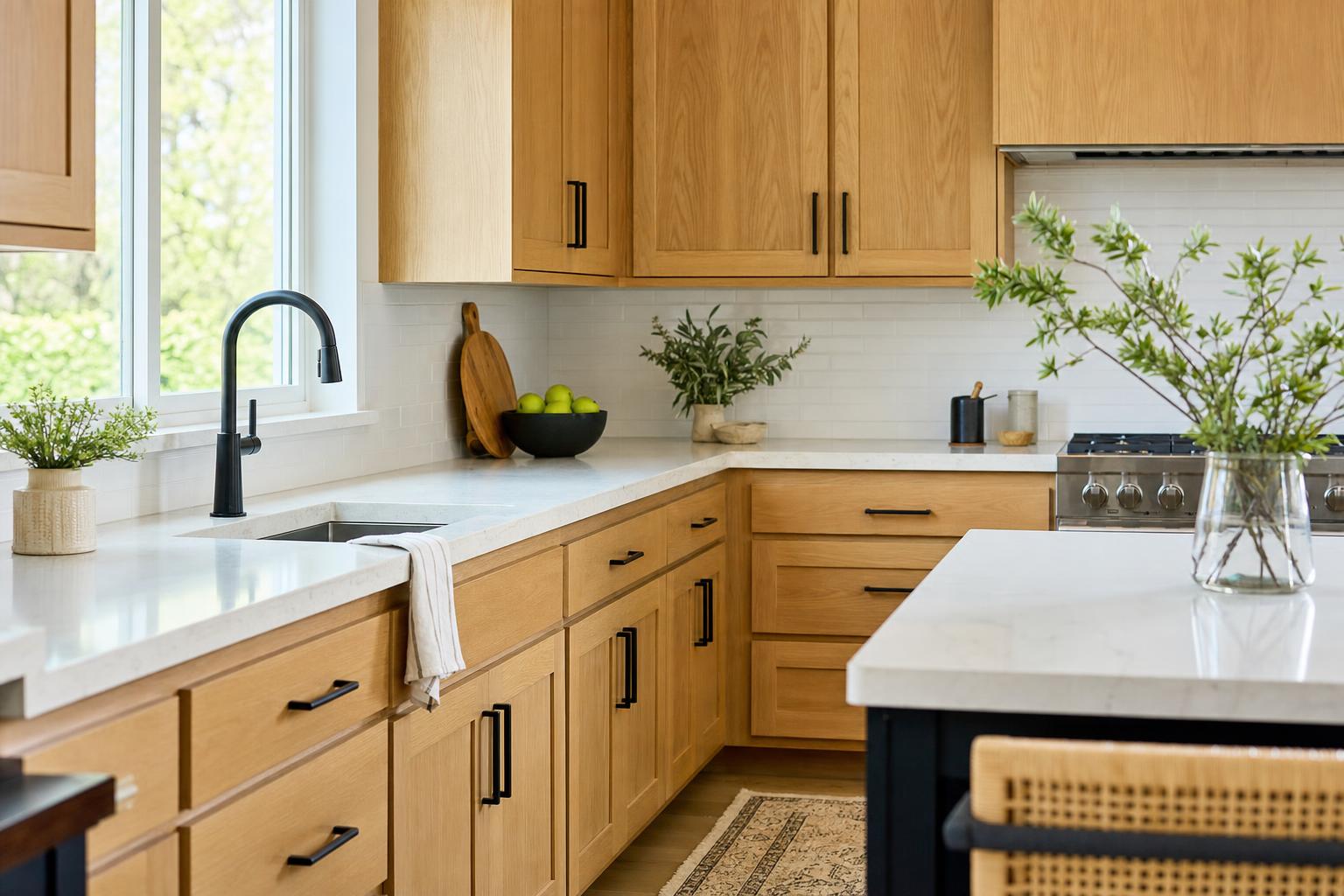
Wood cabinet refacing may be the right choice when you value natural grain, stain variation, and a more custom appearance. Real wood can often be repaired or touched up if minor damage occurs, depending on the species and finish. It also gives you options such as oak, maple, cherry, or another selected wood with a clear or colored stain.
Wood requires appropriate cleaning and should not stay wet, especially near sinks and dishwashers. Natural pieces may vary in grain and color, so doors and drawer fronts may not match perfectly. The existing cabinet layout still needs to be sound for wood cabinet refacing to make sense.
What should you confirm before ordering materials?
Confirm each opening’s measurements, door style, overlay, edge details, finish, and hardware locations before materials are ordered. Check how the selected material will meet beside countertops, appliances, walls, and existing trim. Samples can help you judge color and texture in your kitchen’s actual light.
Review installation timing, warranty coverage, and care instructions with your contractor. If you are considering added storage, read Custom Cabinets During Refacing: Is It Worth It? before finalizing the scope. The right choice should fit your home, schedule, and long-term maintenance preferences.

Why choose Renu Kitchen for cabinet refacing guidance?
Renu Kitchen provides experienced guidance to help you compare cabinet refacing materials and complete a coordinated kitchen update. With more than 26 years of experience, the company serves homeowners across New Jersey and parts of New York.
Material selection should match the condition of your existing cabinet boxes, your design goals, maintenance expectations, and budget. A professional review can show whether your cabinets are suitable for refacing, whether repairs are needed, and which veneer, laminate, wood, or thermofoil options fit your kitchen.
What can a refacing consultation cover?
A consultation begins with the existing cabinet boxes, layout, measurements, and any areas that may need repair before new surfaces are installed. You can compare material samples, door styles, drawer fronts, colors, and hardware in relation to your current kitchen. The discussion can also include countertop upgrades or custom cabinet additions if you want those changes completed as part of the same project.
- The consultation can identify whether your existing cabinet boxes are structurally sound for refacing.
- Measurements help determine the correct sizes for replacement cabinet doors and drawer fronts.
- Material samples let you compare color, texture, cleaning needs, and overall appearance in your kitchen.
- Hardware options can coordinate cabinet handles and knobs with the selected door style.
- Countertop upgrades can be reviewed alongside new cabinet surfaces for a more consistent result.
- Custom additions may provide useful storage without changing the entire kitchen layout.
Renu Kitchen refaces existing kitchens with cabinet doors, drawer fronts, veneers, hardware, countertops, and custom cabinet additions. This approach can update the visible parts of your kitchen while keeping a layout that already works for your household.
Custom craftsmanship, a fast turnaround, free estimates, and a focus on customer satisfaction support a more organized remodeling process. Project timing and pricing depend on the materials, measurements, repairs, and selected upgrades, so ask for a quote based on your kitchen.
The right material is the one that suits your cabinets and your daily needs, not simply the one with the lowest price or a particular appearance. Ready to transform your kitchen? Contact Renu Kitchen for your free estimate and practical guidance on the available options.
Frequently asked questions
What is the most durable material for cabinet refacing?
Laminate and rigid thermofoil are practical durable choices for many cabinet refacing projects because their sealed surfaces resist everyday stains and are simple to clean. Real wood is also durable when properly finished and maintained. The best choice depends on edge protection, installation quality, moisture exposure, and household use.
Are laminate cabinet doors a good choice for a kitchen?
Laminate cabinet doors can be a good choice when you want consistent color, broad design options, and easy routine maintenance. They are available in solid, wood-look, matte, and textured finishes. Quality construction and properly sealed edges remain important, particularly around sinks, dishwashers, and other moisture-prone areas.
Can cabinet refacing use real wood veneer?
Yes, cabinet refacing can use real wood veneer, which is a thin layer of natural wood applied over a stable substrate. It provides authentic grain and stain variation while using less solid wood than a fully solid-wood construction. Veneer should be cleaned gently and protected from prolonged moisture.
Should cabinet doors and drawer fronts use the same material?
Cabinet doors and drawer fronts usually use matching materials and finishes for a unified appearance, although contrasting colors or textures can create a deliberate design feature. The selected materials should coordinate with the cabinet box covering, trim, countertop, backsplash, and hardware so the completed kitchen looks intentional.
How do I know whether refacing is right for my kitchen?
Refacing may be right when your existing cabinet boxes are structurally sound and you want a new appearance without changing the basic layout. Replacement may be more appropriate when boxes have major water damage, severe deterioration, or an impractical layout. A professional inspection can clarify the options and project scope.
Why choose Renu Kitchen for cabinet refacing guidance?
Ready to transform your kitchen? Contact us for your free estimate.