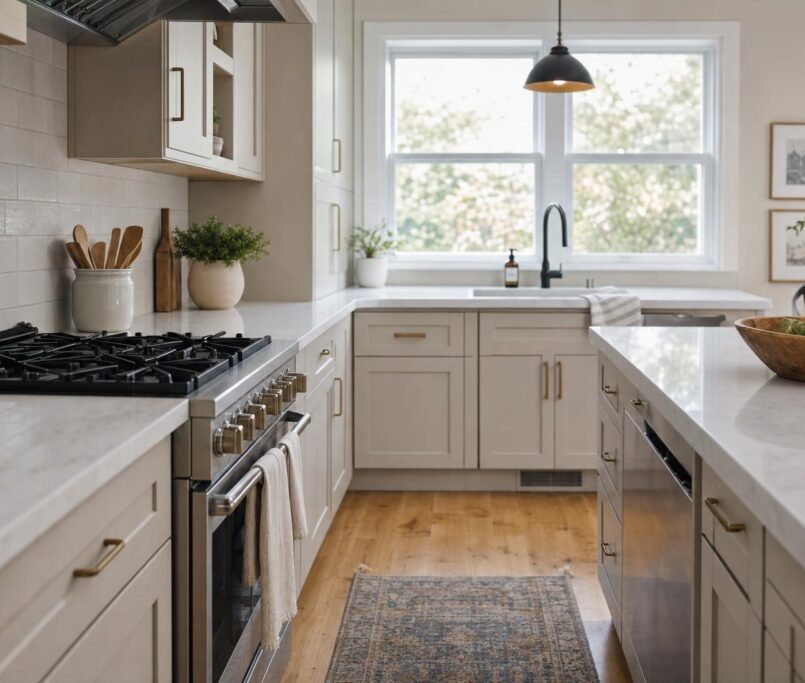
Soft Close Hinges Cabinet Refacing: What to Know
Yes, soft close hinges cabinet refacing projects can often include a quieter, more controlled door-closing upgrade. Compatibility depends on your cabinet construction, existing hinge style, door overlay, and the condition of the cabinet boxes, so the hinges should be evaluated before installation.
Key takeaways
- Soft close hinges use a built-in damper to slow cabinet doors before they close.
- Cabinet refacing can be a practical time to replace compatible hinges while new doors and drawer fronts are installed.
- Hinge compatibility depends on the cabinet box, door overlay, mounting pattern, and hinge dimensions.
- Soft close hinges may reduce slamming and improve the daily feel of an existing kitchen.
What Are Soft Close Hinges, and Why Add Them During Refacing?
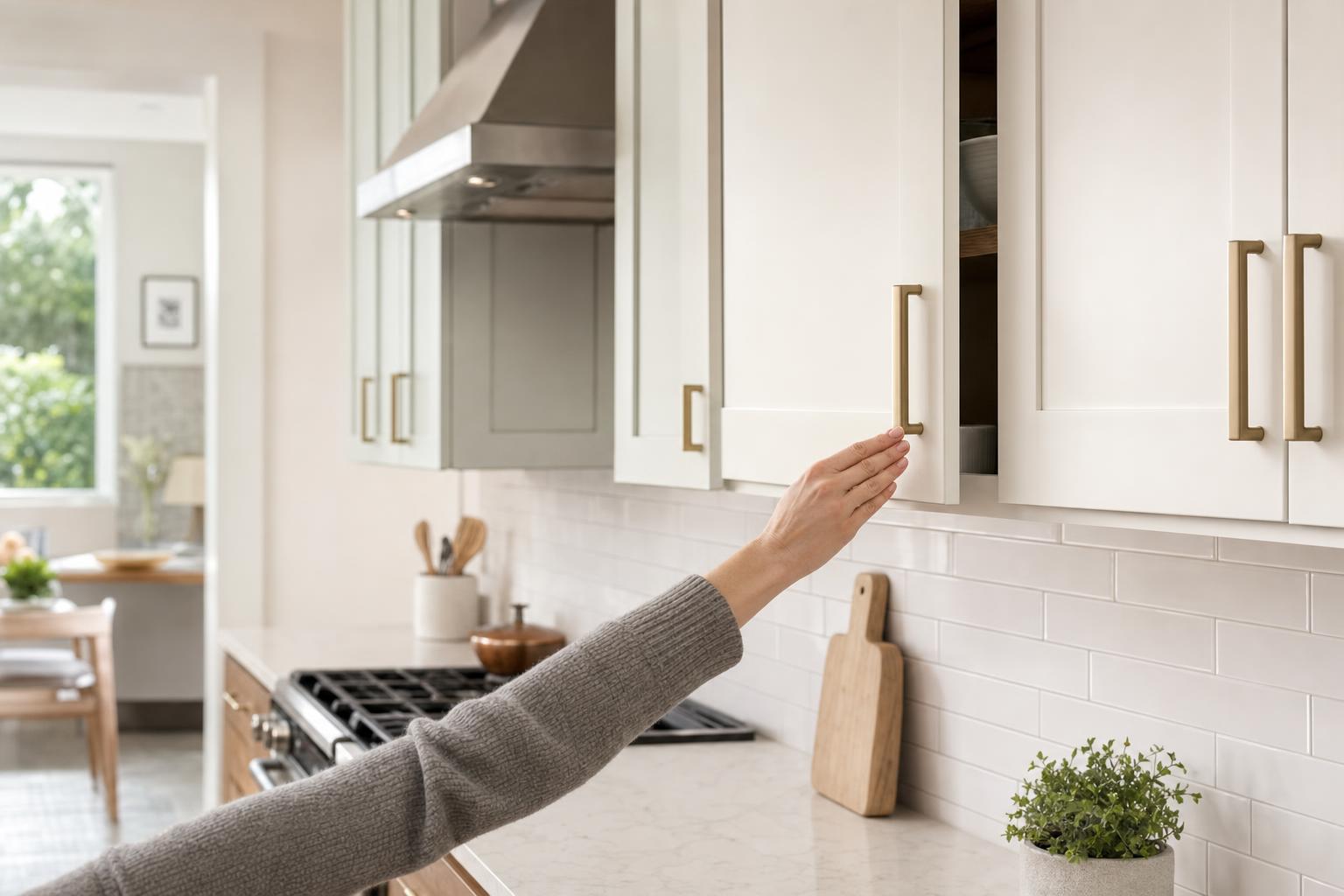
Soft close hinges use a built-in damper to slow the cabinet door before it shuts, creating a quieter and more controlled closing motion. Unlike standard doors that close quickly or may slam, soft close cabinet doors move gently through the final part of their travel. The upgrade is often practical during refacing because the cabinet doors are already being removed.
Cabinet refacing updates the visible surfaces of your existing kitchen, including door and drawer fronts, while preserving the current cabinet layout. With the doors off, your installer has a convenient window to inspect the hinge locations and replace compatible hinges before the new or refinished doors go back on. This can reduce the need for a separate hardware project later.
A cabinet hinge upgrade may help reduce noise, limit the impact that repeated slamming places on doors and cabinet boxes, and give you a more controlled closing motion. It does not change the storage layout or add cabinet space. ReNU Kitchen evaluates the existing cabinet boxes, door overlay, hinge style, and mounting areas before recommending whether the upgrade is suitable.
How Does a Soft Close Mechanism Work?
A soft close hinge uses a small hydraulic or mechanical damper to resist the door as it nears the closed position. The damper controls the final portion of the closing movement rather than holding the door open, so you can still open and close the door normally. Depending on the hinge design, adjustments may let the installer fine-tune closing speed or correct minor door alignment issues.
- The hinge slows the door during the last few inches of closing.
- The damper helps prevent a sharp impact against the cabinet box.
- The hinge does not keep the door from opening during normal use.
- Some models allow adjustments for closing resistance or door alignment.
- Compatibility depends on the door overlay, cabinet construction, and available mounting space.
Your refacing hardware options may include soft close hinges, new knobs or pulls, and matching drawer hardware. For background on how the larger project works, read Refacing Kitchen Cabinets: What Homeowners Should Know. The right cabinet hinge upgrade depends on your existing construction and project goals, so professional guidance can help you choose hardware that fits and performs properly.
Can Any Cabinet Hinge Be Replaced During Refacing?
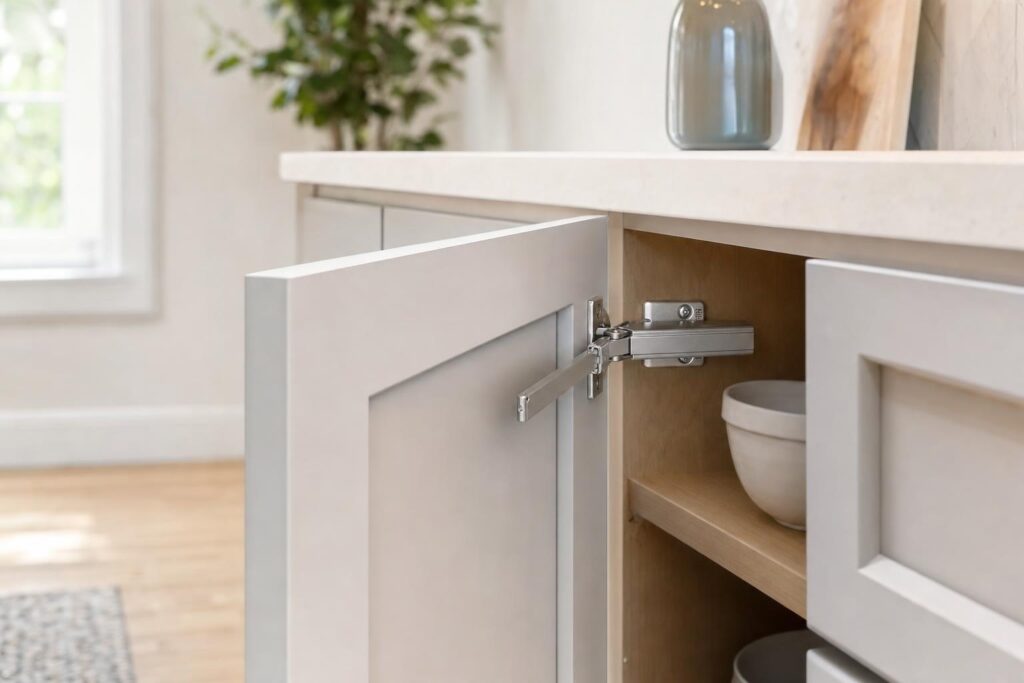
Yes, many cabinet hinges can be replaced during refacing, but the new hinge must match the door overlay, cabinet construction, cup size, screw pattern, and opening angle. A proper match helps soft close cabinet doors operate without binding or uneven gaps.
A full overlay door covers nearly the entire front frame, leaving only a small gap between neighboring doors. Inset doors sit inside the cabinet opening, while partial overlay doors cover part of the frame and leave more of it visible. Each style uses different hinge positioning and hardware.
Face-frame cabinets have a wood or composite frame around the front of each cabinet opening. Frameless cabinets have no front frame, so hinges attach directly to the cabinet box. This difference affects the hinge mounting plate and the available door adjustment.
| Hinge type | Identifying feature | Compatibility consideration | Typical refacing implication |
|---|---|---|---|
| Full overlay concealed hinge | Door covers most of the face frame | Match overlay measurement, cup size, and opening angle | Often suitable for a cabinet hinge upgrade |
| Inset concealed hinge | Door sits inside the cabinet opening | Requires precise door and box measurements | May need specialized inset hardware |
| Partial overlay concealed hinge | Part of the face frame remains visible | Match overlay and face-frame mounting style | Common replacement option when the existing layout stays |
| Surface-mounted hinge | Hinge is visible on the cabinet exterior | Confirm screw pattern and door clearance | May be retained or replaced as a visible design choice |
Before you replace cabinet hinges, check the condition of the cabinet boxes. Water damage, loose mounting areas, unusual corner cabinets, and specialty doors such as glass, bi-fold, or angled doors may require a custom solution. Refacing hardware options should support the existing structure, not force a standard hinge into an unsuitable opening.
What Should Be Measured Before Ordering Hinges?
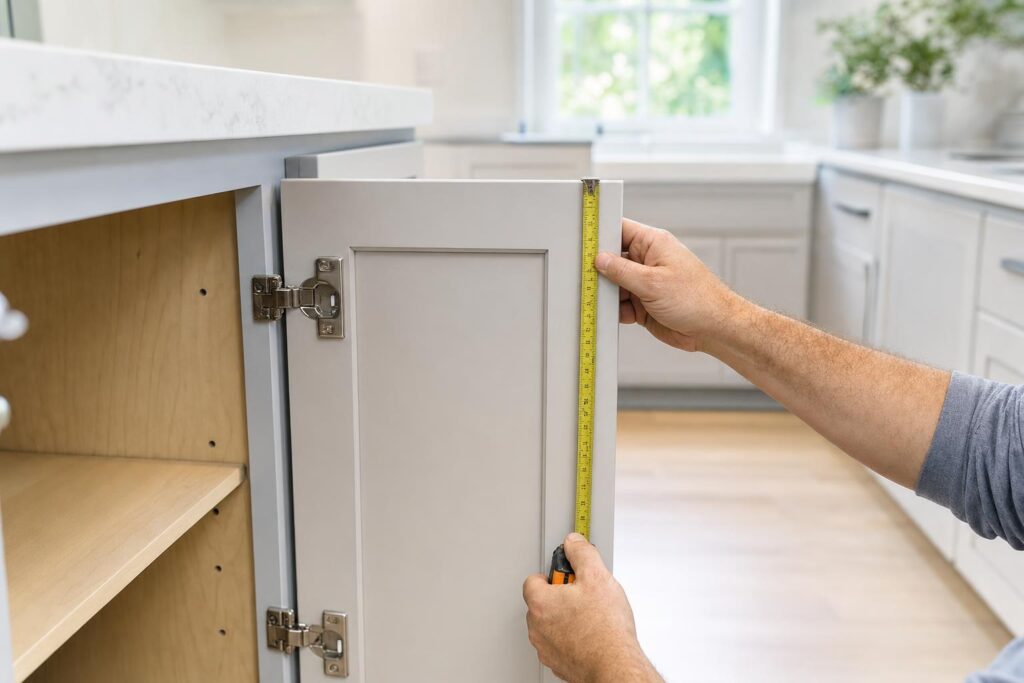
Measure the door overlay, hinge cup diameter and depth, screw locations, and cabinet opening dimensions before ordering hinges. Most concealed hinges use a 35-millimeter cup, but the depth and setback still need confirmation. Record the existing hinge brand or style as a useful reference, not a substitute for measuring.
A professional test-fit checks whether the hinge sits correctly in the door and cabinet box. It can prevent misalignment, binding, doors that do not open fully, or uneven gaps between soft close cabinet doors. For more ideas about coordinated refacing hardware options, see Kitchen Cabinet Hardware: How to Choose the Right Style.
The right choice depends on your cabinet construction, existing doors, and project goals. A careful evaluation before installation helps confirm whether standard soft close hinges will work or whether custom hardware is needed.
What Happens During a Soft Close Hinge Installation?
A soft-close hinge installation involves checking the cabinet boxes, fitting compatible hardware, rehanging the doors, and adjusting each hinge for even gaps and controlled closing.
- The installer inspects the existing cabinet boxes for damage, loosened areas, and construction that could affect hinge placement.
- Measurements confirm the door overlay, hinge style, cup location, and spacing before hardware is ordered or installed.
- Existing doors are removed, then the installer installs replacement hinges or drills the doors and cabinet frames when new hinge hardware requires it.
- Each door is rehung and adjusted for height, depth, and side-to-side positioning so the gaps remain even.
- The installer tests the soft-close action and checks that doors open, close, and align properly.
This cabinet hinge upgrade usually works best as part of the larger refacing plan. You can coordinate new doors, drawer fronts, pulls, knobs, and countertop work so the finish, measurements, and project schedule work together. Refacing hardware options should match your existing layout and the style you want.
Full hinge replacement is not practical for every cabinet. Soft-close adapters can add controlled closing to some existing hinges, while replacement hinges may be a better option when the current hardware is worn but compatible. The cabinet boxes, door condition, and available clearance determine which approach makes sense. For planning costs, review Cost to Reface Kitchen Cabinets: Pricing and Estimates and request a project-specific quote.
Are Soft Close Hinges Worth the Added Cost?
Soft-close hinges may be worth the added cost when you want quieter operation and smoother daily use, especially in busy households or on frequently used cabinets. Adding them during refacing can also help you avoid a separate future hardware installation. The value depends on the number of hinges, specialty cabinets such as corner or angled units, and your overall project budget. ReNU Kitchen can coordinate the hardware choice with your layout, style, and project goals so you can choose the right option.
What Is the Right Choice for Your Refacing Project?
The right choice depends on your cabinet boxes, hinge compatibility, budget, project timing, and how much of your existing kitchen you want to change.
Installing new soft close hinges is often the best option when your cabinet boxes are sound and the doors have a compatible construction and overlay. This cabinet hinge upgrade gives soft close cabinet doors a controlled finish without changing the layout. Your refacing project can also include new doors, drawer fronts, pulls, and finishes while the cabinet boxes stay in place.
Soft-close adapters may work when your existing hinges are still usable but do not include a closing mechanism. Adapters can provide a quieter close with less hardware replacement, though they may not fit every hinge style or provide the same result as new soft close hinges. A professional should check the existing hardware before you choose this option.
- New soft close hinges make sense when your existing hinge style, door overlay, and cabinet construction support a direct replacement.
- Soft-close adapters may suit functional hinges when you want a smaller hardware change and the hinge manufacturer allows an adapter.
- Standard replacement hinges are practical when individual hinges are bent, loose, worn, or damaged but soft close operation is not a priority.
- Keeping existing hinges can be the right choice when they remain compatible, secure, and fully functional.
- Postponing the upgrade may help you control the budget while completing other refacing work first.
Refacing is usually a strong option when the cabinet boxes are structurally sound and you already like the kitchen’s layout. You can update the visible surfaces and refacing hardware options without the demolition, plumbing changes, and longer schedule that a full replacement may require.
Extensive water damage, weak or sagging cabinet boxes, and a need for a completely different layout may point toward replacement instead. If you are weighing both paths, Cabinet Refacing vs Replacing: Which Is Right for You? can help you compare the larger project decisions.
The best next step is an in-home evaluation of the cabinet boxes, doors, hinges, and layout. ReNU Kitchen can help you compare soft close hinges, adapters, standard replacements, or keeping existing hardware so your project matches your goals, budget, and timing.
Frequently asked questions
Can you add soft close hinges without replacing cabinet doors?
Often, yes. Existing cabinet doors may accept replacement soft close hinges if their overlay, hinge cup, screw pattern, and cabinet construction match the new hardware. A professional should inspect and measure the doors first. If the existing hinges are unusual or the doors are damaged, adapters or new doors may be more practical.
How much does a soft close hinge upgrade cost during refacing?
The cost depends on the number of doors, hinge style, cabinet construction, drilling needs, and whether new doors are included in the refacing project. Some cabinets need straightforward hinge replacement, while specialty or damaged doors require additional work. A project-specific estimate gives the most reliable price.
Do soft close hinges work on face-frame cabinets?
Yes, soft close hinges are available for many face-frame cabinets, which have a front frame surrounding each cabinet opening. The hinge must match the door overlay and mounting requirements. Frameless cabinets use different mounting arrangements in many cases, so identifying the cabinet type is an important first step.
Should I replace cabinet hinges during kitchen refacing?
Replacing cabinet hinges during refacing may be the right choice when the existing hardware is worn, noisy, mismatched, or incompatible with new doors. Installing hinges while doors are removed can streamline the project. If the current hinges work well and match the new doors, keeping them may also be reasonable.
What Is the Right Choice for Your Refacing Project?
Ready to transform your kitchen? Contact ReNU Kitchen for your free estimate.