
Cabinet Hardware Placement: A Guide to Daily Comfort
Cabinet hardware placement affects how comfortably and consistently you use your kitchen every day. The right cabinet knob placement or cabinet pull placement depends on door and drawer size, your existing layout, and the reach points that feel natural when opening each cabinet.
Key takeaways
- Cabinet hardware placement should support a comfortable reach while creating a consistent appearance across the kitchen.
- Knobs are commonly placed near the door corner, while pulls provide a longer gripping surface for many doors and drawers.
- Drawer fronts usually need centered hardware unless their size, weight, or surrounding cabinetry calls for an exception.
- Existing cabinet layout, door style, appliance clearance, and user comfort should guide final placement decisions.
Why does cabinet hardware placement matter for daily use?
Cabinet hardware placement matters because it controls reach, leverage, clearance, consistency, and the finished appearance of your kitchen. Hardware includes the knobs, pulls, or handles attached to cabinet doors and drawer fronts. A convenient position can reduce awkward wrist movement and make daily opening easier.
Your existing cabinet layout should guide each decision. Door swing, nearby appliances, corners, walls, and countertop overhangs can limit where a handle fits or how far your hand can move. The people using the kitchen also matter, since children, older adults, and anyone with limited hand strength may need an easier grip or shorter reach.
Kitchen cabinet ergonomics is the study of arranging kitchen features for comfortable, efficient use. It connects practical needs with visual consistency, so cabinet knob placement and cabinet pull placement should work across the room rather than look correct on only one door. For style ideas, review Kitchen Cabinet Hardware: How to Choose the Right Style before selecting exact locations.
What should you evaluate before choosing a location?
Evaluate the cabinet size, surrounding clearance, users, and required reach before drilling any holes. Review whether the cabinet frame is visible, whether a nearby wall could block the door, and whether an appliance needs space to open fully. Separate style preferences from practical opening requirements, especially on wide doors and deep drawers.
- Check the door and drawer dimensions before choosing a knob or pull position.
- Confirm that cabinet frames, nearby walls, and appliance doors will not block your hand or the cabinet swing.
- Choose a grip that children, older adults, and people with limited hand strength can use comfortably.
- Keep matching doors and drawers consistent while adjusting locations when reach or clearance requires it.
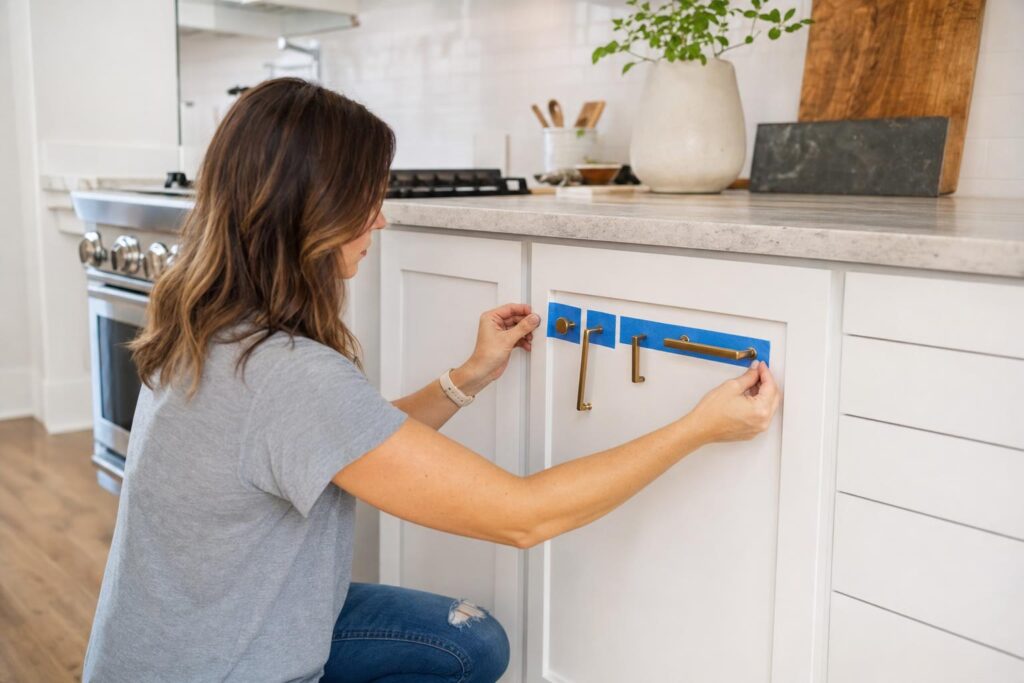
- Mark proposed positions with painter’s tape or temporary hardware, then test each opening before drilling.
Should you use cabinet knobs or pulls?
Use knobs for a compact grip and traditional look, or pulls for more leverage and a broader grip; your door style, drawer size, and daily cooking habits should guide the right choice.
Cabinet knob placement usually sits near the upper or lower corner of a door, depending on whether it is an upper or base cabinet. Adjust the position slightly for hand comfort, door size, and the door’s style. Pulls typically sit vertically on doors and horizontally on drawers, with consistent spacing across matching units.
Full overlay doors cover the entire cabinet frame, so hardware placement has a strong visual effect across the front. Inset doors sit inside the frame and leave the surrounding edge visible, which often calls for more careful spacing around the stiles and rails. Refacing or replacing drawer fronts may also change the available surface for hardware, as explained in Replace Kitchen Cabinet Drawer Fronts: A Practical Guide.
| Feature | Knobs | Pulls |
|---|---|---|
| Grip | Compact point grip | Longer surface with more leverage |
| Typical placement | Near the upper or lower door corner | Vertically on doors and horizontally on drawers |
| Visual effect | Simple and less prominent | Clear visual line across matching units |
| Suitable applications | Standard doors and lighter storage | Wide drawers, heavy cookware, and frequent use |
When are pulls the more practical option?
Pulls may be the more practical option for wider drawers, heavy cookware storage, and homeowners who prefer a broader grip. A longer pull gives you more room for your hand and can make a loaded drawer easier to open. Choose a length that respects the surrounding stiles, rails, and available door surface.
- Longer pulls can create a clear visual line across matching doors and drawers.
- Consistent alignment keeps full overlay and inset cabinets looking orderly.
- Very long pulls may crowd narrow doors or leave limited clearance near cabinet edges.
- A shorter pull can suit a small door while still providing more grip than a knob.
- Test the reach and hand position before final hardware installation.
How should you place hardware on doors and drawers?
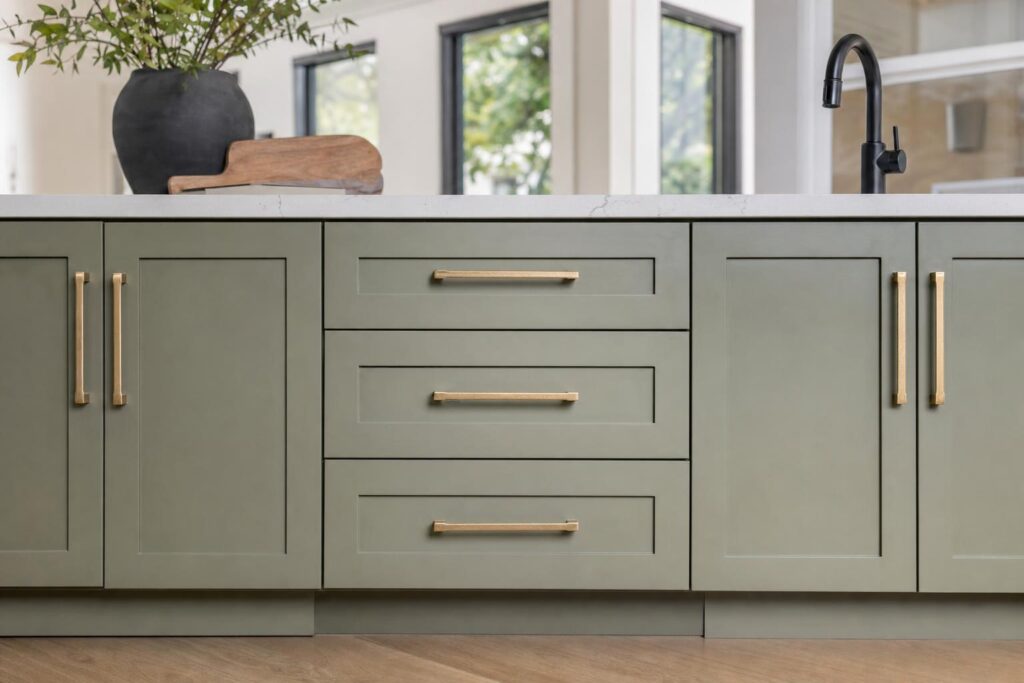
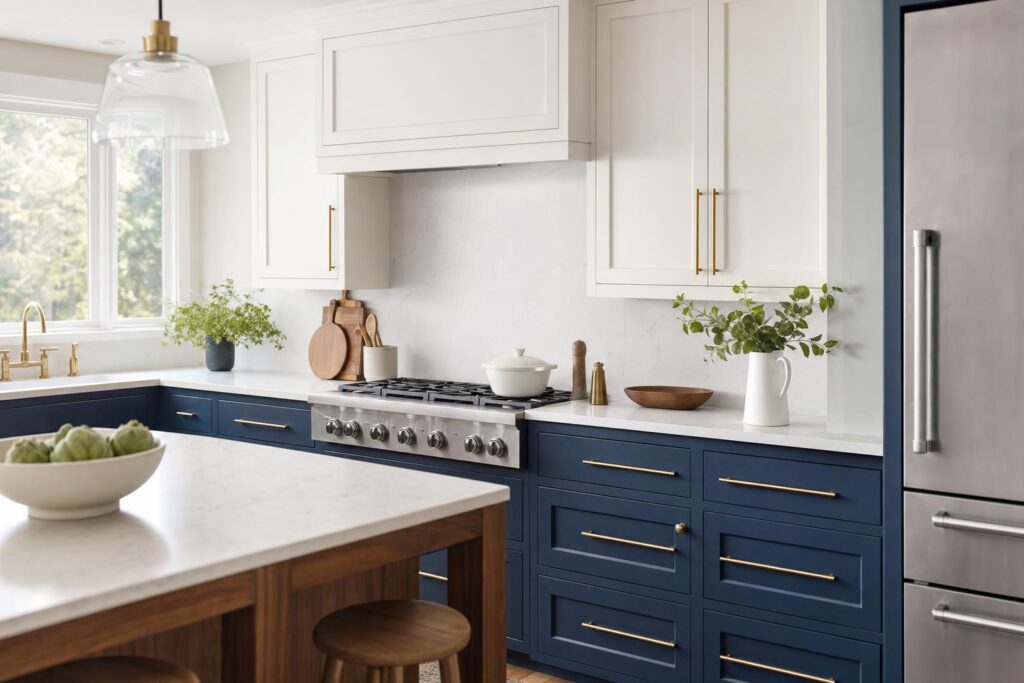
Place door hardware near the opening edge, while drawer hardware usually sits centered on the drawer front unless its width or weight calls for another arrangement. This basic cabinet pull placement gives your hand a consistent reach point across the kitchen.
On upper doors, install knobs or pulls on the lower portion of the stile, the vertical frame beside the opening edge. Base-door hardware generally goes on the upper portion of the same stile. Pantry doors and tall utility cabinets need hardware at a comfortable standing height, with the centerline clear of nearby walls, appliances, and trim.
- Measure the door or drawer front and mark its centerline before selecting the final hardware location.
- Check the rail width, or horizontal frame section, so screws and mounting plates fit fully on solid material.
- Keep hardware clear of narrow stiles, corner turns, adjacent doors, and appliance panels that may limit hand clearance.
- Use a template to mark every location, then review the layout from standing and seated positions.
- Adjust the standard position when accessibility needs, reach limits, or a corner cabinet make another grip point more practical.
Exceptions are common on narrow doors, corner cabinets, integrated appliance panels, and cabinets beside a wall. Your existing layout and kitchen ergonomics matter more than forcing every location to match. If refacing includes custom additions, Custom Cabinets During Refacing: Is It Worth It? can help you consider how new cabinet sizes affect the hardware plan.
What changes for drawers and wide cabinet fronts?
Center a knob or pull on a standard drawer front unless the drawer is unusually wide or heavy. For a wide drawer, compare one centered pull with two evenly spaced pulls; two may provide better balance and leverage. Keep stacked drawers aligned so the hardware forms a deliberate horizontal rhythm across the cabinet face. Confirm the final marks with a hardware template before drilling.
How can you create a consistent finished look?
You create a consistent finished look by repeating centerlines, orientation, spacing, and hardware finish while allowing practical exceptions for corners, appliances, and unusually sized cabinets. A complete hardware installation guide should also account for refacing, new door profiles, drawer fronts, countertop edges, backsplash, and appliances.
Cabinet refacing replaces the visible door and drawer surfaces while keeping your existing cabinet boxes and layout. New surfaces can change the visual balance, so hardware should be reviewed with the door profile, drawer size, countertop edge, backsplash pattern, and nearby appliance panels in mind. For more context, read Cabinet Refacing vs Replacing: Which Is Right for You?.
Before drilling, complete a final review of the full plan. Use this process:
- Mark each proposed centerline with a pencil and confirm that matching doors and drawers follow the same pattern.
- Apply painter’s tape to show hardware positions without marking the finished surface.
- Test each location by opening doors and drawers from normal standing positions.
- Measure the spacing between nearby handles, cabinet edges, backsplash areas, and appliances.
- Install the hardware only after the placement, orientation, and finish have been approved.
When should a professional review the placement plan?
Professional guidance is useful when your kitchen has mixed door sizes, corner units, appliance panels, or custom cabinet additions. These areas often need practical exceptions without making the overall design look uneven. Renu Kitchen can evaluate your existing layout and coordinate hardware replacement during a cabinet refacing project. That review can help prevent drilling errors, improve alignment across new doors and drawer fronts, and create a more unified finished appearance. The right choice depends on your cabinet condition, project goals, and comfort with precise installation.
Frequently asked questions
Where should cabinet knobs be placed on kitchen doors?
Cabinet knobs are commonly placed near the opening corner of a door, positioned consistently on matching cabinets. Upper-door knobs typically sit toward the lower corner, while base-door knobs sit toward the upper corner. The final location should also allow comfortable reach, door clearance, and alignment with the existing cabinet layout.
Should cabinet pulls be vertical or horizontal?
Cabinet pulls are usually installed vertically on cabinet doors and horizontally on drawers. This orientation follows how each surface is opened and creates a familiar visual pattern. Tall pantry doors may also use vertical pulls, while wide drawers can use one centered pull or two evenly spaced pulls.
Should drawer pulls be centered?
Most standard drawer pulls should be centered horizontally and vertically on the drawer front. Wide or heavy drawers may work better with two evenly spaced pulls for improved leverage. Stacked drawers should maintain matching centerlines unless an appliance panel, unusual width, or accessibility need requires a practical exception.
Can hardware placement be changed during cabinet refacing?
Hardware placement can usually be changed during cabinet refacing because new doors and drawer fronts are installed over the existing cabinet boxes. Homeowners can review knob or pull locations before drilling. Renu Kitchen can help coordinate the placement with the cabinet layout, new surfaces, and other kitchen updates.
Find the right placement for your existing kitchen
Ready to transform your kitchen? Contact us for your free estimate.