
Kitchen Cabinet Painting: Is It Right for Your Kitchen?
Kitchen cabinet painting may be the right choice when your existing cabinet boxes and doors are structurally sound, and you mainly want a new color or finish. If doors, drawer fronts, or the layout are damaged or outdated, painting may not deliver the transformation you want, making refacing a more suitable option.
Key takeaways
- Kitchen cabinet painting works best when existing cabinet doors, drawer fronts, and boxes are in good condition.
- Proper cleaning, sanding, priming, and application determine how durable painted kitchen cabinets will be.
- Painting usually changes color and finish but does not correct damaged doors, poor storage, or an unsuitable kitchen layout.
- Replacing doors and drawer fronts can create a more substantial update while keeping the existing cabinet boxes and layout.
- Renu Kitchen helps New Jersey homeowners compare painting, refacing, and other cabinet upgrade options through free estimates.
Is Kitchen Cabinet Painting Right for Your Kitchen?
Kitchen cabinet painting is right for your kitchen when the cabinet boxes, doors, and drawer fronts are structurally sound and you mainly want to refresh their color or finish. It can improve appearance without replacing the existing cabinets.
Painting changes the surface, not the kitchen’s basic function. It will not change the layout, increase storage capacity, replace an outdated door style, or repair damaged construction. If your current arrangement works well, paint kitchen cabinets may provide the update you want with less disruption than a full replacement.
Your cabinets may be good candidates if they have solid wood or paintable MDF surfaces. MDF is a smooth, manufactured wood product that can accept a properly prepared coating. Stable hinges, firm cabinet frames, and doors that open and close correctly also support a successful cabinet painting process.
- Solid wood doors and drawer fronts are usually suitable for careful preparation and paint.
– Paintable MDF surfaces can provide a smooth finish when they are clean and intact.
– Stable hinges and firmly attached hardware indicate that the existing cabinet structure is in usable condition.
– Minimal swelling, warping, or splitting suggests that moisture has not seriously damaged the cabinets.
– A consistent surface with limited repairs is more suitable than one with widespread peeling or deterioration.
Warning signs include peeling laminate, water damage, broken frames, and heavy grease buildup that has soaked into the surface. Doors that no longer align may point to worn hinges, warped components, or a cabinet box that needs repair. Painting over these problems can leave you with a newer color but the same functional issues.
Define your goal before comparing painting versus refacing cabinets. A color refresh may only require paint, while a style update may call for new door and drawer front profiles, updated hardware, or a different finish. A broader kitchen transformation may be better suited to refacing, which replaces the visible cabinet surfaces while keeping the existing layout. Read Refacing Kitchen Cabinets: What Homeowners Should Know to compare that option with painting.
The right choice depends on the condition of your existing cabinets and the change you want to see. A professional evaluation can help separate a surface update from repairs or a larger refacing project, so you can plan the work with clear guidance.
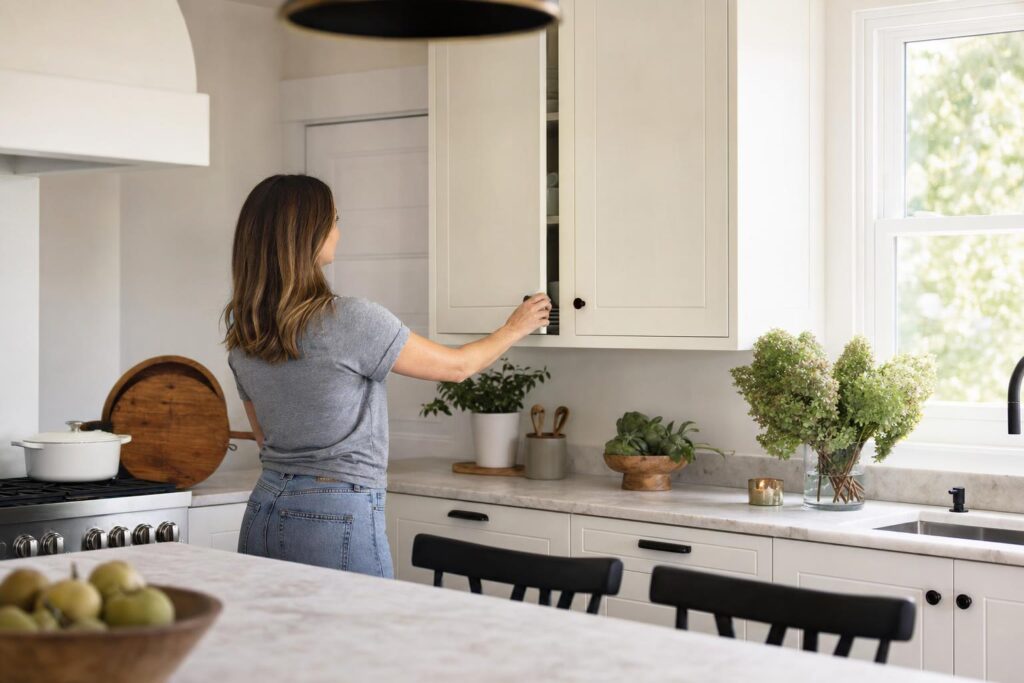
What Happens During the Cabinet Painting Process?
The cabinet painting process removes, cleans, prepares, primes, paints, cures, and reinstalls your cabinet components in a planned sequence. The work usually begins by removing doors, drawer fronts, hinges, and handles, while labeling each piece and clearing cabinet contents so everything returns to its original position.
- Workers label each door, drawer front, hinge, and handle before removing them from the cabinet boxes.
- They protect countertops, floors, appliances, and nearby surfaces before cleaning and sanding begin.
- They degrease the surfaces, repair chips or dents, and sand or degloss glossy areas.
- They apply a suitable primer and controlled coats of cabinet paint to the prepared components.
- They allow the paint to cure before reinstalling hardware and returning items to the cabinets.
How should cabinets be prepared before painting?
Preparation includes removing grease, repairing chips, sanding glossy surfaces, and protecting your countertops and floors. Degreasing removes cooking residue that can prevent paint from bonding, while sanding or deglossing gives the coating a surface it can grip.
Primer is a bonding base coat that helps paint adhere and improves color coverage. Laminate, thermofoil, oak grain, and previously painted surfaces may need different preparation methods, products, or repairs. A quick paint-over can leave brush marks, poor adhesion, visible grain, or uneven coverage. Professional preparation takes more time but supports a cleaner, more durable result.
How long does cabinet painting take?
Timing depends on your kitchen size, door count, repairs, drying conditions, and whether the work happens on site or off site. Your kitchen may be partly or fully unavailable during preparation and curing, even after the paint feels dry. Curing is the time paint needs to harden fully, so cabinets should not receive heavy use immediately.
Confirm the work sequence and daily access plan before the project begins, including which cabinets remain usable and when doors will be reinstalled. If painting does not suit the condition of your existing components, Cabinet Refacing New Jersey: Service Areas and Process explains another option for updating the kitchen while keeping its existing layout.
How Durable Are Painted Kitchen Cabinets?
Painted kitchen cabinets can be durable for many years when the surfaces are sound, properly prepared, coated with suitable products, and treated with normal care. Durability also depends on daily use, curing time, and the quality of the application.
The cabinet painting process should begin with thorough cleaning and surface preparation. Grease, residue, loose finish, and damaged areas can prevent primer and paint from bonding. A compatible primer and cabinet-grade coating help create a smoother, more resilient finish, but the coating still needs adequate time to cure before heavy use.
Normal wear often appears first on high-touch areas, such as doors near the handles, drawer fronts, and cabinet edges. This is different from premature peeling or chipping caused by poor adhesion, skipped preparation, inadequate cleaning, or using the wrong coating. Painted kitchen cabinets also cannot hide or repair swollen MDF, delaminated laminate, broken doors, or structurally weak cabinet boxes.
- Wipe cabinet surfaces with a soft cloth to avoid unnecessary scratching.
– Use a mild cleaner that is suitable for the cabinet finish, and avoid harsh abrasives.
– Clean moisture, grease, and spills promptly, especially around the sink and dishwasher.
– Allow freshly painted surfaces to cure as directed before regular washing or repeated handling.
– Check high-use doors and drawers periodically for loose hardware or signs of wear.
Painting changes the finish, not every working part of the cabinetry. Hinges, drawer slides, handles, and cabinet edges may still need adjustment or replacement after painting, particularly if they were already worn. For help choosing replacement handles and pulls, see Kitchen Cabinet Hardware: How to Choose the Right Style.
The right choice depends on the condition of your existing cabinets and how much use your kitchen receives. If the boxes and doors are solid, careful preparation and realistic maintenance can make painting a practical update. If the underlying materials are failing, refacing or replacement may provide a more dependable result.
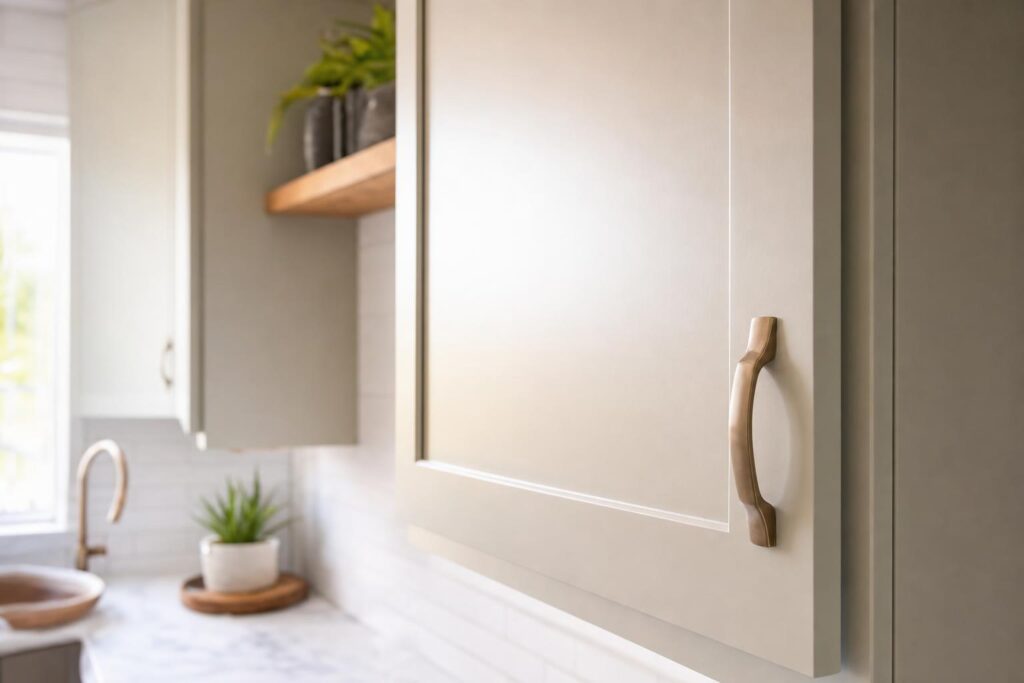
Painting Versus Refacing Cabinets: Which Option Costs More?
Painting usually costs less than refacing, while full replacement costs the most because it includes new cabinet boxes, installation, and broader construction. The right choice depends on your cabinet condition, design goals, and how much of the kitchen you want to change.
Kitchen cabinet painting changes the color and finish of existing doors, drawer fronts, and cabinet boxes. It may be a practical lower-scope project when the wood or engineered surfaces are sound, the style still works, and you do not need layout changes. Repairs, surface preparation, coatings, hardware, and kitchen size affect the final quote.
Refacing keeps your existing cabinet boxes but replaces or covers the visible doors, drawer fronts, and exposed surfaces with new finished materials. You can choose different door styles, colors, laminates, wood veneers, and hardware, so refacing creates a more substantial visual update than paint without removing the existing layout. Custom cabinet additions, countertop upgrades, and repairs add to the project scope.
| Option | Condition and appearance | Layout | Disruption and project scope |
|---|---|---|---|
| Kitchen cabinet painting | Sound boxes and doors | new color or finish | Usually unchanged |
| Cabinet refacing | Sound boxes | new doors, drawer fronts, and finished surfaces | Usually unchanged |
| Full replacement | Damaged or unsuitable boxes | complete new cabinetry | Can change significantly |
Painting versus refacing cabinets often comes down to whether color alone will solve the problem. Refacing may be the better value when doors are worn, styles are dated, or you want new storage features while keeping a workable layout. For a closer look at the factors that shape refacing costs, read Cabinet Refacing Cost: What Affects Your Price?.
Full replacement may be justified when the layout fails, cabinet boxes are severely damaged, storage is insufficient, or your plans require major structural changes. An in-home assessment is the most reliable way to compare existing conditions, repair needs, materials, and options before choosing. The best solution is the one that fits your kitchen and project goals. Ready to transform your kitchen? Contact us for your free estimate.
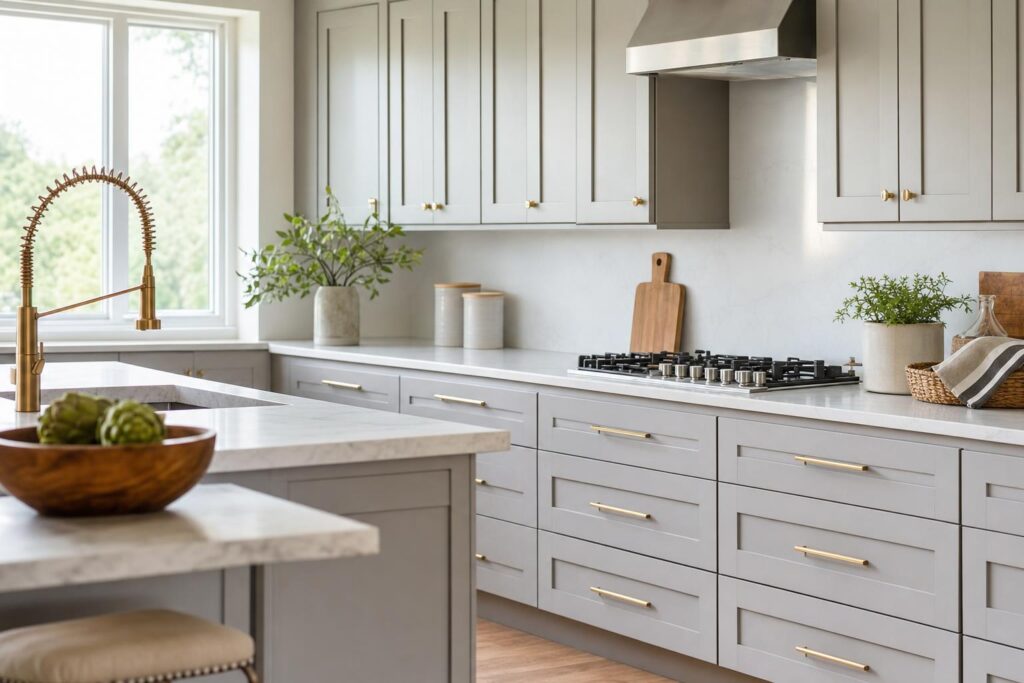
What Is the Best Alternative to Kitchen Cabinet Painting?
The best alternative to kitchen cabinet painting is cabinet refacing, often combined with new hardware, countertops, or custom storage, when your cabinet boxes are usable but the visible surfaces need a larger update.
When should you replace cabinet doors and drawer fronts?
Replace cabinet doors and drawer fronts when they are cracked, warped, peeling, heavily worn, or outdated. New fronts can change your kitchen’s style, color, profile, and material more dramatically than paint while preserving the existing cabinet layout and usable cabinet boxes. You can choose updated slab, Shaker, or raised-panel doors in a factory-finished material.
Before ordering, the cabinet team must confirm each opening, door measurement, hinge placement, and drawer box condition. These details affect fit, function, and installation. Finish options should also be reviewed so the new fronts coordinate with the cabinet boxes, trim, and any replacement panels.
Refacing may be preferable to painting when existing surfaces are damaged or when you want a factory-finished appearance with a completely new door style. The process covers exposed cabinet surfaces with matching veneer or laminate and replaces the doors and drawer fronts.
Can other upgrades complete a painted or refaced kitchen?
Yes. New hardware and countertops can improve daily function while coordinating with painted or refaced cabinets. Soft-close hinges and drawer slides can make doors and drawers operate more quietly, while updated pulls, knobs, and a durable countertop can complete the design.
- New cabinet hardware can provide a different grip, finish, and placement for improved everyday use.
- Soft-close hinges and drawer slides can reduce noise and provide a smoother closing action.
- A countertop replacement can coordinate the cabinet finish with the sink, backsplash, and appliances.
- Custom cabinet additions can add pantry storage, wall cabinets, or other capacity that paint alone cannot provide.
- Matching end panels and trim can give a refaced kitchen a more consistent finished appearance.
Compare the complete project rather than judging cabinet color in isolation. ReNU Kitchen evaluates your existing layout and cabinet condition before recommending painting, refacing, or combined upgrades. The right choice depends on condition, budget, timing, desired appearance, and whether you want to keep or change the existing layout. Ready to transform your kitchen? Contact us for your free estimate.
Frequently asked questions
Can you paint any kitchen cabinets?
Many wood and MDF cabinets can be painted when their surfaces and cabinet boxes are sound. Laminate, thermofoil, swollen materials, and heavily damaged doors may require specialized preparation or replacement instead. An assessment can determine whether painting will provide a durable result or whether refacing is the better option.
Is painting kitchen cabinets cheaper than refacing?
Painting often has a smaller project scope than refacing because it changes the existing surfaces rather than replacing doors and drawer fronts. The final cost depends on kitchen size, repairs, preparation, materials, hardware, and access. A detailed estimate is needed because cabinet condition can change the recommended approach.
How long do painted kitchen cabinets last?
The service life of painted kitchen cabinets depends on preparation, coating quality, curing, moisture, cleaning, and daily use. High-touch edges and areas near sinks or dishwashers may show wear sooner. Gentle cleaning and prompt moisture removal help protect the finish, while damaged surfaces may need replacement rather than paint.
Should I paint or reface my kitchen cabinets?
Choose painting when your existing doors and boxes are sound and you mainly want a new color or finish. Choose refacing when doors are damaged, the style is outdated, or you want new door and drawer front materials. Renu Kitchen can evaluate your layout, condition, and goals before recommending the right choice.
What Is the Best Alternative to Kitchen Cabinet Painting?
Ready to transform your kitchen? Contact us for your free estimate.