Kitchen Cabinet Refacing Ideas for a Fresh New Look
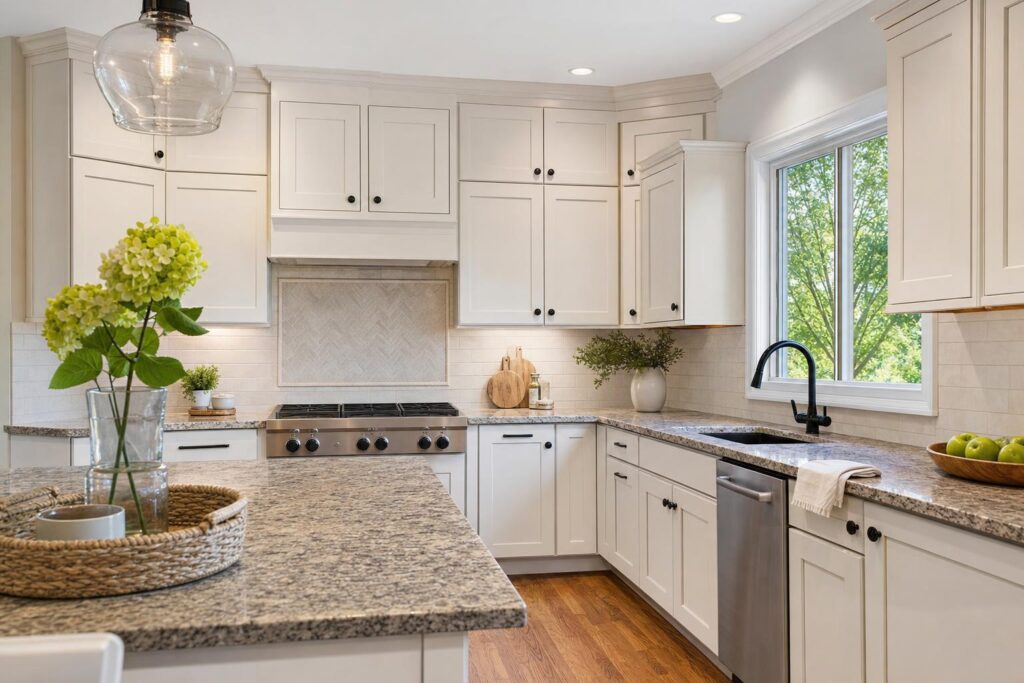
Kitchen cabinet refacing ideas can give your existing kitchen a fresh look through new door styles, colors, hardware, and countertops without changing the cabinet layout. The right combination may deliver a more modern, functional space with less cost, time, and disruption than a full replacement.
Key takeaways
- Cabinet refacing replaces visible doors, drawer fronts, and exterior surfaces while keeping sound cabinet boxes in place.
- Door style, cabinet color, hardware, and countertop selections should work together as one design plan.
- Light colors and simple door profiles can make a smaller kitchen feel brighter and more open.
- New hardware is a practical way to change the kitchen’s appearance without altering the existing layout.
- Custom cabinet additions can improve storage when the current layout needs a targeted upgrade.
Which Door Styles Work Best for a Refaced Kitchen?
Shaker and slab doors work well for modern kitchens, while raised-panel and narrow-profile doors suit traditional or transitional homes. Refacing replaces visible surfaces while keeping sound cabinet boxes and your existing layout.
New doors and drawer fronts establish the direction for your cabinet refacing designs. The door profile, overlay, and material all affect the result. Overlay describes how far the door extends over the cabinet face frame, while materials such as wood, laminate, and thermofoil offer different colors, textures, and maintenance needs. For more planning guidance, read Refacing Kitchen Cabinets: What Homeowners Should Know.
Choose a Door Profile That Fits Your Home
Shaker doors have a simple frame around a recessed center panel, making them flexible for many kitchen cabinet colors and hardware choices. Slab doors have flat fronts with an unframed appearance, which suits contemporary and modern cabinet refacing. Raised-panel doors add dimension and work well in traditional kitchens. Narrow-profile doors use slimmer rails and stiles for a lighter transitional look.
- Shaker doors provide a clean design that works with both warm wood tones and painted finishes.
- Slab doors create a smooth surface that pairs well with minimalist hardware.
- Raised-panel doors add detail when your kitchen has traditional trim or decorative features.
- Narrow-profile doors offer a restrained style between classic and contemporary designs.
- The selected door style should work with your existing cabinet box dimensions.
Coordinate Drawer Fronts and Cabinet Details
Drawer front replacement should match the selected doors so the kitchen looks planned rather than pieced together. Full overlay doors cover nearly the entire cabinet face frame, creating a more continuous appearance. Edge profiles, end panels, toe kicks, and crown molding complete the visible surfaces and help blend refaced cabinets with the rest of your room. ReNU Kitchen can guide you toward layout-friendly options that fit your existing cabinet boxes.
How Can Kitchen Cabinet Colors Change the Room?
Kitchen cabinet colors can make a kitchen feel larger, warmer, brighter, or more dramatic without changing its existing layout. Your best choice depends on room size, natural light, style, and the finishes already in place.
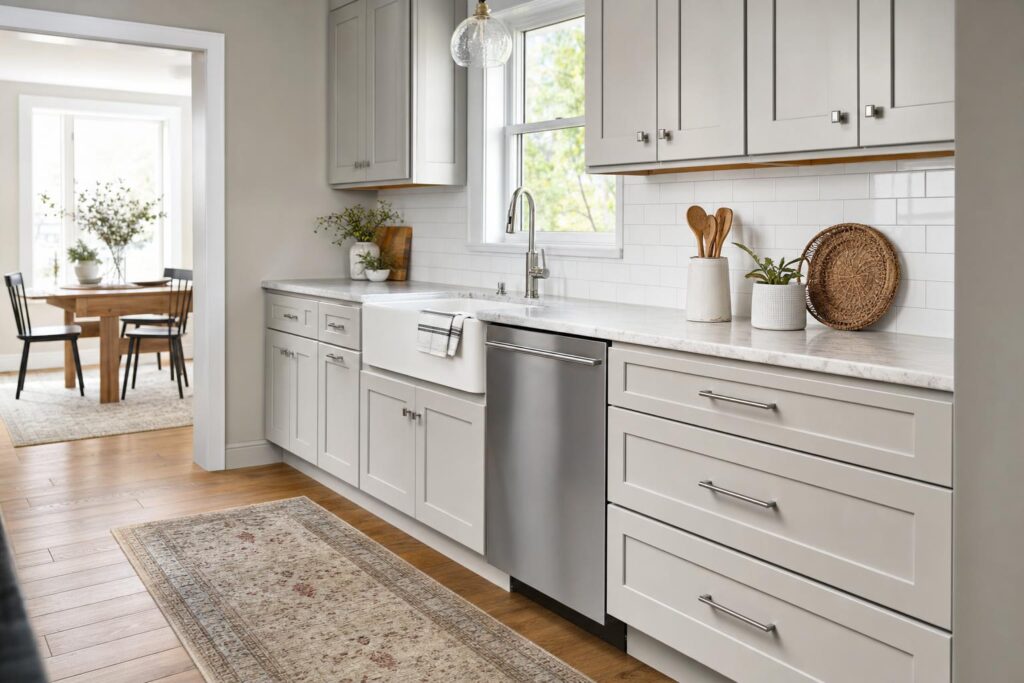
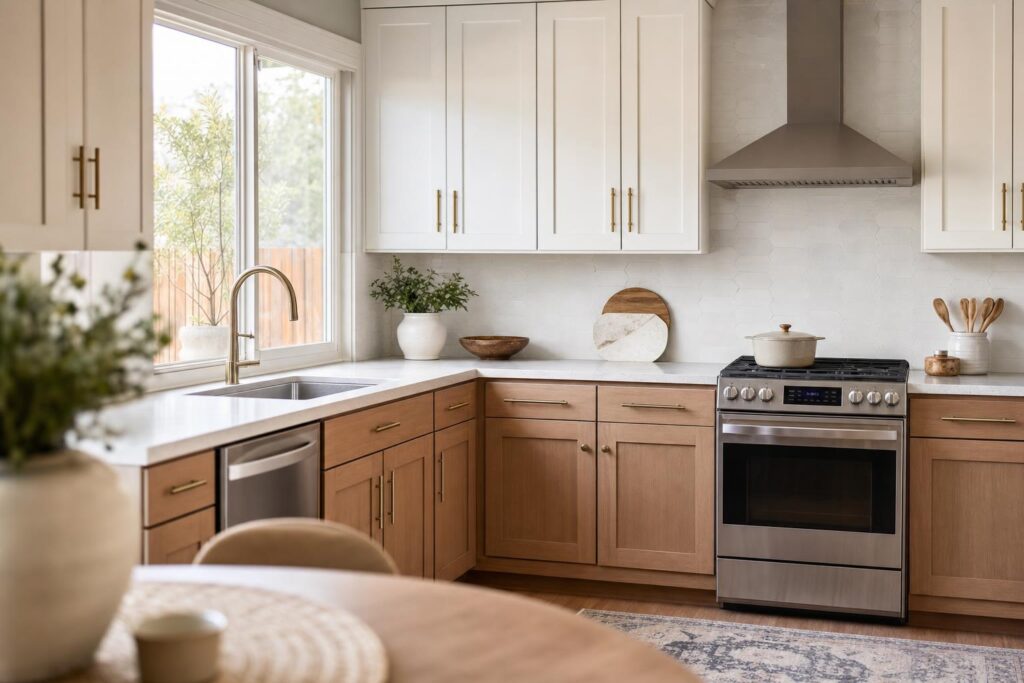
White and soft gray cabinets reflect light, helping a small or dim kitchen feel more open. Warm neutrals, such as beige, taupe, and greige, add comfort without making the room feel heavy. Wood tones bring natural texture, while navy, charcoal, and deep green create contrast but may make a compact room feel smaller.
| Color direction | Best use | Visual effect | Planning considerations |
|---|---|---|---|
| White or soft gray | Small kitchens and limited natural light | Brighter and more spacious | Check undertones against white appliances, backsplash, and flooring |
| Warm beige, taupe, or greige | Traditional, transitional, or connected living spaces | Comfortable and cohesive | Match the warmth of wood floors and countertops |
| Natural wood tones | Kitchens needing texture and warmth | Organic and inviting | Compare grain and stain with existing floors and butcher block |
| Navy, charcoal, or deep green | Larger kitchens or well-lit spaces | Bold and grounded | Balance with light walls, counters, and backsplashes |
Test door or laminate samples in the kitchen before choosing. View them near windows in the morning and beside your lighting at night, since daylight and warm bulbs can change how the same color appears. Review samples with your countertops, backsplash, flooring, and appliances.
- White cabinets can brighten a narrow kitchen when paired with a light backsplash and reflective countertop.
- Warm neutral cabinets can connect adjoining rooms when your flooring or furniture has beige, tan, or brown undertones.
- Wood-tone cabinets should coordinate with the floor without matching its grain too closely.
- Dark cabinets work best with enough natural or layered artificial light to keep the room balanced.
- A color sample should be checked beside existing countertops before you select a refacing material.
Should You Choose One Color or Two?
One cabinet color creates a calm, cohesive appearance and may be the right choice when your countertop or backsplash already has a strong pattern. Two-tone cabinets add definition by using light uppers with darker lowers, or a contrasting color on the island. This approach can separate work zones and make an island a focal point. Avoid combinations that compete with a busy countertop, detailed backsplash, or strongly patterned floor. Your refacing design should give each finish room to work.
Color is one part of the project cost, along with door materials, drawer fronts, hardware, and installation. For planning guidance, review Cabinet Refacing Cost: What Affects Your Price?. The right kitchen cabinet colors should suit your light, existing finishes, and long-term preferences.
What Hardware and Countertops Complete the New Look?
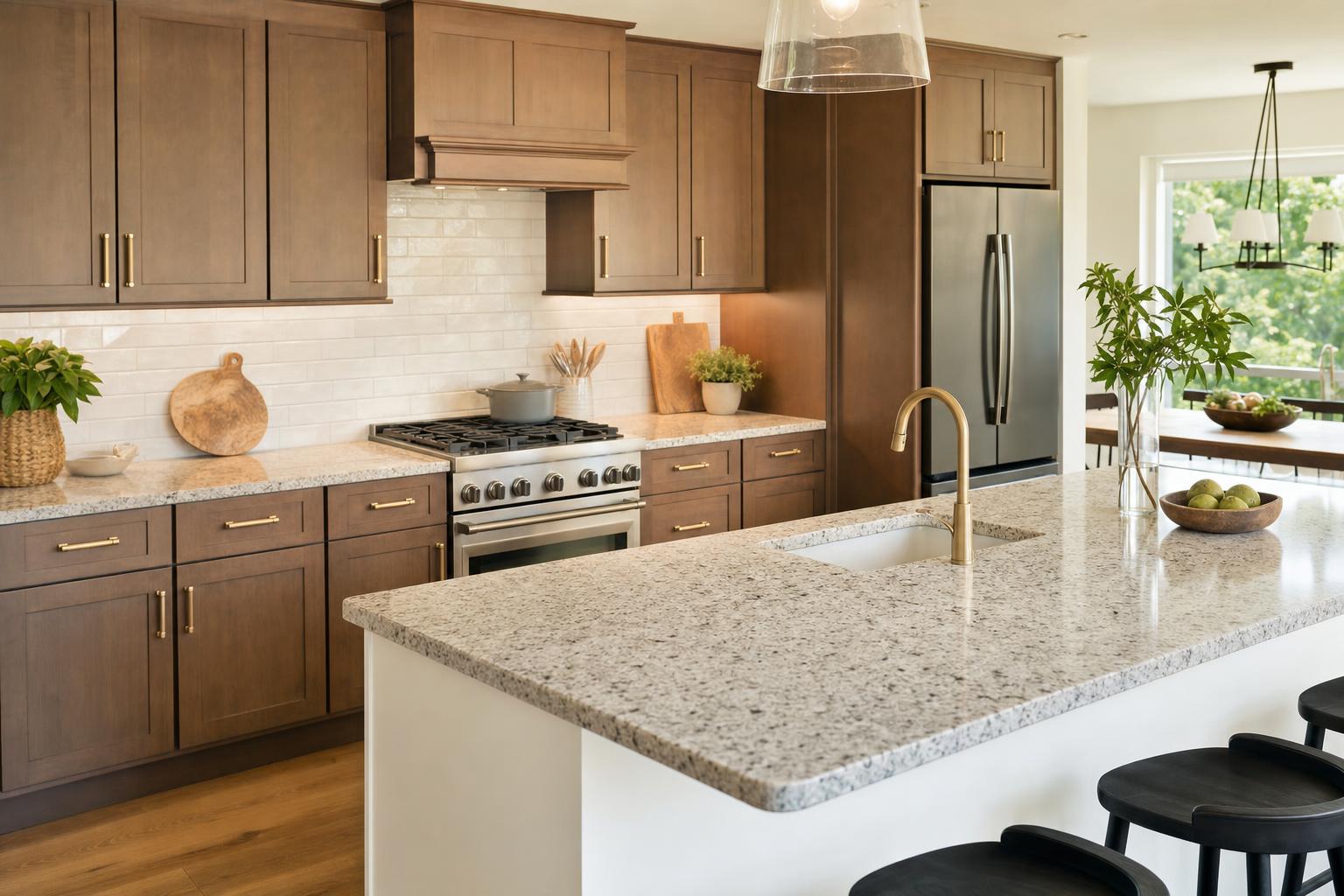
Hardware and countertops complete a refaced kitchen by adding useful contrast, coordinating finishes, and a finished surface that supports your new cabinet style. These updates can create a cohesive modern cabinet refacing project without changing the existing layout.
Match Finishes Without Making Everything Identical
Choose hardware by both appearance and comfort. Knobs suit doors and smaller drawers, while pulls are easy to grip on wide drawers and full-height doors. Cup pulls add a traditional touch, and integrated handles create a clean, modern line built into the door edge. Brushed nickel feels soft and versatile, matte black looks crisp, brass adds warmth, and bronze creates a richer, traditional impression.
Repeat one or two finishes instead of matching every item exactly. Your cabinet hardware can relate to the faucet, lighting, and appliance tones without copying them. Also consider scale: long pulls may suit wide drawers, while smaller knobs can feel better on narrow doors. The right size should feel comfortable during everyday use. For more guidance, see Kitchen Cabinet Hardware: How to Choose the Right Style.
- Quartz offers a consistent, low-maintenance surface with many colors and patterns.
- Granite provides natural variation and a durable stone surface, so each slab has its own character.
- Laminate offers a broad range of affordable colors and patterns for budget-conscious updates.
- Solid surface creates a smooth, repairable countertop with integrated sink options.
- A simple eased edge keeps a modern look, while a rounded or decorative edge adds softness and detail.
Coordinate the countertop with the backsplash so the two surfaces support rather than compete with each other. A countertop overhang of about 1 to 1½ inches usually protects cabinet faces and creates comfortable seating at a peninsula, though final dimensions depend on support and layout. ReNU Kitchen can coordinate hardware replacement and countertop upgrades with cabinet refacing, helping you compare options for your home.
Which Refaced Kitchen Ideas Work With Your Existing Layout?
Refaced kitchen ideas work best when they improve storage and workflow within your existing cabinet footprint. Keeping the layout can reduce plumbing, electrical work, demolition, cost, and disruption while still giving the room a noticeably updated appearance.
Start by checking how easily you move between the refrigerator, sink, range, and main preparation zone. You may need a pullout near the sink, clearer landing space beside the range, or easier-to-reach storage for everyday dishes. Accessibility also matters, so consider drawer storage, wider paths, and hardware that is simple to grip.
Your cabinet boxes are usually suitable for refacing when they are level, firmly attached, dry, and free from major water damage. Replacement may be necessary if the boxes are warped, swollen, unstable, or no longer support the doors and drawers properly. A professional inspection can help you choose between refacing, partial replacement, and a larger redesign.
- Measure each cabinet opening, wall, appliance, and walkway before choosing storage additions.
- Mark the locations of plumbing, electrical outlets, windows, and heating vents.
- Identify workflow problems near the sink, range, refrigerator, and preparation areas.
- Choose additions such as pantry storage, a waste pullout, spice storage, or island cabinets.
- Select door finishes, hardware, countertops, and interior accessories that work together.
When Should You Add Custom Cabinet Storage?
Add custom cabinet storage when your existing layout works but leaves unused gaps or does not hold the items you use most. A taller pantry cabinet can use vertical space, while tray dividers organize baking sheets and cutting boards. An appliance garage can keep small appliances accessible without leaving them on the countertop.
Other useful additions include a narrow spice pullout beside the range, a waste and recycling pullout near the sink, or storage built into an existing island. These options improve function without redesigning the whole kitchen. Homeowners comparing sizes, materials, and installation details can review Custom Cabinets During Refacing: Is It Worth It? before making a decision.
Is Cabinet Refacing the Right Choice for Your Kitchen?
Cabinet refacing is the right choice when your cabinet boxes are sound, the layout works, and you want a visible update without removing the existing kitchen. New doors, drawer fronts, surface materials, hardware, and countertops can change the room while keeping much of its current structure.
Refacing often costs less than full replacement and usually creates less disruption because the cabinet boxes remain in place. The project may take days or a few weeks, depending on the kitchen and selected options, while a full replacement involves demolition, new cabinets, and more installation work. Refacing offers many design choices, but replacement may provide greater customization when you need different cabinet sizes, major storage changes, or a new layout.
Full replacement may be the better choice when cabinet boxes have structural damage, severe water damage, or widespread deterioration. It may also make more sense if the existing layout cannot support your cooking, storage, or accessibility needs. A professional review can help you compare the condition, cost, timeline, disruption, and long-term goals before choosing.
What Should You Discuss During a Refacing Estimate?
Bring your cabinet measurements, photos, and a clear idea of your storage priorities to the estimate. Discuss the cabinet condition, desired door style, kitchen cabinet colors, hardware, countertops, and any custom additions you may need. Renu Kitchen reviews your existing kitchen and recommends options suited to your goals, budget, and layout. Call (732) 890-9911 to arrange a practical conversation about your project.
Renu Kitchen brings more than 26 years of experience to cabinet refacing, with free estimates for homeowners across New Jersey and parts of New York. The best choice depends on your kitchen’s condition and your plans, but the right guidance can help you create a fresh, functional space with less disruption. Ready to transform your kitchen? Contact us for your free estimate.
Frequently asked questions
What is the most popular style for refacing kitchen cabinets?
Shaker doors are among the most popular choices for refacing kitchen cabinets because their simple recessed-panel design works with traditional, transitional, and modern interiors. Homeowners can pair them with painted finishes, wood tones, updated drawer fronts, and either knobs or pulls to create a coordinated appearance.
Can I change cabinet colors without replacing the cabinets?
Yes, cabinet refacing can change the visible color of existing cabinets by installing new finished doors, drawer fronts, and matching exterior panels. The cabinet boxes remain in place when they are structurally sound. Sample colors should be reviewed in the kitchen’s natural and artificial light before selection.
Does cabinet refacing change the kitchen layout?
Cabinet refacing usually keeps the existing kitchen layout because the cabinet boxes remain in place. Homeowners can still request targeted additions, such as a pantry, island storage, or pullout organizer. A different layout may require more extensive cabinet replacement, plumbing, electrical, and construction work.
How do I know whether refacing or replacement is better?
Refacing may be the right choice when your existing cabinet boxes are sound, the layout works, and you want a new appearance with less disruption. Full replacement may be better when cabinets have major structural or water damage, lack useful storage, or the entire layout must change.
Is Cabinet Refacing the Right Choice for Your Kitchen?
Ready to transform your kitchen? Contact us for your free estimate.