Is Cabinet Refinishing Worth It? A Kitchen Decision Guide
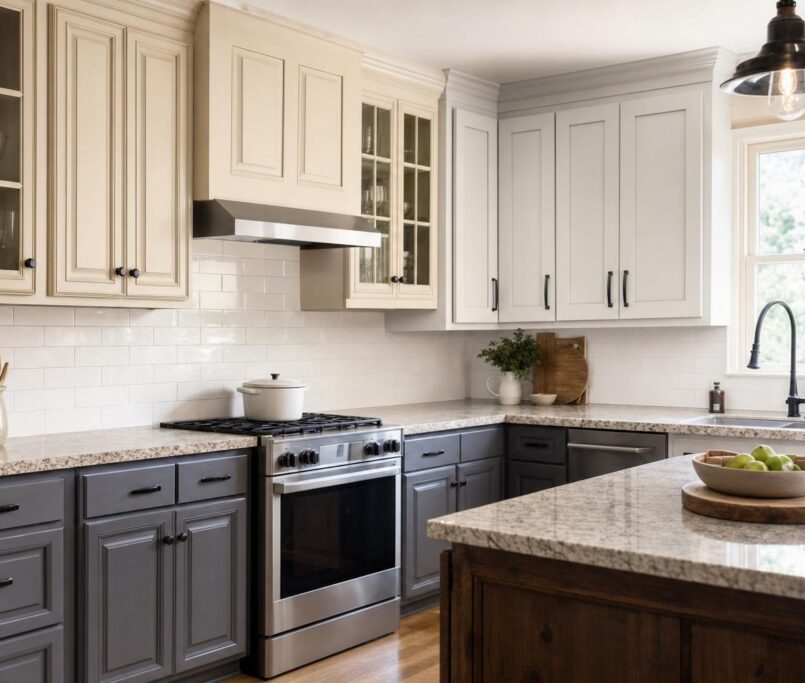
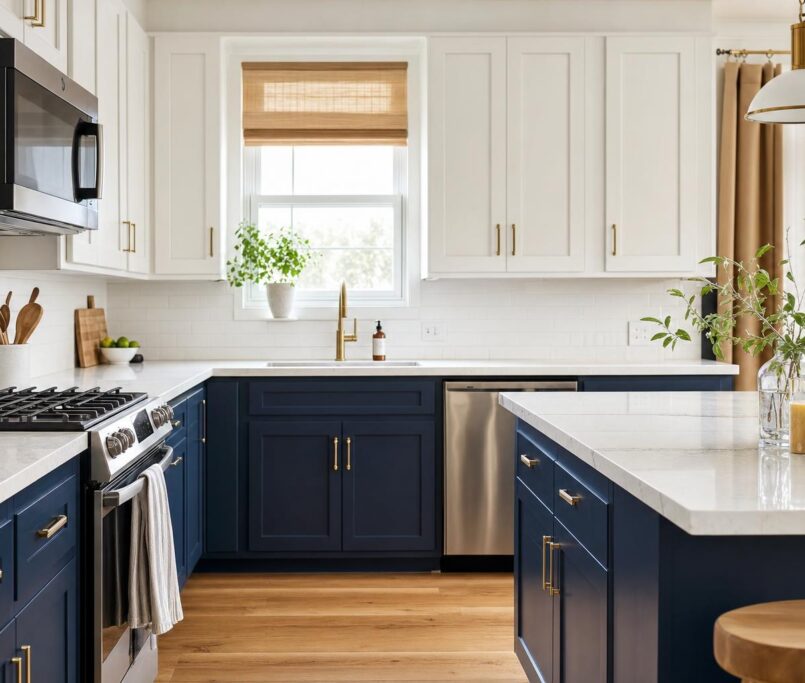
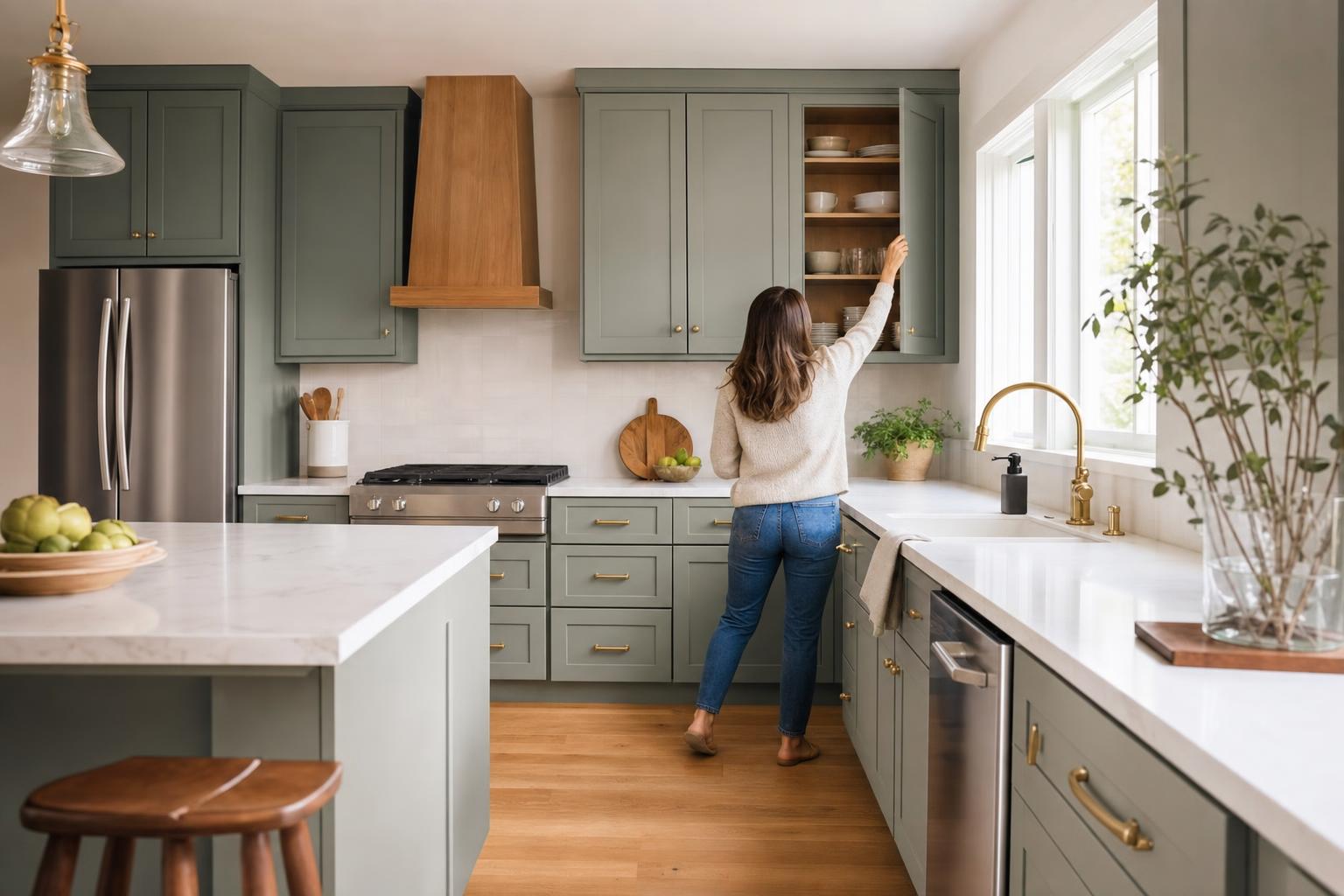
Is cabinet refinishing worth it? It can be a practical choice when your existing cabinet boxes are structurally sound and you want a refreshed appearance without changing the kitchen layout. Refinishing may cost less and create less disruption than replacement, but refacing or new cabinets may be better when surfaces or construction are badly damaged.
Key takeaways
- Cabinet refinishing is most suitable for existing cabinets with sound construction and a finish that needs cosmetic improvement.
- Cabinet refinishing benefits include a lower project cost, less disruption, and more usable life from existing kitchen cabinets.
- Cabinet refinishing drawbacks include limited style changes and less durable results when cabinet surfaces are damaged or poorly prepared.
- Refacing replaces cabinet doors, drawer fronts, and exposed coverings while keeping the existing cabinet boxes and layout.
- The right kitchen cabinet upgrade option depends on cabinet condition, appearance goals, budget, and expected durability.
What Is Cabinet Refinishing, and How Does It Work?
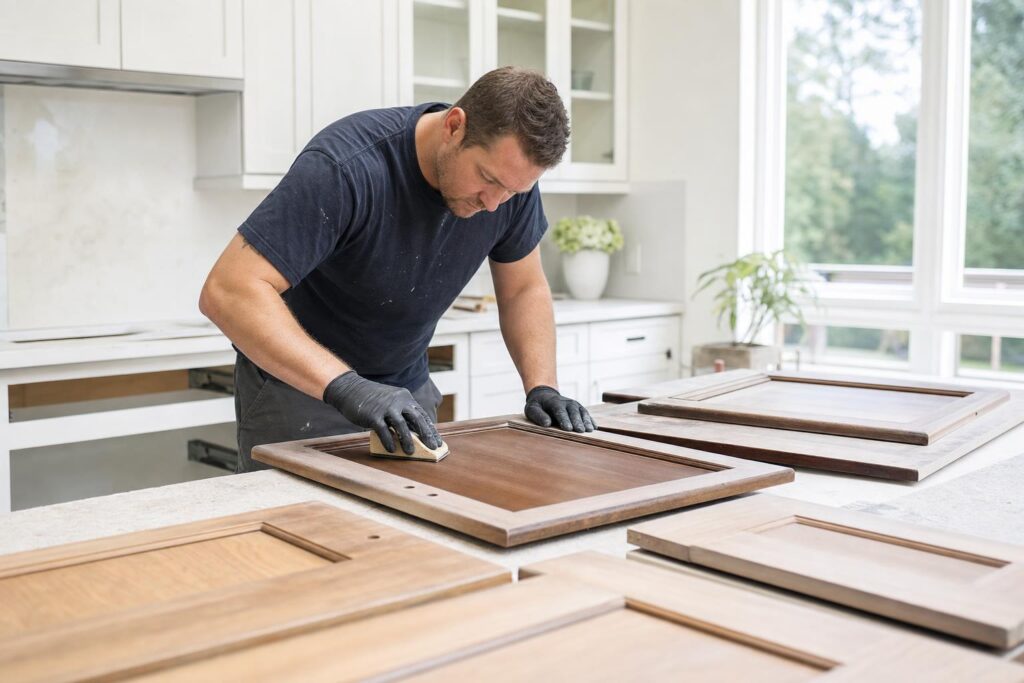
Cabinet refinishing means preparing, sanding, priming, and repainting or restaining your existing cabinet surfaces. It refreshes the finish without replacing the cabinet boxes or changing the kitchen layout.
Cabinet boxes are the fixed frames attached to the wall or floor. Doors cover the openings, drawer fronts attach to the drawer boxes, and hardware includes knobs, pulls, hinges, and slides. Refinishing usually addresses visible wood or laminate surfaces, while hardware can be cleaned, replaced, or upgraded separately. For other kitchen cabinet upgrade options, read Refacing Kitchen Cabinets: What Homeowners Should Know.
Which Cabinets Are Good Candidates for Refinishing?
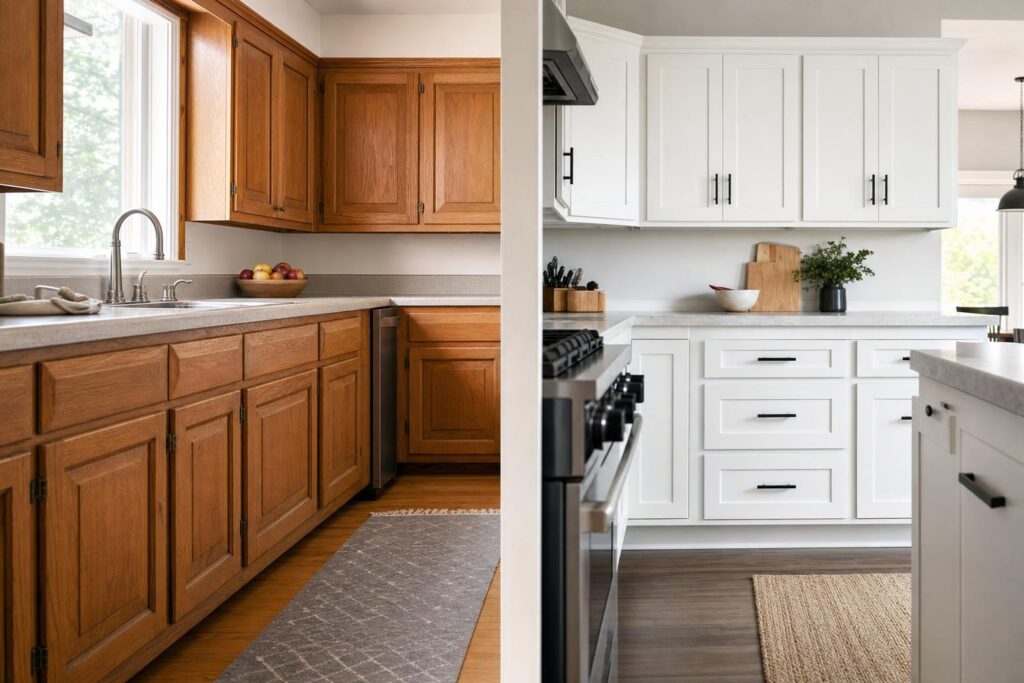
Cabinets are good candidates when the boxes have stable joints, the hinges work properly, and there is no major water or structural damage. Refinishing can correct a dated color, minor scratches, a worn finish, or a mismatched appearance while keeping your existing layout.
Warped doors, swollen particleboard, loose construction, and serious damage may not hold a new coating well. Persistent grease can also prevent proper adhesion if it has soaked into the surface. In these cases, refacing replaces the exposed doors and drawer fronts, while replacement may be needed for damaged cabinet boxes.
What Does the Refinishing Process Include?
A typical refinishing project follows a careful sequence so the new coating bonds correctly and lasts through normal kitchen use.
- The contractor inspects the cabinet boxes, doors, drawer fronts, and hardware for damage and compatibility.
- The surfaces are cleaned thoroughly to remove grease, residue, and cooking buildup.
- Sanding, repairs, and masking prepare each surface before primer and finish are applied.
- Paint or stain is applied by professional spray or brush methods, depending on the material and finish.
- The coating dries and cures before the doors, drawer fronts, and hardware are carefully reinstalled.
Drying may take a day or more, while full curing can take longer. The final result depends on material compatibility, preparation quality, and how your household uses the kitchen each day.
What Are the Cabinet Refinishing Benefits and Drawbacks?
Cabinet refinishing is worth it when your existing cabinet boxes are sound, your layout works, and you want a lower-cost appearance update with less disruption than replacement. It is less suitable when doors, edges, or cabinet construction have serious damage.
The main cabinet refinishing benefits include a lower investment than many replacement projects, less demolition, a shorter period of kitchen disruption, and reduced material waste. Workers typically keep the cabinet boxes in place while preparing and coating the exposed surfaces, so your kitchen may remain more usable during the project.
- Refinishing can change the cabinet color while keeping your existing layout and storage locations.
- The work creates less demolition and disposal than removing complete cabinets.
- A new coating can give worn doors and drawer fronts a clean, consistent appearance.
- Refinishing cannot add cabinet width, increase storage, or correct an inefficient layout.
- Deep scratches, swelling, peeling laminate, or damaged edges may remain visible after coating.
- Painted surfaces require careful cleaning and maintenance, especially around sinks, ranges, and busy handles.
Cabinet refinishing drawbacks become clearer when you compare it with other kitchen cabinet upgrade options. Color changes are practical, but wood grain may still show through, and edge wear can develop sooner in high-use areas. Refinishing also does not provide the same result as replacing doors, because the existing door style, thickness, and construction remain.
Durability depends on the cabinet material, surface preparation, coating system, humidity, cleaning habits, and daily household use. Properly prepared surfaces and suitable coatings generally perform better than quick repainting, but no finish removes the need for normal care. For cost factors when you compare options, see Cabinet Refacing Cost: What Affects Your Price?.
| Option | Typical cost | Disruption | Appearance and layout | Durability |
|---|---|---|---|---|
| Refinishing | Lower investment | Usually several days | limited demolition | New color, existing doors and layout |
| Refacing | Mid-range investment | Usually several days to about two weeks | New doors, drawer fronts, and surface | same layout |
| Full replacement | Highest investment | Often several weeks | major demolition | New cabinets, sizes, layout, and storage |
The right choice depends on your cabinet condition and project goals. Refinishing may be the practical option when appearance is the priority; refacing or replacement may provide better value when you need new doors, added storage, or a different layout.
Should You Refinish or Reface Cabinets?
To decide whether to refinish or reface cabinets, choose refinishing for sound doors and boxes that need a new finish, and refacing for new doors, drawer fronts, and exterior coverings. Both options preserve your existing layout and cabinet boxes, so neither solves poor storage planning or major construction damage.
When Is Refinishing the Better Choice?
Refinishing is the better choice when your existing door style, cabinet construction, and exposed surfaces remain acceptable. The work may include a new paint color, a refreshed stain, or a more consistent finish across doors, drawer fronts, and cabinet boxes. It usually offers fewer material choices than refacing because you keep the existing profiles and surfaces, but the project may take less time and cost less. If you want a cleaner appearance without a major visual transformation, refinishing may be the economical option. New pulls, knobs, hinges, or drawer systems can still improve daily use.
When Does Refacing Make More Sense?
Refacing makes more sense when doors and drawer fronts are damaged, outdated, or difficult to refinish. It applies new finished material to exposed cabinet surfaces while retaining the existing cabinet boxes. You can select new door profiles, finishes, hardware, and coordinating exterior materials, with choices such as laminate, wood veneer, or painted components. Refacing often creates a more complete update and may offer stronger, more consistent surfaces than refinishing, while preserving a familiar, functional layout. New countertops can complete the upgrade. For project details, review Cabinet Refacing New Jersey: Service Areas and Process.
- Refinishing keeps your existing doors and usually offers the simplest style change.
- Refacing replaces visible doors and drawer fronts while keeping usable cabinet boxes.
- Both options limit changes to the existing kitchen layout.
- New hinges, pulls, knobs, drawer systems, and countertops can support either project.
- The cabinet boxes must be structurally sound for either approach.
How Much Does Cabinet Refinishing Cost?
Cabinet refinishing usually costs less than replacing all cabinet boxes, but the final price depends on your kitchen’s size, materials, finish, repairs, access, and labor.
A small kitchen with fewer doors and drawer fronts generally requires less work than a large kitchen with detailed trim or hard-to-reach cabinets. Solid wood, laminate, and thermofoil surfaces may require different preparation and coating methods. Paint, stain, or another finish also affects the estimate.
A clear estimate should separate the work into specific components: surface cleaning and sanding, repairs, primer and finish coats, hardware, cabinet door removal and reinstallation, and cleanup. Optional countertop work should appear separately if you are considering a broader kitchen cabinet upgrade.
- Surface preparation should identify cleaning, sanding, stripping, masking, and any work needed to create a smooth bonding surface.
- Repairs should list damaged cabinet boxes, loose joints, worn edges, hinge areas, and drawer components rather than grouping all work under one allowance.
- Materials should name the primer, coating or stain, sheen, hardware, and other products included in the price.
- The timeline should explain how many workdays your kitchen may be unavailable and when doors and drawer fronts will return.
- The estimate should state warranty terms, cleanup responsibilities, and exclusions such as plumbing, electrical work, or countertop installation.
Refinishing keeps your existing cabinet boxes and changes their visible surfaces, so it usually requires fewer materials and less labor than changing the entire cabinet structure. However, refinishing may not offer the best value when doors are warped, swollen, or failing. In that situation, refacing with new doors and drawer fronts may provide a more complete improvement.
Hardware can also change the total. Review style and measurement options in Kitchen Cabinet Hardware: How to Choose the Right Style before approving the estimate. Ask whether removal, drilling, installation, and disposal are included.
Compare estimates by scope, not just the lowest total. The right choice should match your cabinet condition, appearance goals, timeline, and budget while giving you clear guidance about preparation, materials, and final results.
Is Cabinet Refinishing the Right Choice for Your Kitchen?
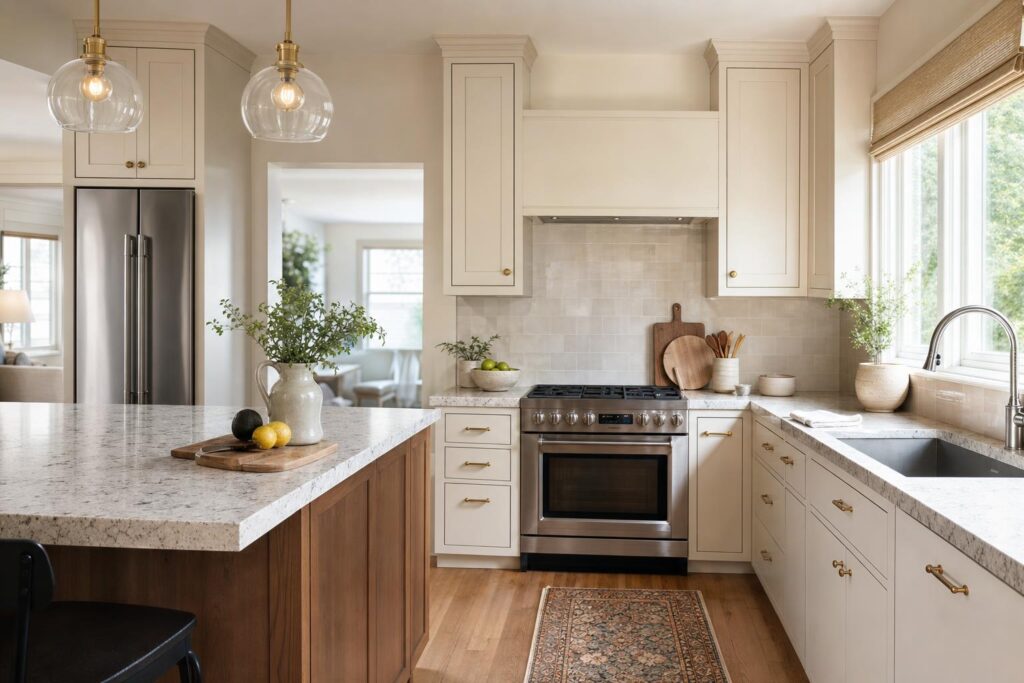
Cabinet refinishing is the right choice when your cabinet boxes are sound, your layout works, and you mainly want a new color or finish. If your goals involve broader exterior changes, refacing may be better, while structural damage or a needed layout change can point to replacement.
- Inspect the cabinet boxes for water damage, swelling, loose joints, or sagging; refinishing suits cabinets that remain solid and level.
- Define the appearance you want, because refinishing changes the existing surfaces, while refacing replaces doors, drawer fronts, and exposed cabinet coverings for a broader update.
- Confirm that your current layout provides enough storage and usable work space; refinishing or refacing will not correct poor traffic flow or missing cabinet space.
- Compare your budget with your kitchen cabinet upgrade options, including refinishing, refacing, new hardware, countertops, and custom cabinet additions.
- Consider disruption and expected lifespan, since a surface update may involve less work than replacement, but the best result depends on the condition and durability of the existing cabinets.
Refinishing may be the practical path for worn, faded, or outdated surfaces when you are satisfied with the layout. It can update the appearance with a new paint color or stain while keeping the existing cabinet structure. Ask about the preparation, coating materials, and care requirements so you know what the finished surfaces will need over time.
Renu Kitchen evaluates existing kitchens before recommending an option. With more than 26 years of experience, the team can discuss cabinet refacing, replacement drawer fronts and doors, hardware, countertops, and custom cabinet additions. You can review choices based on your kitchen’s condition, project goals, budget, and preferred level of disruption.
Renu Kitchen serves homeowners across New Jersey and parts of New York, with custom craftsmanship, fast turnaround, and free estimates. The right choice is the one that fits your existing kitchen and long-term plans. Ready to transform your kitchen? Contact us for your free estimate.
Frequently asked questions
Is cabinet refinishing worth it compared with replacing cabinets?
Cabinet refinishing is often worth considering when cabinet boxes and doors are structurally sound and the main problem is an outdated finish. It typically preserves the existing layout, reduces demolition, and costs less than full replacement. Replacement may be more appropriate when cabinets are damaged, poorly arranged, or unable to support the desired design.
How long does cabinet refinishing usually last?
The life of a refinished cabinet surface depends on preparation, coating quality, cabinet material, moisture, cleaning products, and daily use. A professional process with thorough cleaning, sanding, compatible primer, and proper curing generally performs better than a quick do-it-yourself coating. High-use areas may show wear sooner than less-used cabinets.
Can cabinet refinishing change the style of my kitchen?
Cabinet refinishing can change color, sheen, and overall visual consistency, but it usually keeps the existing door profiles, cabinet layout, and construction. If you want new door styles, drawer fronts, or exterior materials, refacing may provide a broader transformation. Hardware and countertop changes can further update the completed kitchen.
When should I choose cabinet refacing instead of refinishing?
Choose cabinet refacing when the cabinet boxes are sound but the doors, drawer fronts, or exposed surfaces are damaged, outdated, or unsuitable for refinishing. Refacing allows homeowners to select new exterior finishes and often new door styles while preserving the existing layout. Refinishing is better when the current surfaces remain acceptable.
Is Cabinet Refinishing the Right Choice for Your Kitchen?
Ready to transform your kitchen? Contact us for your free estimate.