Cabinet Refinishing vs Refacing: Key Differences Explained
Cabinet refinishing vs refacing comes down to the condition and appearance you want from your existing cabinets. Refinishing restores the current doors and cabinet boxes with paint or stain, while refacing replaces the doors and drawer fronts and covers exposed cabinet surfaces with new veneer or laminate.
Key takeaways
- Cabinet refinishing changes the finish on existing cabinet doors, drawer fronts, and boxes.
- Cabinet refacing keeps the existing cabinet layout but adds new doors, drawer fronts, and exterior veneers.
- Refinishing may cost less when the existing cabinet surfaces are sound and the homeowner likes the current door style.
- Refacing is usually the stronger option when doors are outdated, worn, or difficult to restore consistently.
- Neither option corrects a poor kitchen layout, extensive cabinet-box damage, or major structural problems.
- The right kitchen cabinet upgrade depends on cabinet condition, design goals, budget, and desired project timeline.
What Is the Difference Between Refinishing and Refacing Cabinets?
Refinishing restores your existing cabinet doors and boxes by preparing and coating their current surfaces, while refacing installs new doors and drawer fronts and covers the visible cabinet boxes with new veneer or laminate.
Both options keep your existing kitchen layout, so the location of cabinets, appliances, and plumbing usually stays the same. You can also add new knobs, pulls, hinges, or other hardware to either project. Neither service is a full cabinet replacement because the main cabinet structure remains in place.
- Refinishing keeps your current door and drawer-front designs while changing their color or surface finish.
- Refacing replaces the visible doors and drawer fronts with new styles, materials, and finishes.
- Both options can include updated hardware to change the kitchen’s function and appearance.
- Refacing can cover worn cabinet boxes without removing the fixed storage structure.
- Full replacement removes the existing cabinets and changes the layout, storage, or cabinet construction.
How Does Cabinet Refinishing Work?
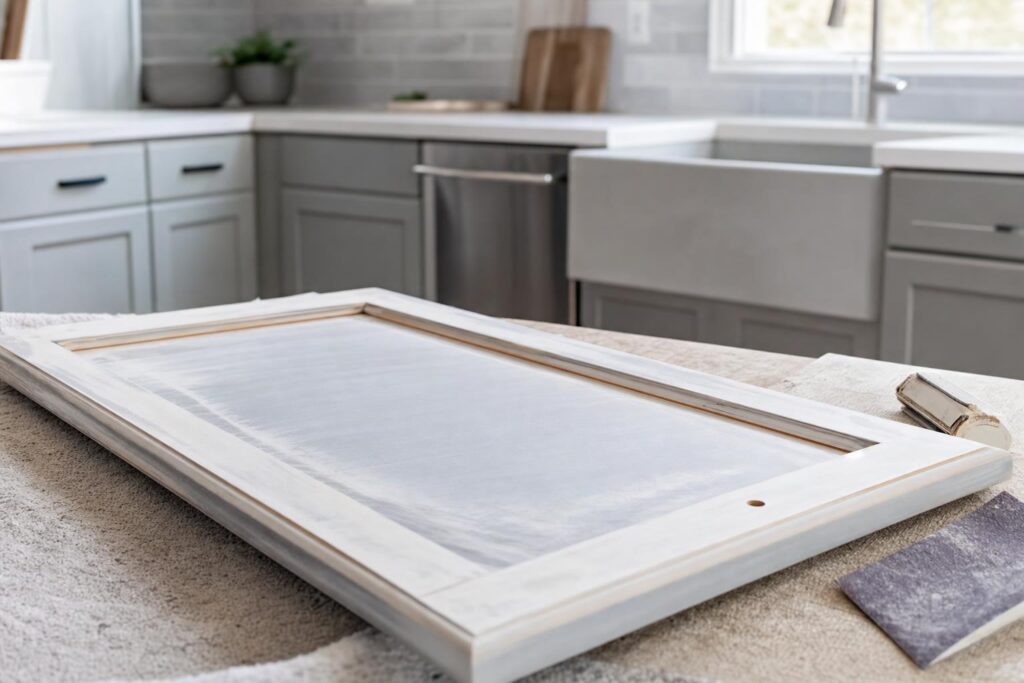
Cabinet refinishing starts with careful preparation rather than simply adding a coat of paint. The surfaces are degreased to remove cooking residue, then sanded so the new finish can bond. Minor dents, cracks, or loose areas may be repaired before primer and finish coats are applied.
Paint works well when you want a consistent color across the kitchen. Stain may be appropriate when the existing doors have suitable wood grain that you want to show through, although the material and current finish affect the result. Refinishing preserves the current door profile, drawer-front design, and visible imperfections that cannot be fully repaired.
How Does Cabinet Refacing Work?
Refacing replaces your cabinet doors and drawer fronts instead of coating the existing ones. The exposed cabinet boxes receive matching veneer or laminate, which creates a new surface over the fixed structural case surrounding the shelves and interior storage. The inside of the boxes usually remains unchanged.
Refacing offers options such as wood, laminate, and updated hardware in different colors and styles. Your project may also include custom cabinet additions when you need more storage while keeping the existing layout. For a closer look at materials, planning, and the process, read Refacing Kitchen Cabinets: What Homeowners Should Know.
Choosing refinishing or refacing cabinets depends on the condition of your current surfaces and how much you want to change their appearance. Refinishing may be the right choice when the doors are sound, while refacing provides a larger visual update without the disruption of full replacement.
Which Option Gives Your Kitchen the Better New Look?
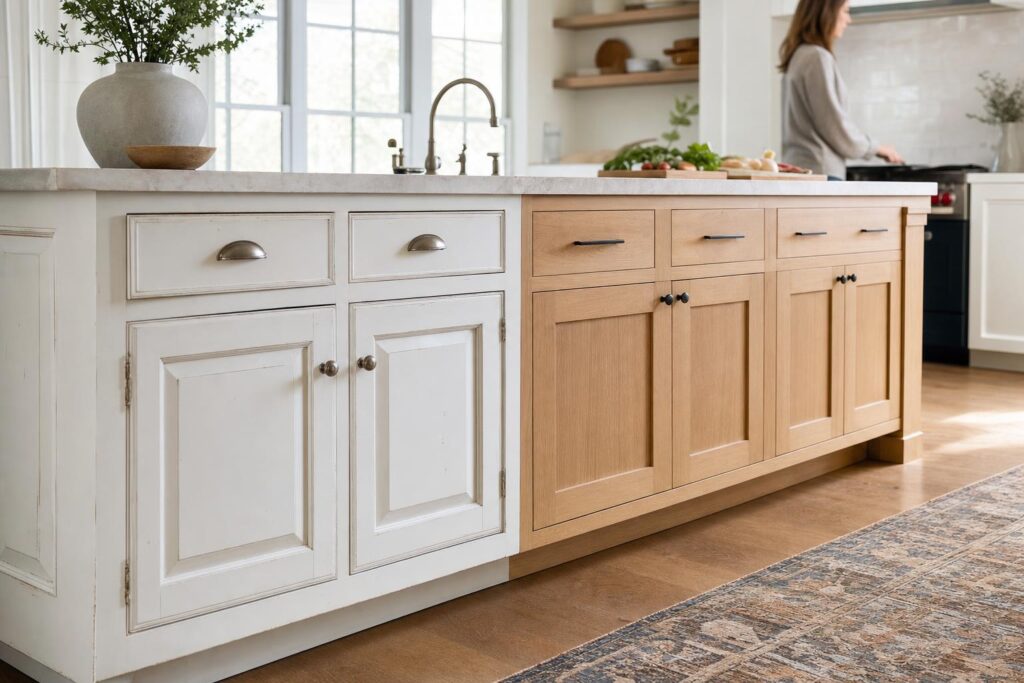
Refacing usually gives your kitchen the bigger new look, while refinishing is better for improving an attractive existing style without changing the cabinet layout. Both options keep the kitchen footprint and cabinet placement the same.
When Is Refinishing the Better Appearance Choice?
Refinishing or refacing cabinets depends on how much visual change you want. Refinishing may be the right choice when your existing door profile is attractive and the main problems are faded color, light wear, or an outdated finish. It works best when doors and drawer fronts are structurally sound, with no major warping, splitting, or water damage, and can accept a consistent finish.
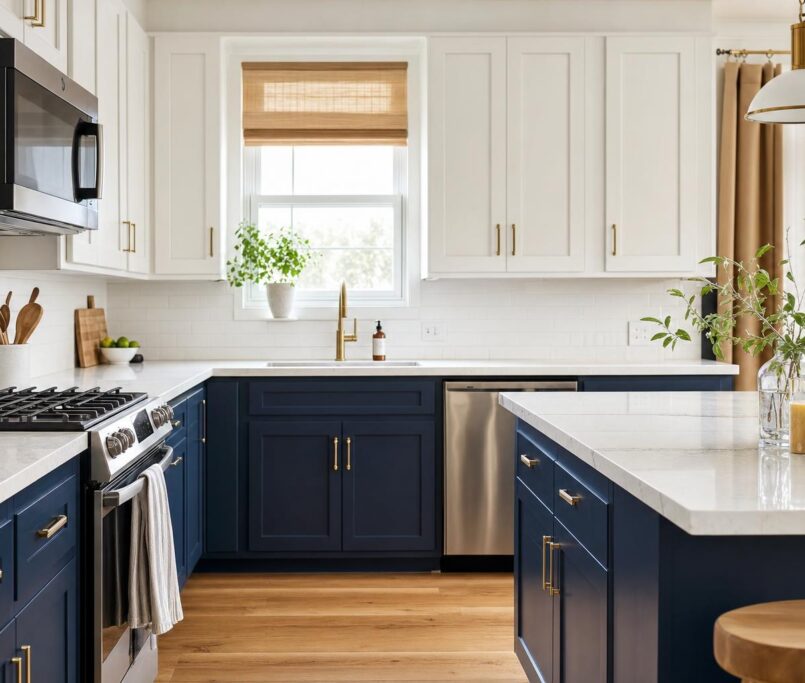
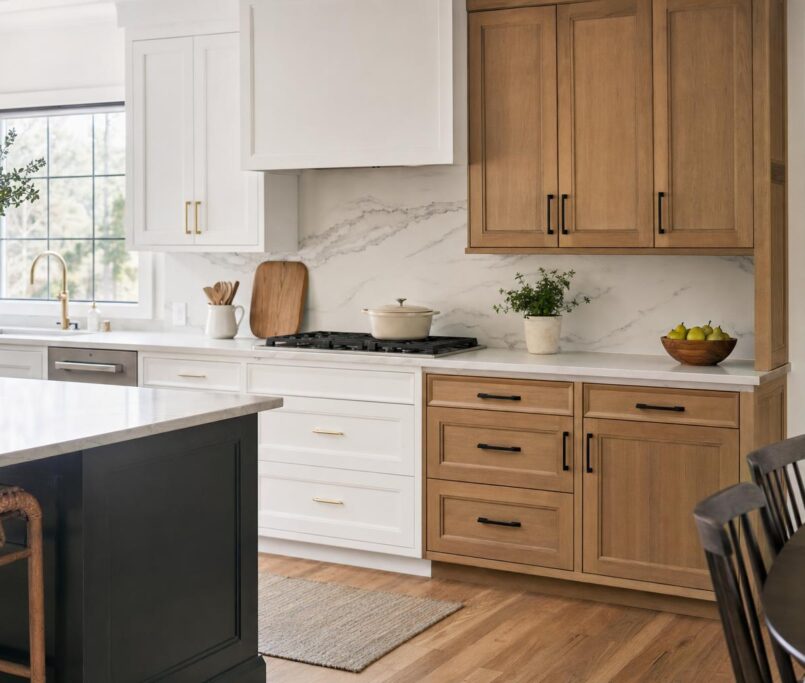
A new stain can refresh natural wood while allowing the grain to remain visible. Opaque paint covers the grain and creates a more uniform color, such as white, gray, navy, or a soft neutral. You can also coordinate new hardware with the refinished surfaces, but the original door shape and edge details will still define the kitchen’s overall look.
When Does Refacing Create a Larger Design Change?
Refacing creates a broader style update because it replaces the cabinet doors and drawer fronts while covering exposed cabinet boxes with matching veneer or laminate. New doors can move your kitchen toward a shaker, slab, raised-panel, or another profile without removing usable cabinet boxes.
This approach lets you coordinate the door style, wood tone or laminate color, edge details, and cabinet surfaces as one design. New hardware and a countertop upgrade can complete the change, especially when the existing cabinet surfaces are mismatched, heavily worn, or difficult to refinish evenly. Refacing durability also depends on quality materials, accurate installation, and normal daily care.
- Refinishing keeps the existing door profile and provides a refreshed version of the current kitchen style.
- Refacing offers more options for door profiles, drawer fronts, colors, wood tones, and laminates.
- Matching veneer can create a more cohesive appearance across worn or mismatched cabinet boxes.
- New hardware can change the kitchen’s character without changing cabinet placement.
- A coordinated countertop can help connect new cabinet finishes with the rest of the room.
For hardware ideas, read Kitchen Cabinet Hardware: How to Choose the Right Style. The best choice in this kitchen cabinet upgrade comparison depends on whether you want a careful refresh or a larger design change while keeping your existing layout. ReNU Kitchen can review your cabinet doors and boxes and provide guidance with a free estimate.
How Do Durability, Disruption, and Cost Compare?
Durability, disruption, and cost depend on your cabinet boxes, chosen materials, project size, and the work required to prepare and install them. Refinishing usually involves more surface preparation, while refacing adds new exterior components and often creates a stronger visual change with similar existing layout.
What Affects Refacing Durability?
Refacing durability describes how well the new exterior materials, doors, drawer fronts, and hardware maintain their appearance and function over time. Sound cabinet boxes give the new materials a stable base, while accurate measurements help doors align and close properly. Quality adhesives, durable finishes, and careful installation also affect how well the upgrade handles heat, moisture, and daily use.
Daily habits matter, too. Frequent washing, heavy drawer loads, and repeated contact around pulls can create cosmetic wear even when the installation remains structurally sound. Scratches, fading, or a loose hinge may be repairable. Swollen particleboard, water damage, or a weak cabinet box may require repairs or cabinet replacement before refinishing or refacing can provide a dependable result.
| Comparison area | Refinishing | Refacing |
|---|---|---|
| Process | Remove hardware, clean, sand, repair, and apply paint or stain to existing surfaces | Measure existing openings, fabricate new doors and drawer fronts, then install veneer or laminate over exposed surfaces |
| Appearance | Keeps the existing door style and changes color or stain | Allows new door styles, colors, finishes, and matching exterior panels |
| Durability | Depends heavily on surface preparation, coating quality, and the condition of the original materials | Depends on sound cabinet boxes, accurate installation, adhesive quality, and the durability of new materials |
| Disruption | Doors and hardware come off while surfaces are prepared and coated | drying time can extend the work |
| Cost factors | Cabinet size, repairs, number of doors, finish type, and preparation time | Cabinet size, door count, material selection, hardware, repairs, countertops, and custom additions |
Refinishing may be the simpler choice when the existing doors and cabinet boxes are sturdy and you want a color update. Refacing requires measuring, fabrication, and installation, but it can change the door style and cover worn surfaces without removing the cabinet layout. Both options typically create less disruption than a full replacement, although your kitchen may have limited access during preparation or installation.
Cabinet size and door count affect labor and material needs. Veneer or laminate selection, new pulls and hinges, cabinet repairs, countertop upgrades, and custom cabinet additions can also change the project scope. For a clearer breakdown of the main cost variables, read Cabinet Refacing Cost: What Affects Your Price?.
A site-specific estimate is more reliable than a universal price because every kitchen has different measurements, conditions, and design goals. The right choice is the option that fits your existing cabinets, desired appearance, schedule, and budget while providing a practical long-term upgrade.

Which Cabinets Are Good Candidates for Refinishing or Refacing?
Refinishing suits solid, stable cabinets with a finish problem, while refacing suits sound cabinet boxes with outdated, damaged, or unwanted doors and drawer fronts. Neither option fits cabinets with major structural damage or a layout that no longer works.
Start by inspecting the cabinet boxes, which are the fixed frames attached to the wall or floor. Refinishing may be the right choice when the boxes and doors are sturdy, the hinges attach securely, and the main issue is peeling paint, worn stain, or an outdated color. The existing wood or veneer must also be suitable for a new finish.
Refacing works well when the cabinet boxes remain square, dry, and firmly built, but the cabinet doors and drawer fronts make the kitchen look dated. New doors, drawer fronts, veneer, laminate, and hardware can change the appearance without removing the existing layout. You can also discuss countertop upgrades or custom cabinet additions as part of the project.
Watch for water damage beneath the sink, swollen particleboard, loose construction, broken cabinet boxes, or shelves and drawers that no longer function. Unusable storage can also signal that the current cabinets are not worth covering. Widespread structural damage, major storage changes, or a new layout usually point toward cabinet replacement instead of refinishing or refacing.
A Practical Decision Checklist
A useful kitchen cabinet upgrade comparison starts with the condition of the cabinet boxes and the way your current layout serves you. Consider your desired style, budget, schedule, and project scope before choosing materials. Surface work may leave room in the budget for new doors, hardware, countertops, or custom additions, while replacement may be necessary when the cabinet structure cannot support those updates.
- Inspect every cabinet box for moisture damage, swelling, loose joints, and secure wall attachment.
- Decide whether your current layout and storage meet your daily needs.
- Identify whether you want a new finish, new doors and drawer fronts, or broader design changes.
- Compare the expected cost of refinishing or refacing with the value of other planned upgrades.
- Set a realistic schedule and confirm how much kitchen disruption your household can manage.
Professional measurements can reveal whether your existing cabinet boxes are suitable for refacing and help prevent ordering mistakes. For more detail on the work involved, review Cabinet Refacing New Jersey: Service Areas and Process. An experienced contractor can also guide you through door styles, surface materials, hardware, and custom options.
The right choice depends on the condition of your cabinets and the changes you want to make. With sound existing cabinets, refinishing or refacing can provide a practical upgrade without removing a workable kitchen layout. ReNU Kitchen can assess your options and provide guidance with a free estimate.

How Can You Choose the Right Kitchen Cabinet Upgrade?
Choose refinishing when your cabinet doors and boxes are sound and you want to keep their existing style; choose refacing when you want a new exterior appearance without changing the kitchen layout.
Refinishing or refacing cabinets can both improve an existing kitchen, but they solve different problems. Refinishing uses paint or stain to refresh the surfaces you already have. Refacing replaces the doors and drawer fronts, then covers the visible cabinet boxes with matching veneer or laminate. This gives you more control over color, door style, and finish while keeping the current footprint.
- Refinishing is a practical choice when your existing doors, drawer fronts, and cabinet boxes are solid and their design still suits your kitchen.
- Refacing may be the right choice when the cabinet structure works well but the doors, drawer fronts, finish, or surface style looks dated.
- Keeping the existing layout can reduce the demolition, plumbing changes, and disruption associated with a full cabinet replacement.
- Your budget should account for the project scope, including hardware, countertops, and any custom cabinet additions.
- The condition of the cabinet boxes should be checked before you decide between refinishing and refacing.
ReNU Kitchen evaluates your existing cabinets before recommending an option. We discuss your goals, budget, preferred materials, and the amount of disruption you can manage. If refacing fits your project, we can coordinate new cabinet doors, drawer fronts, hardware, countertop upgrades, and custom additions so the finished kitchen has a consistent appearance.
Your kitchen cabinet upgrade comparison should also consider how much of the existing work you want to preserve. Refinishing usually keeps more of the original cabinet design, while refacing allows a broader exterior update without removing a sound layout. If the boxes have major damage, water exposure, or structural problems, a different solution may be needed.
ReNU Kitchen brings more than 26 years of experience to cabinet refacing and related kitchen upgrades. Our team serves homeowners across New Jersey and parts of New York, with custom craftsmanship and free estimates to help you understand your options before work begins.
The right choice depends on cabinet condition, your design goals, budget, and desired disruption. Ready to transform your kitchen? Contact ReNU Kitchen for your free estimate and practical guidance on the best option for your home.
Frequently asked questions
Is it cheaper to refinish or reface kitchen cabinets?
Refinishing is often less expensive because it uses the existing doors, drawer fronts, and cabinet boxes. Refacing costs more because it includes new doors, drawer fronts, exterior veneer or laminate, and installation. Your final price depends on cabinet size, materials, repairs, hardware, and optional countertop or custom cabinet work.
Can you reface cabinets that have been painted?
Yes, cabinets that have been painted can often be refaced if the cabinet boxes are sound, stable, and properly measured. The existing finish may need preparation before veneer or laminate is applied. A professional assessment can identify moisture damage, loose construction, or other conditions that need repair first.
How long does cabinet refinishing or refacing take?
Project timing varies with kitchen size, preparation, material selection, door fabrication, repairs, and installation details. Refinishing includes substantial surface preparation, while refacing requires measuring and producing new components. A qualified cabinet professional can provide a more accurate schedule after reviewing your existing kitchen.
Does cabinet refacing change the kitchen layout?
Cabinet refacing normally keeps the existing cabinet layout, cabinet boxes, and storage locations in place. It changes the visible exterior through new doors, drawer fronts, veneer, laminate, and hardware. Custom cabinet additions or limited modifications may expand storage, but a major layout change generally requires a different remodeling approach.
When should I replace cabinets instead of refinishing or refacing?
Replacement may be more appropriate when cabinet boxes have widespread water damage, swelling, broken construction, or unusable storage. It may also suit homeowners who want a substantially different layout. If the existing boxes are stable and the layout works, refinishing or refacing can provide a practical alternative to full replacement.
How Can You Choose the Right Kitchen Cabinet Upgrade?
Ready to transform your kitchen? Contact ReNU Kitchen at (732) 890-9911 for your free estimate.